


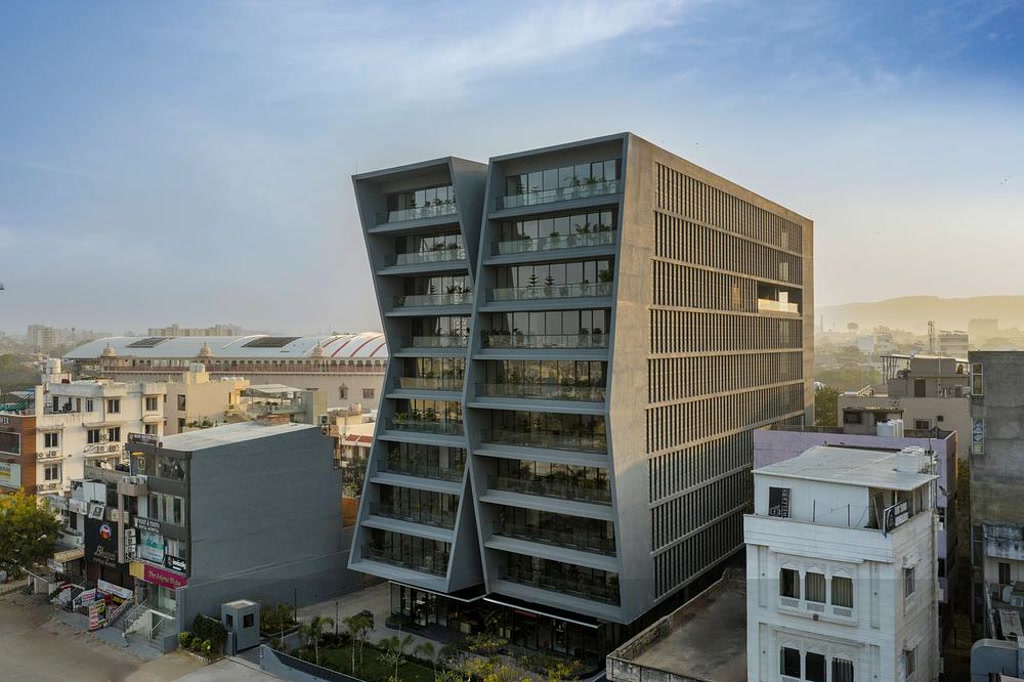
On a dense arterial stretch in Jaipur, this office building negotiates climate, context, and contemporary work culture through layered skins, shifting volumes, and a reinterpreted architectural language
Set along one of Jaipur’s busiest arterial roads, within a fabric of aging commercial structures, this office building arrives as a clear point of departure — the first new insertion in an otherwise established urban condition. Rather than asserting itself through contrast alone, the project works more deliberately, positioning itself between continuity and change. It establishes a contemporary identity while remaining anchored in the architectural logic of its context and climate.
The planning is precise and strategic. Service areas and the circulation core are pushed to the southern edge, allowing the rest of the floor plate to remain open and adaptable. Structural columns line the perimeter, freeing the interiors from fixed constraints and enabling flexibility across levels. This adaptability is further reinforced programmatically — smaller office units occupy the lower floors, while larger workspaces are placed above, responding to varying spatial demands within a single vertical framework.
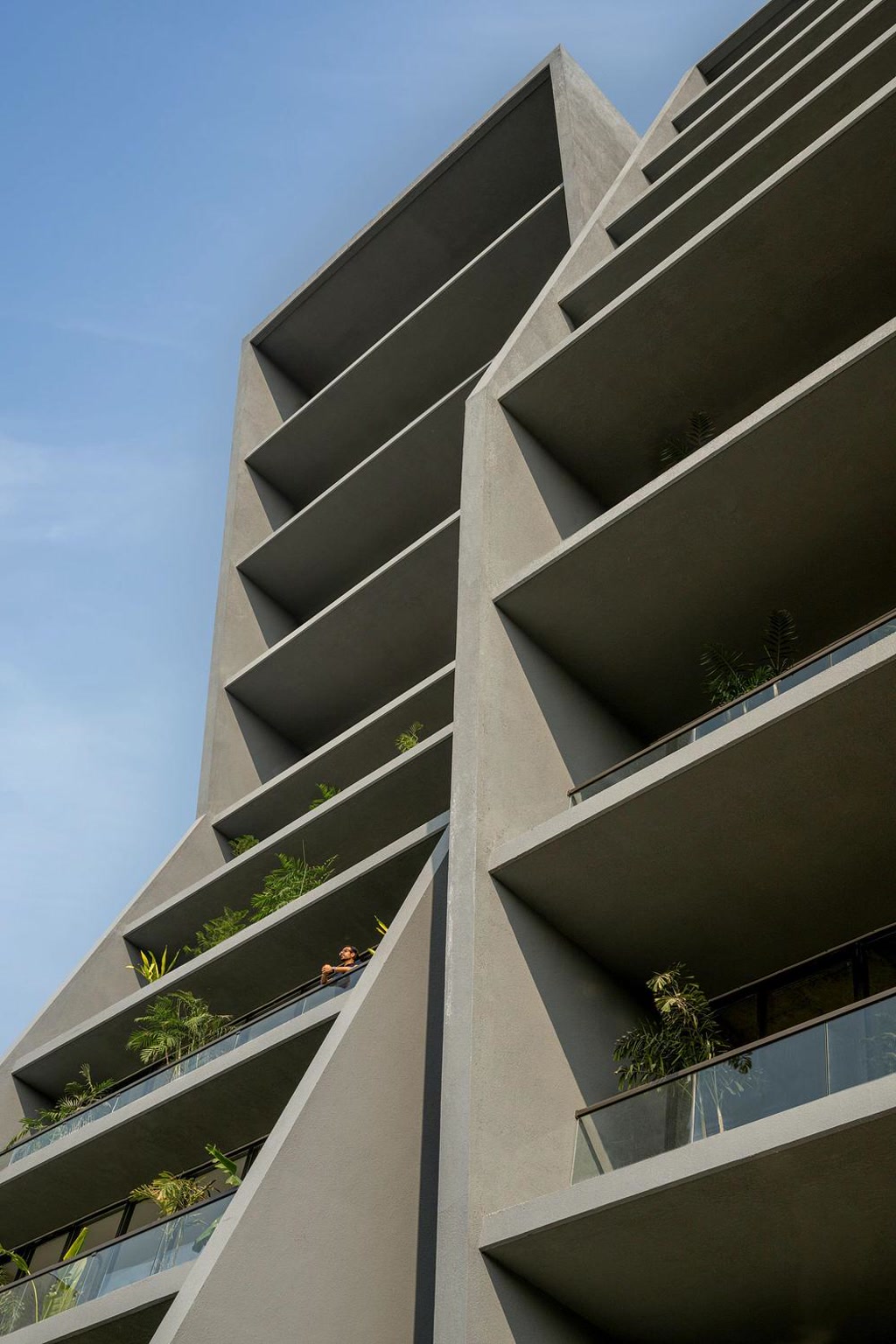
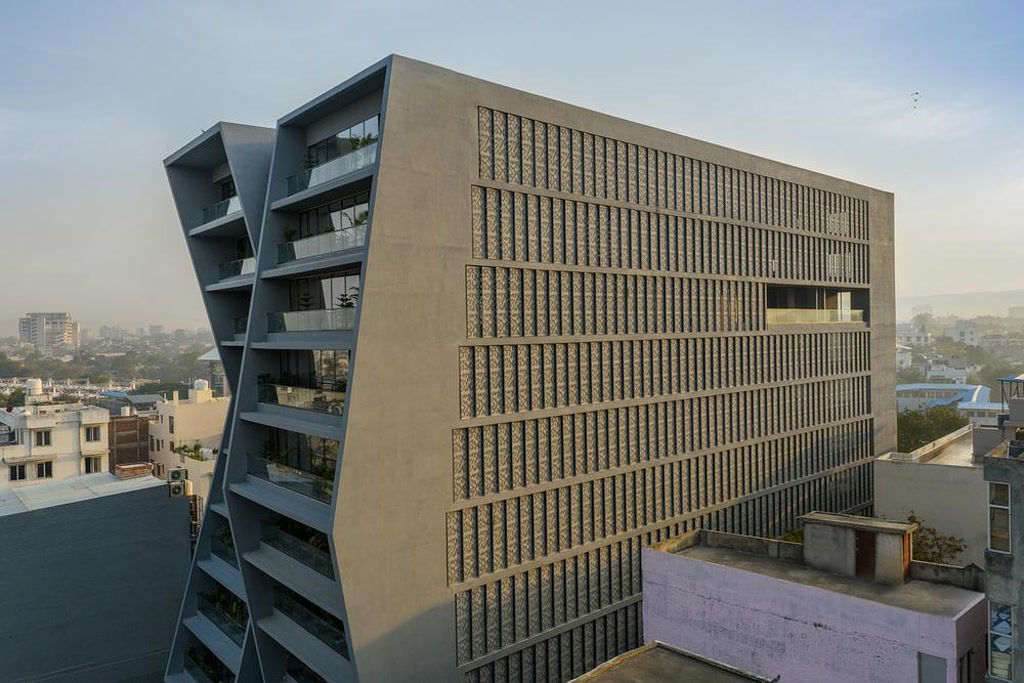
The building’s most visible gesture unfolds along its western edge. Here, the facade tilts — forward and backward — splitting into two distinct vertical volumes. This controlled shift in massing does more than create a formal identity; it produces a series of sheltered decks at every level. These outdoor extensions offer usable spill-out spaces while maintaining visual privacy between adjacent offices. The building, in this sense, is not a sealed container but a layered interface between inside and outside.
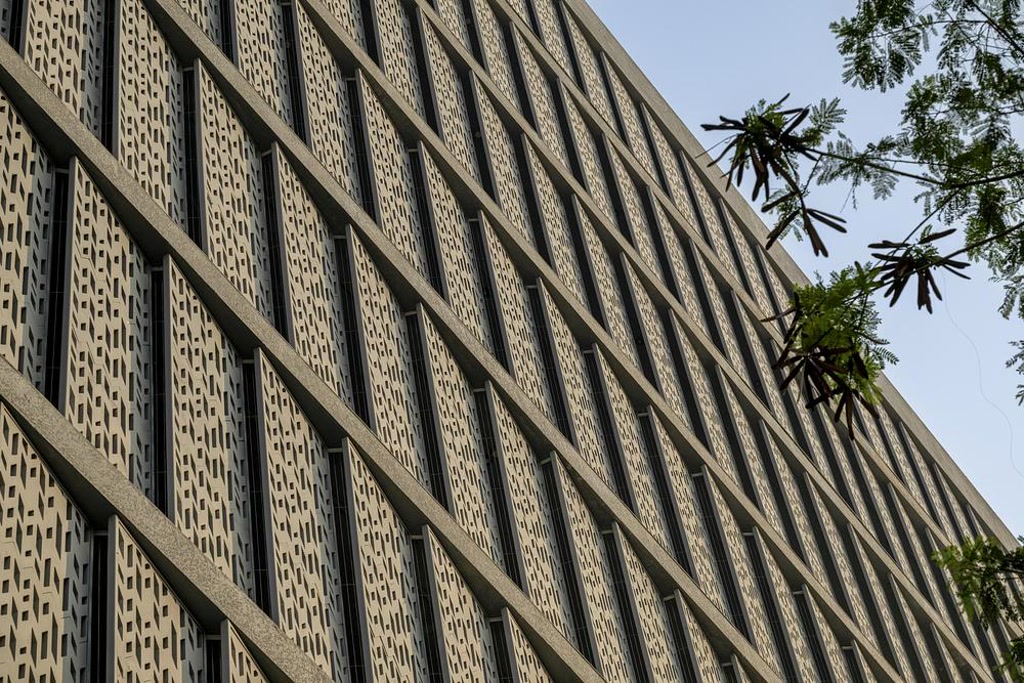
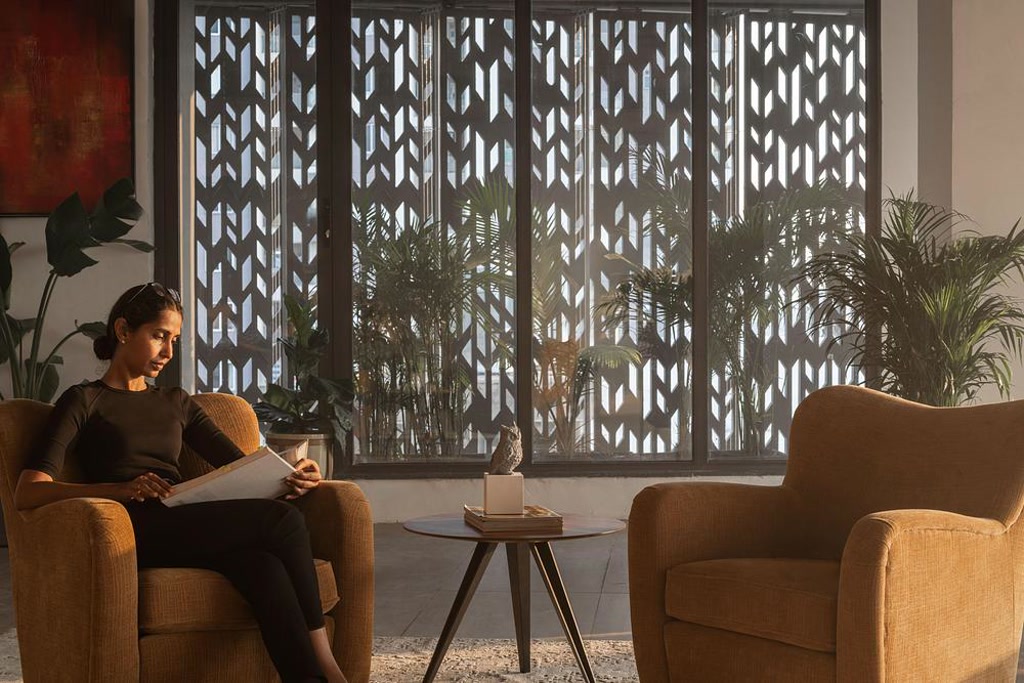
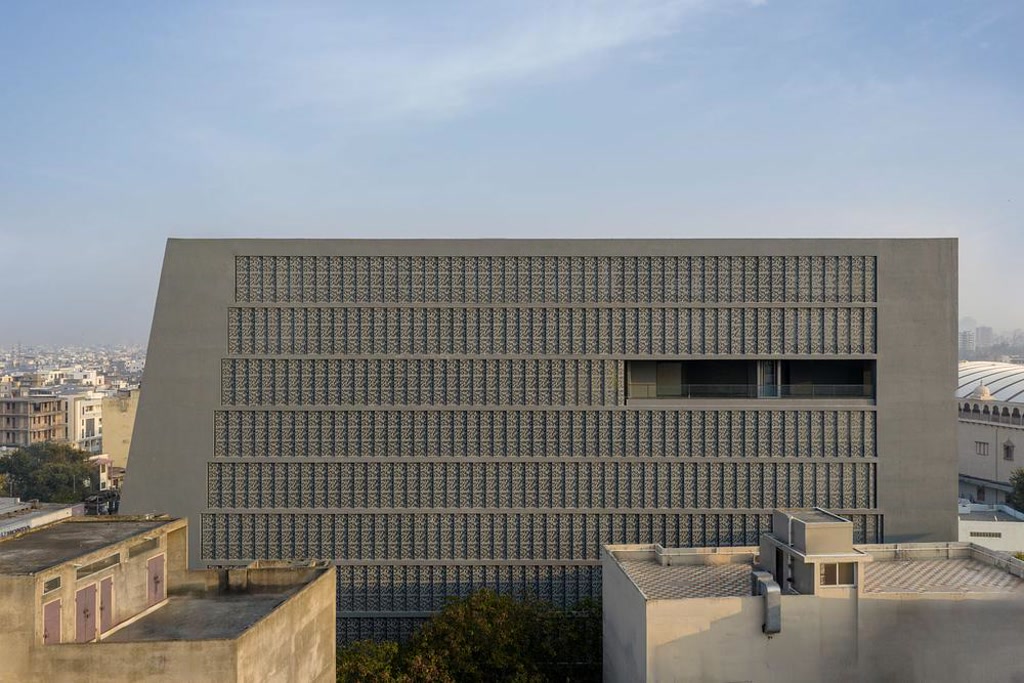
On its sides, the structure is wrapped in a perforated screen system that draws from the logic of traditional stone jaali screens found across Rajasthan. This is not replication, but reinterpretation. Fabricated from lightweight foam concrete using largely recycled material, the screens introduce both texture and performance. They filter light, temper heat, and establish a secondary skin that responds directly to the region’s harsh climatic conditions.
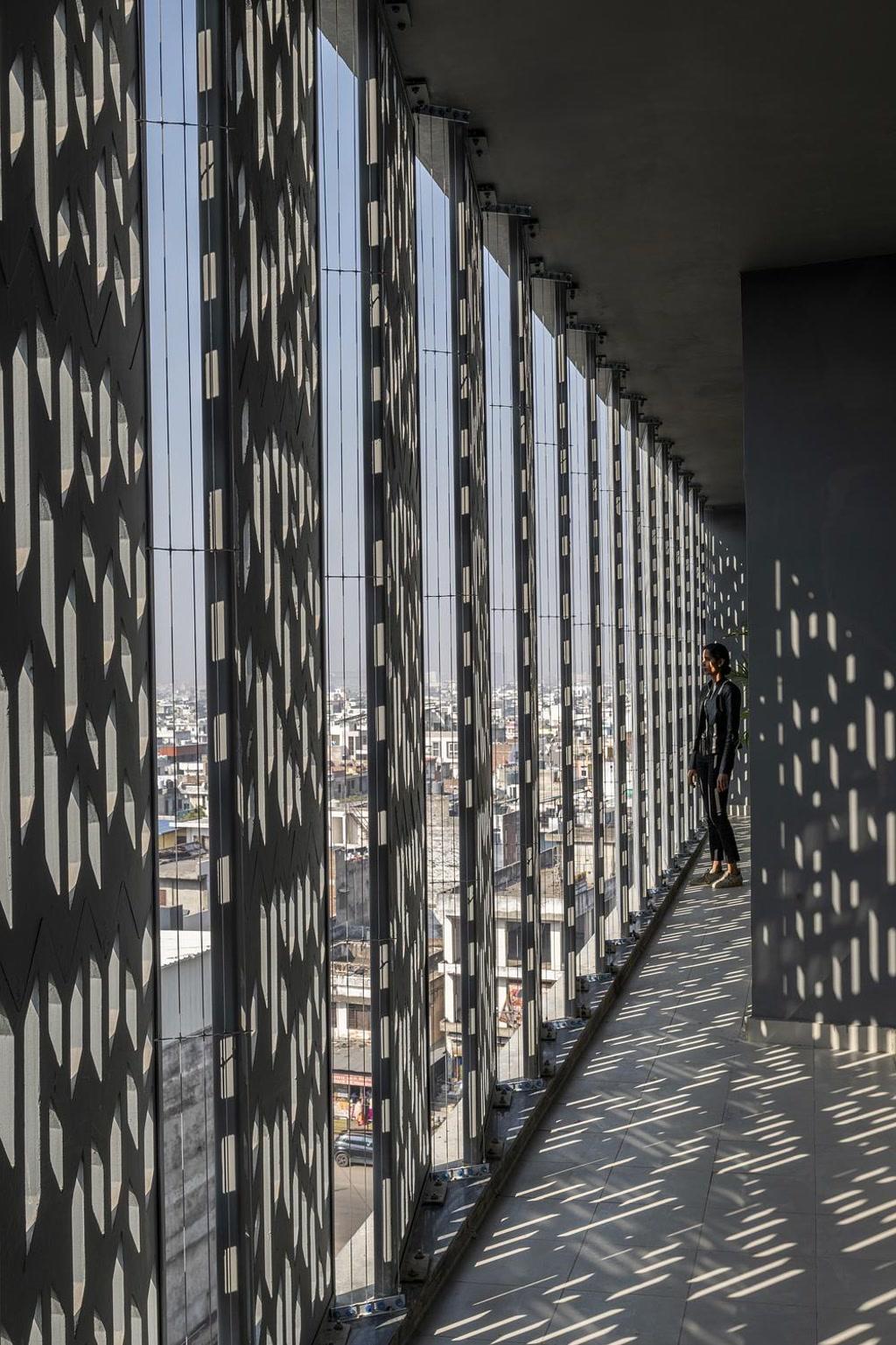
Between this outer screen and the inner glazed facade, a narrow planter zone runs continuously along the building’s edge. At just three feet wide, it performs multiple roles — softening the transition between layers, buffering noise from the traffic-heavy street, and introducing a consistent band of greenery into an otherwise dense urban setting. It is a small move, but one that significantly alters the building’s environmental and experiential quality.
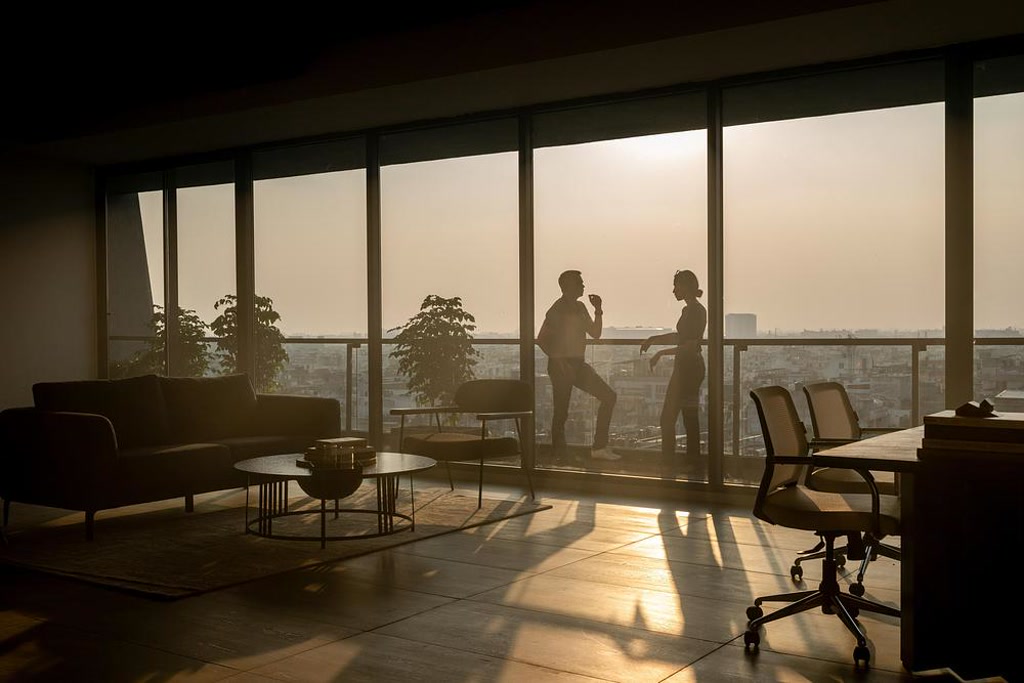
At ground level, the building engages the city more directly. A restaurant and conference facility activate the frontage, extending the building’s function beyond its occupants. Above, the terrace level shifts the focus inward again, accommodating a cafeteria, gym, and landscaped garden — spaces that support pause, interaction, and a break from the rigidity of the workday.
Materially and structurally, the project remains grounded in efficiency. Fly ash bricks and an RCC frame form the primary construction system, while a series of environmental strategies — water recycling, rainwater harvesting, and rooftop solar panels — reduce operational impact. Together, these measures contribute to a lower embodied carbon footprint when compared to conventional office developments.
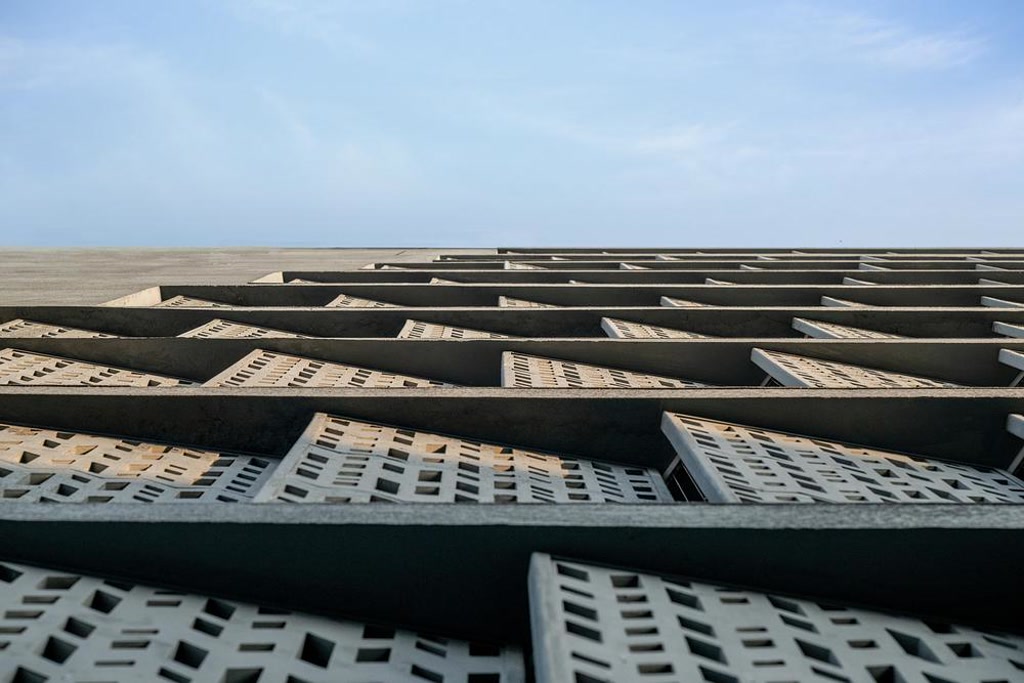
The building’s environmental response is embedded in its architecture rather than applied onto it. The perforated screens and recessed decks operate as passive shading devices, reducing direct heat gain and lowering dependence on mechanical cooling. In doing so, the project aligns performance with form, allowing sustainability to emerge as a byproduct of design rather than an afterthought.
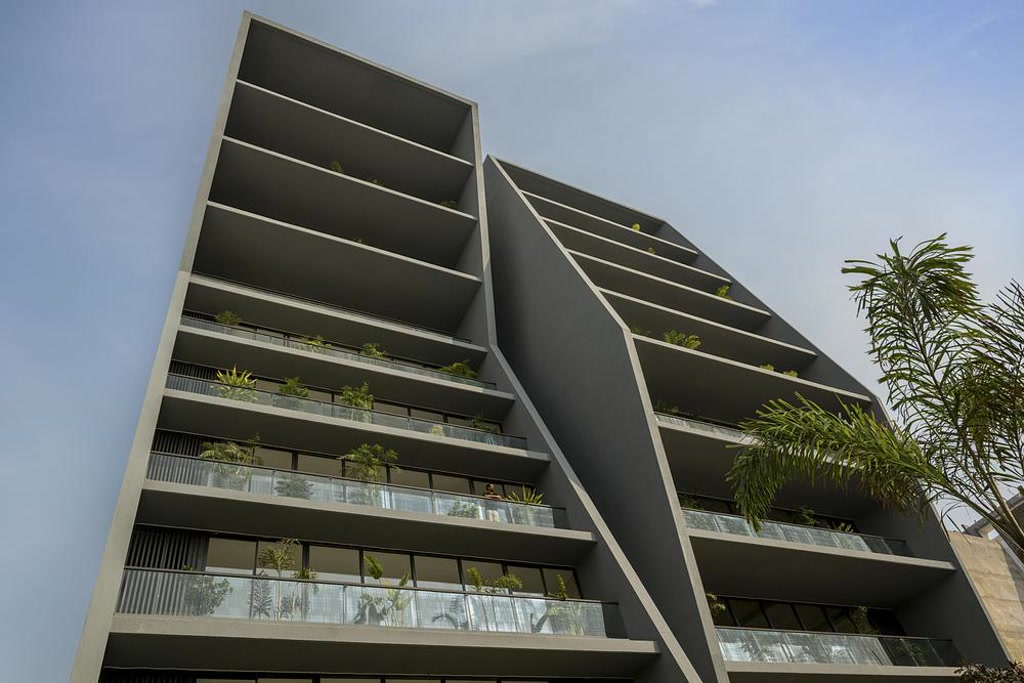
In a city where climate and craft have long shaped the built environment, this office building revisits those principles through a contemporary lens. It does not replicate tradition, nor does it ignore it. Instead, it recalibrates it — producing a workspace that is at once responsive, efficient, and firmly situated within its context.
Connect Online@www.sanjaypuriarchitects.com