


In Singapore, a renovated apartment rethinks living with plants — not as decoration, but as an everyday condition shaped through memory, material, and spatial recalibration
In a Park begins with a simple mismatch. A three-bedroom apartment in northeast Singapore, designed for conventional living, meets a client whose life has shifted toward horticulture. What was once an incidental interest has become a defining way of inhabiting space — one that the existing layout could no longer support.
The pandemic may have triggered a renewed engagement with plants for many, but here, the shift endured. The brief was direct: the home needed to accommodate a growing collection of plants. Yet within this practicality lay a more telling observation. The client noted that while he was surrounded by plants, he did not “wake up to them.” This gap — between presence and experience — became the project’s point of departure.
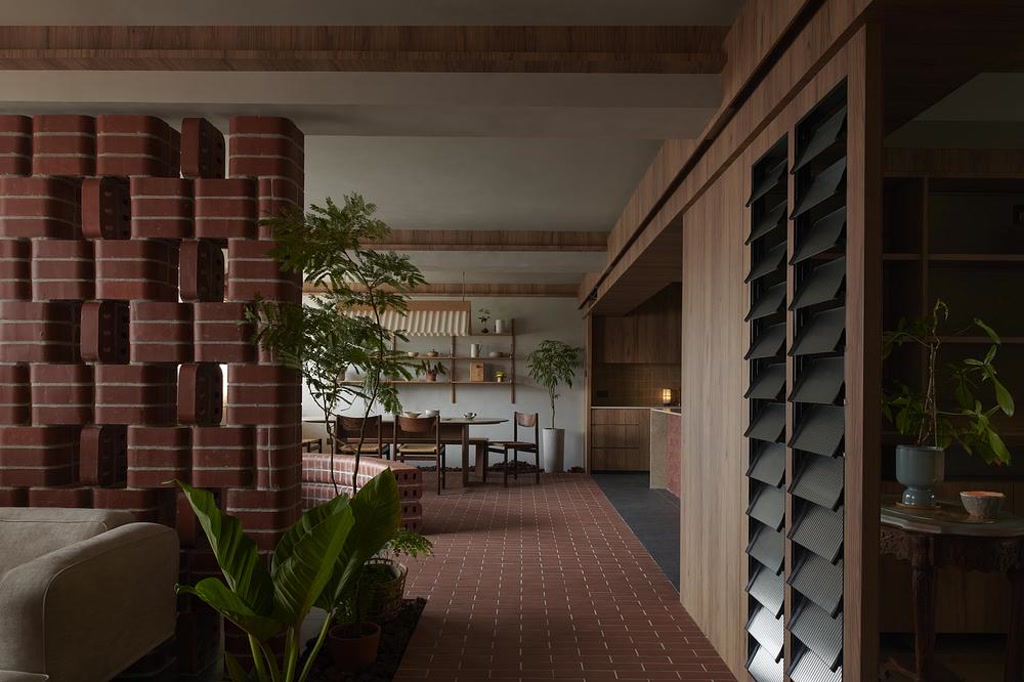
Rather than inserting more greenery into an unchanged framework, the design repositions the house itself as a landscape. The idea of a park is not approached literally, but abstracted as a spatial condition — open, continuous, and embedded with moments of pause. Plants are no longer objects within rooms; they become part of how the rooms are defined.
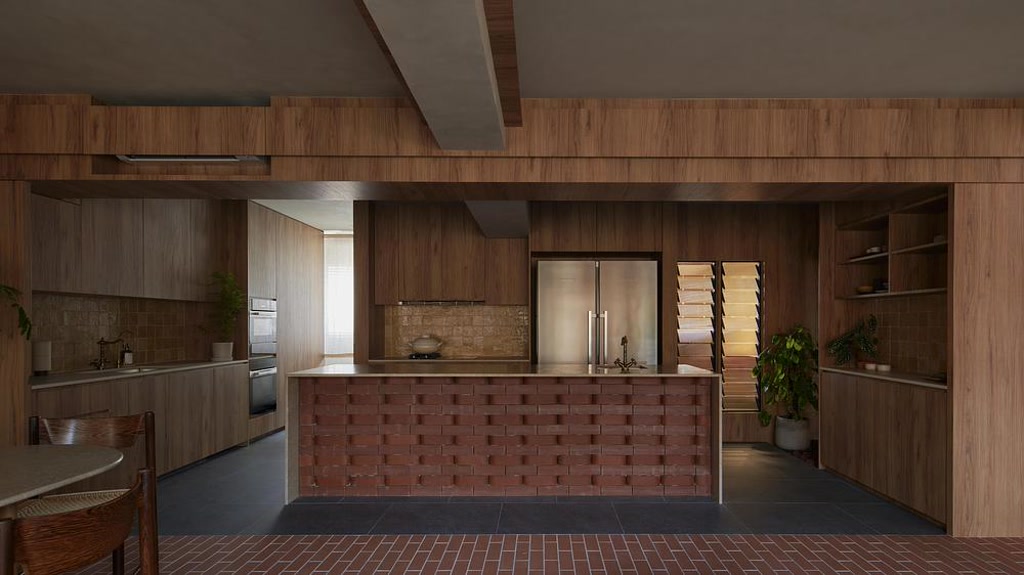
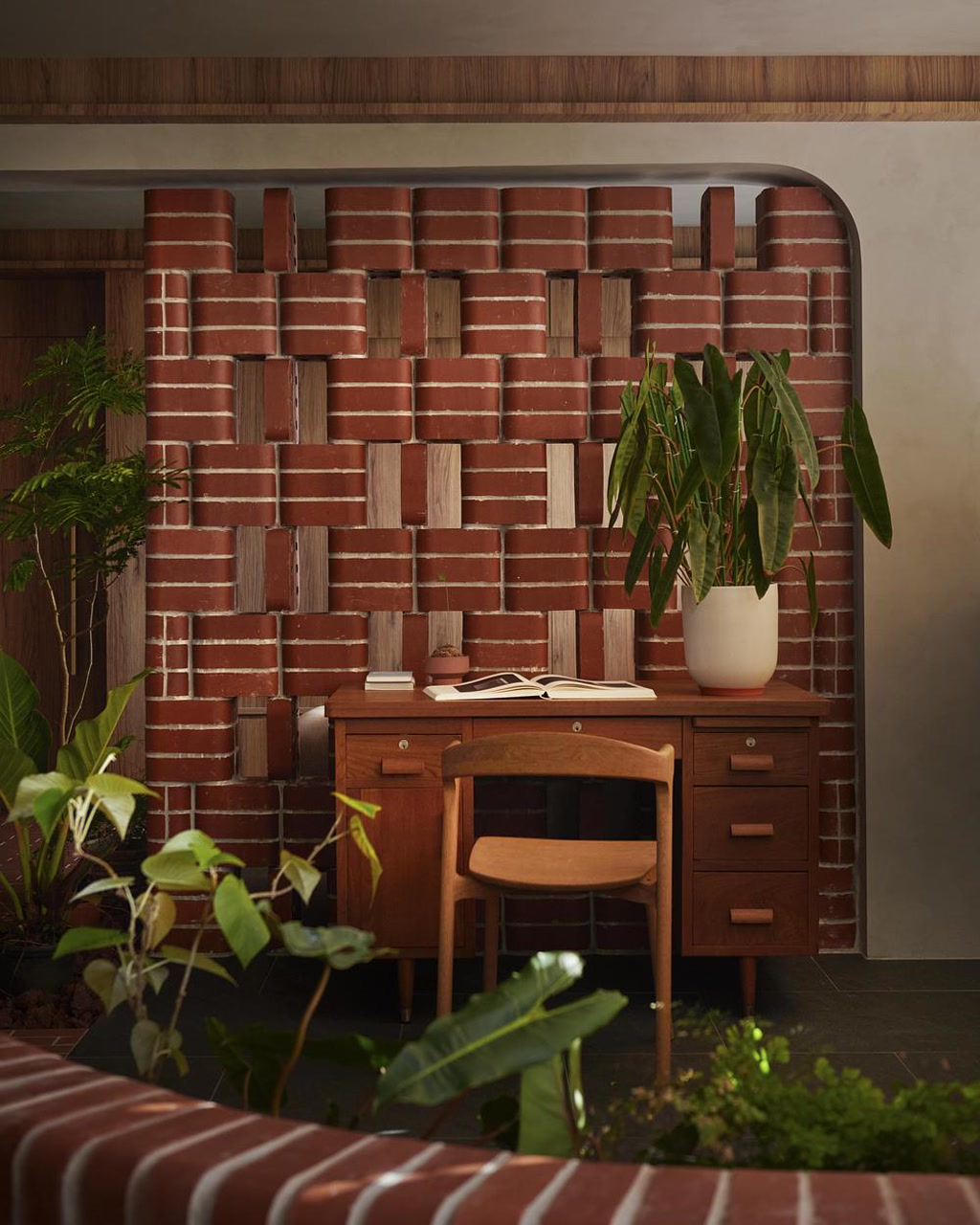
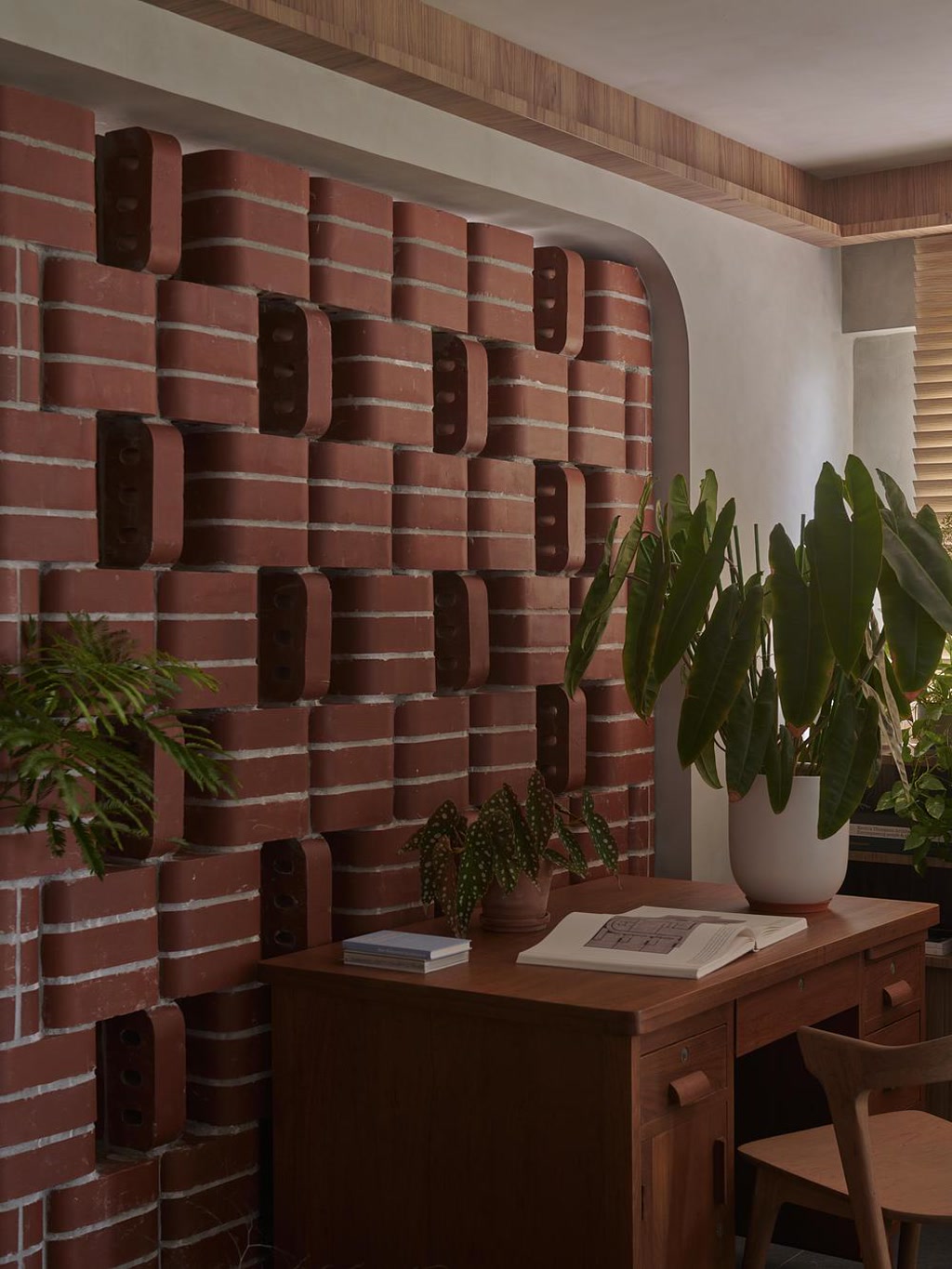
This shift is anchored in a material rediscovery. Referencing older public parks in Singapore, the project turns to the double-bullnose brick — an element once common in benches, pathways, and planters, yet now largely forgotten. Its selection is not nostalgic, but deliberate. It carries with it a memory of public space, of informality, of use over time.
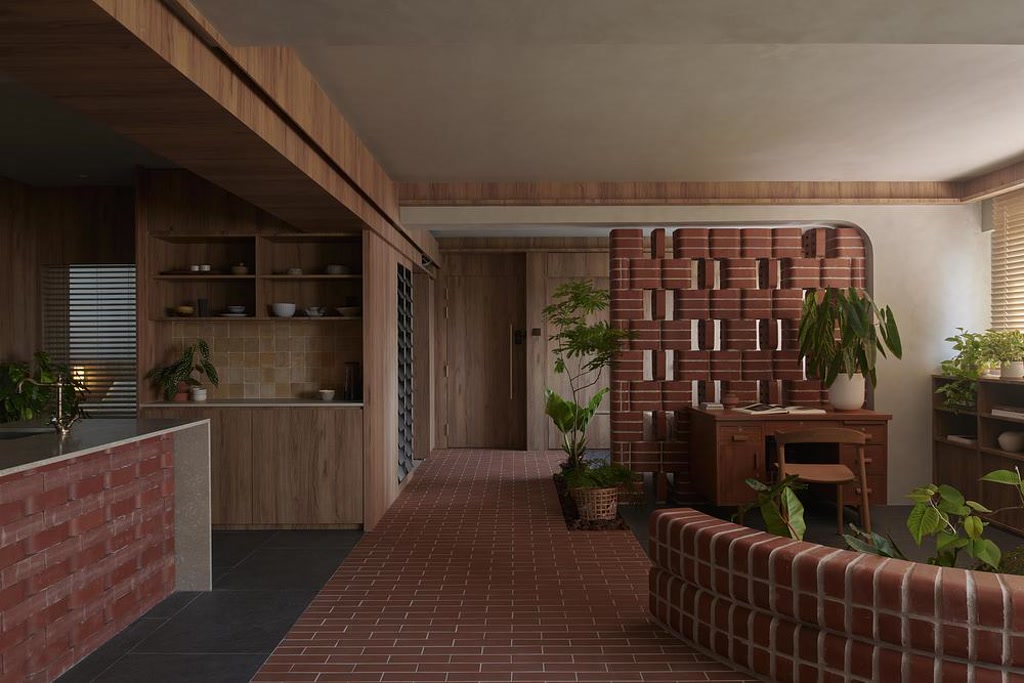
The process of sourcing reveals its own constraint. Production of the brick had been discontinued, with only 571 pieces remaining. This finite quantity reframes the material — not as a repeatable system, but as a resource to be used with precision. Its application across the apartment is therefore measured, each instance considered rather than extended.
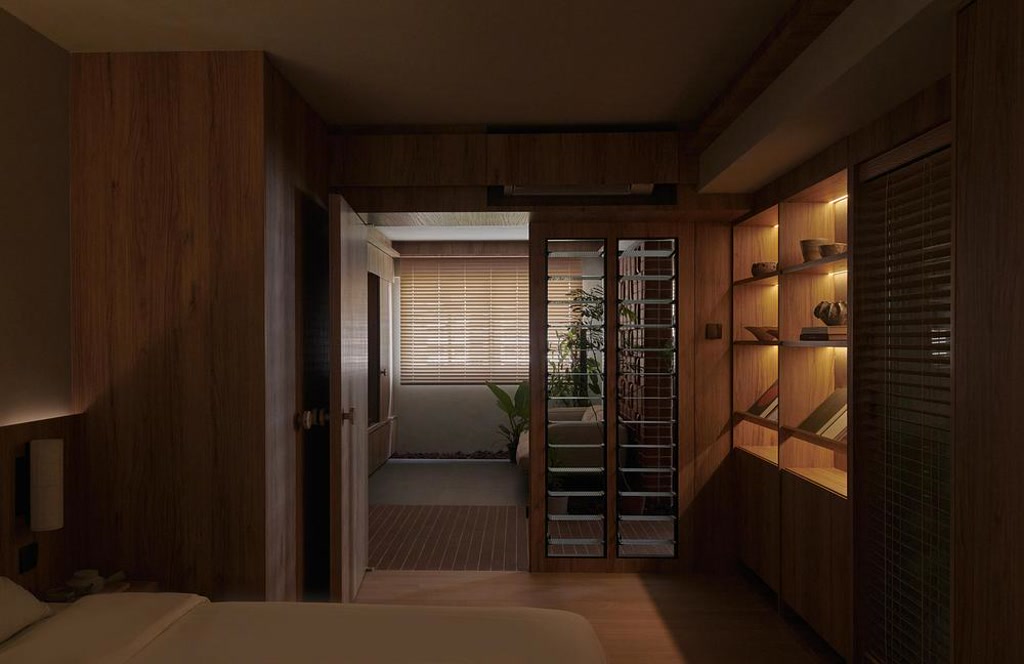
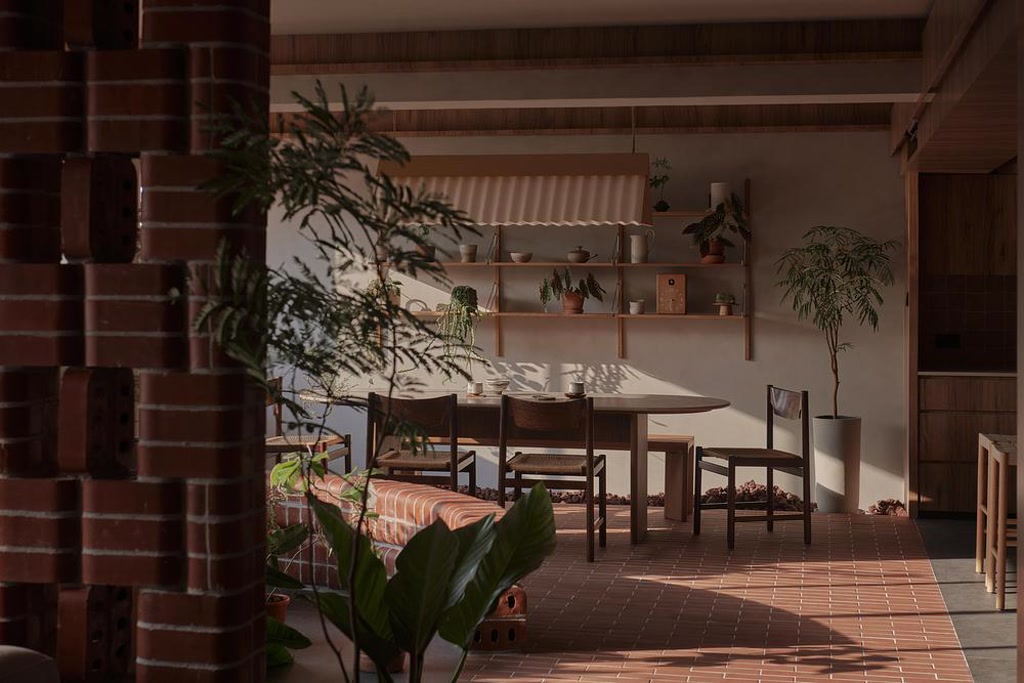
The rounded profile of the brick introduces a softness that contrasts with the typical rigidity of domestic interiors. It allows surfaces to curve, edges to ease, and boundaries to loosen. A freestanding brick wall subtly divides the study from the living area, not as a barrier, but as a porous threshold. Between the study and dining spaces, a curved bench emerges — shared, accessible from both sides, and open to occupation. These gestures resist compartmentalisation, encouraging movement, overlap, and informal use.
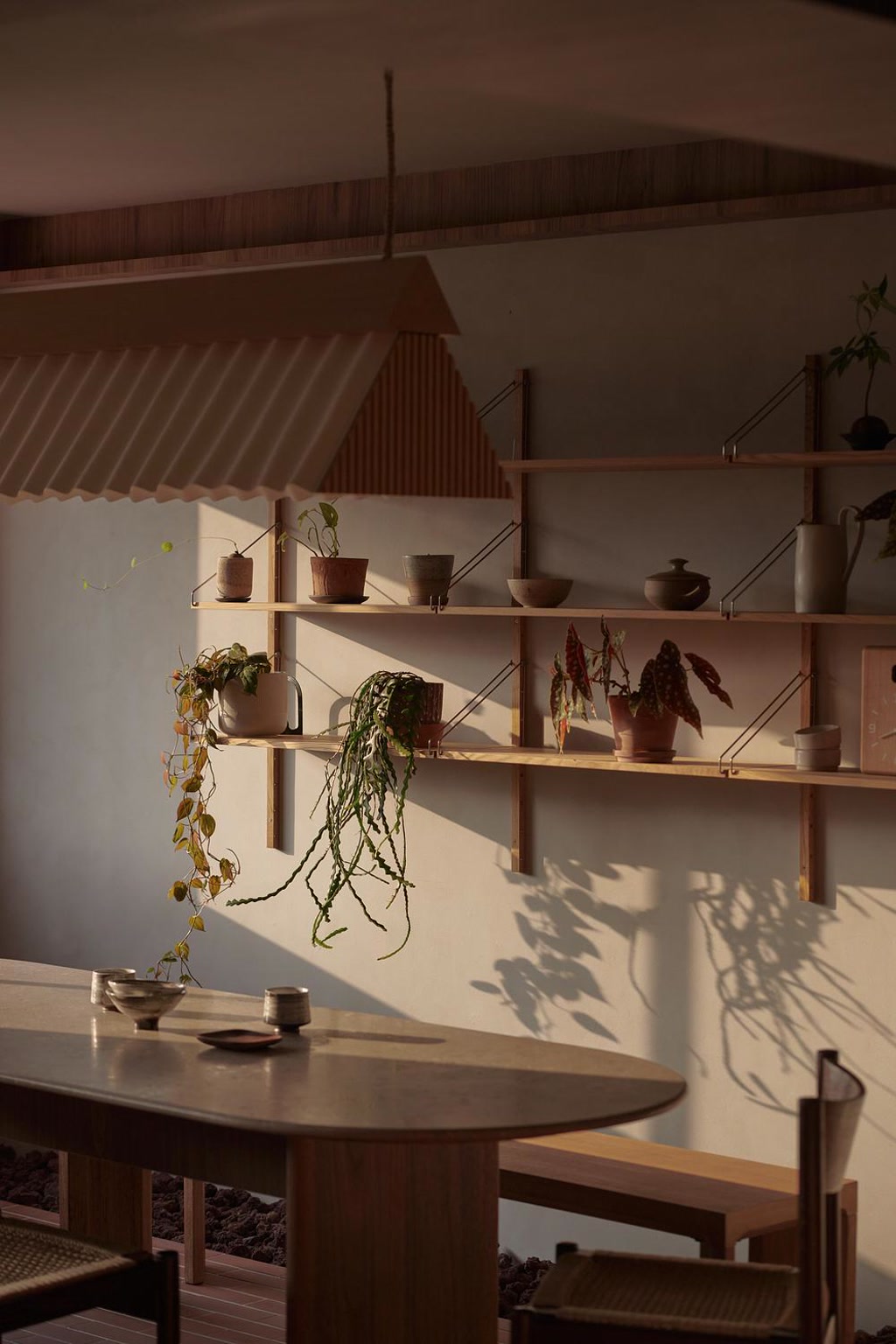
Through these interventions, the apartment begins to adopt the spatial qualities of a park. It is less about enclosure and more about continuity — spaces that flow into one another, anchored by moments of rest and framed by the presence of plants.
In a Park does not rely on technological innovation or material excess. Instead, it works through reduction and attention — revisiting a familiar material, rethinking its application, and allowing it to quietly reorganise the domestic interior. In doing so, the project suggests that the value of design often lies not in invention, but in recognition — in seeing the potential of what already exists, and placing it differently.
Photo Courtesy: Jovian Lim
Compiled By: Mubeen Ponissery
Connect Online@www.larchitects.com.sg