


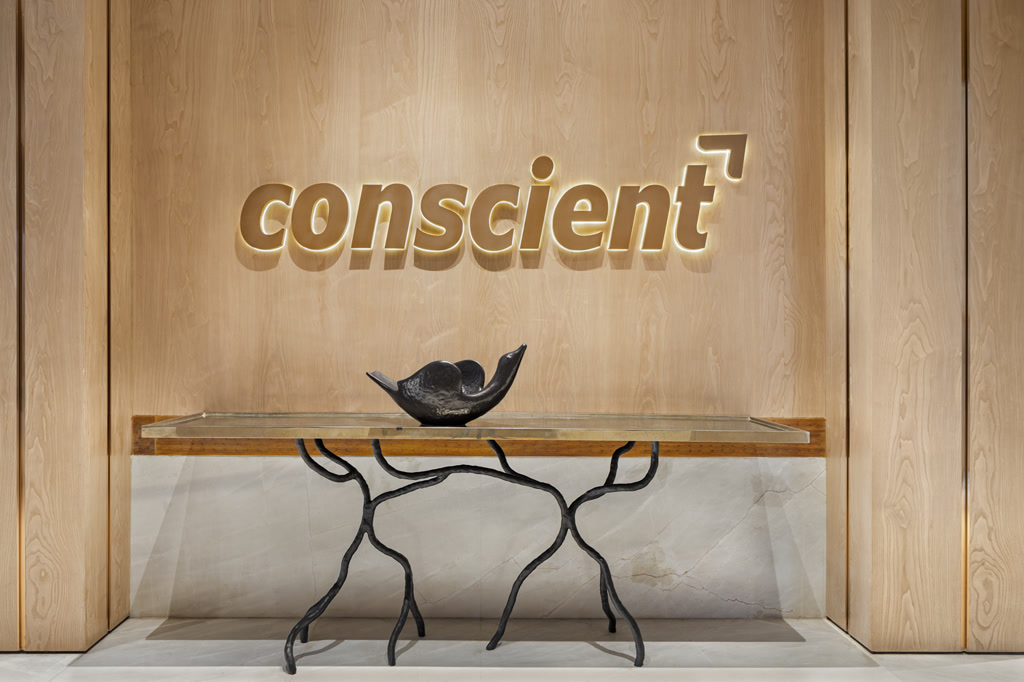
At Gurgaon’s Grand Hyatt Tower, Studio IAAD rethinks the sales office as an adaptive spatial system — where experience, work, and movement operate as one continuous environment.
Perched on the fourth floor of the Grand Hyatt Tower along Golf Course Extension Road, Gurgaon, the Conscient Infra Sales Lounge is conceived as a dual-purpose environment — simultaneously an experience centre and a functioning workspace. Designed by Studio IAAD, the project responds to a brief that demands adaptability without compromising spatial clarity.
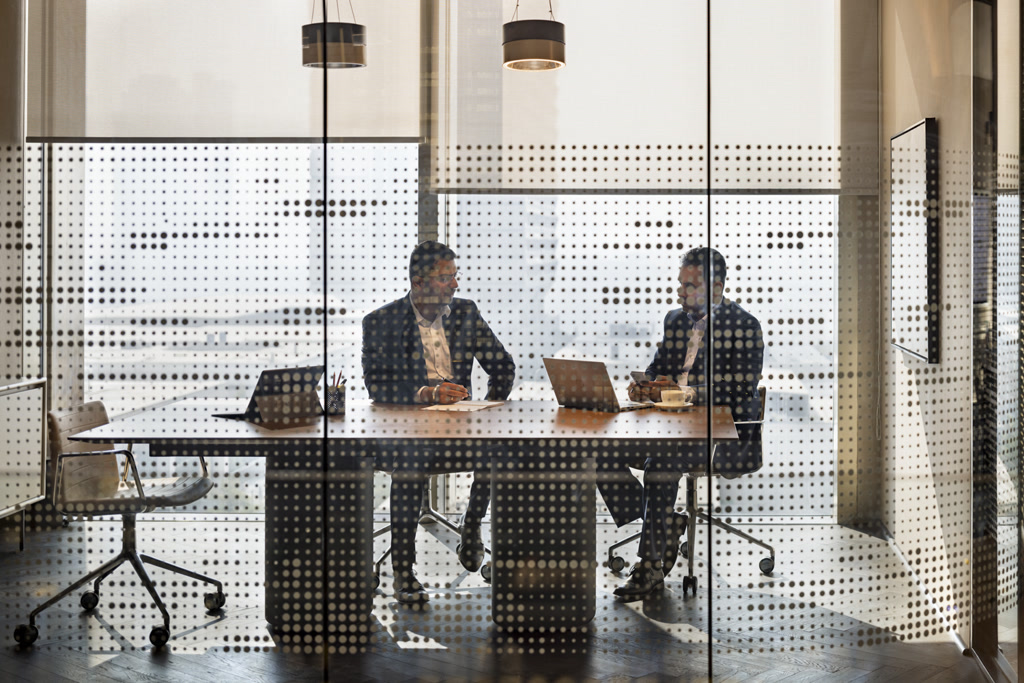
At its core lies a deliberate shift away from rigid zoning. Instead of segregating functions, the design operates through layered thresholds, interconnected corridors, and softened spatial boundaries — allowing the environment to recalibrate based on use. The challenge of a compact entrance, coupled with fixed architectural constraints, is addressed through a planning strategy that prioritises visual continuity, navigability, and modular flexibility. The result is not a conventional sales office, but a spatial framework — one that absorbs change without requiring transformation.
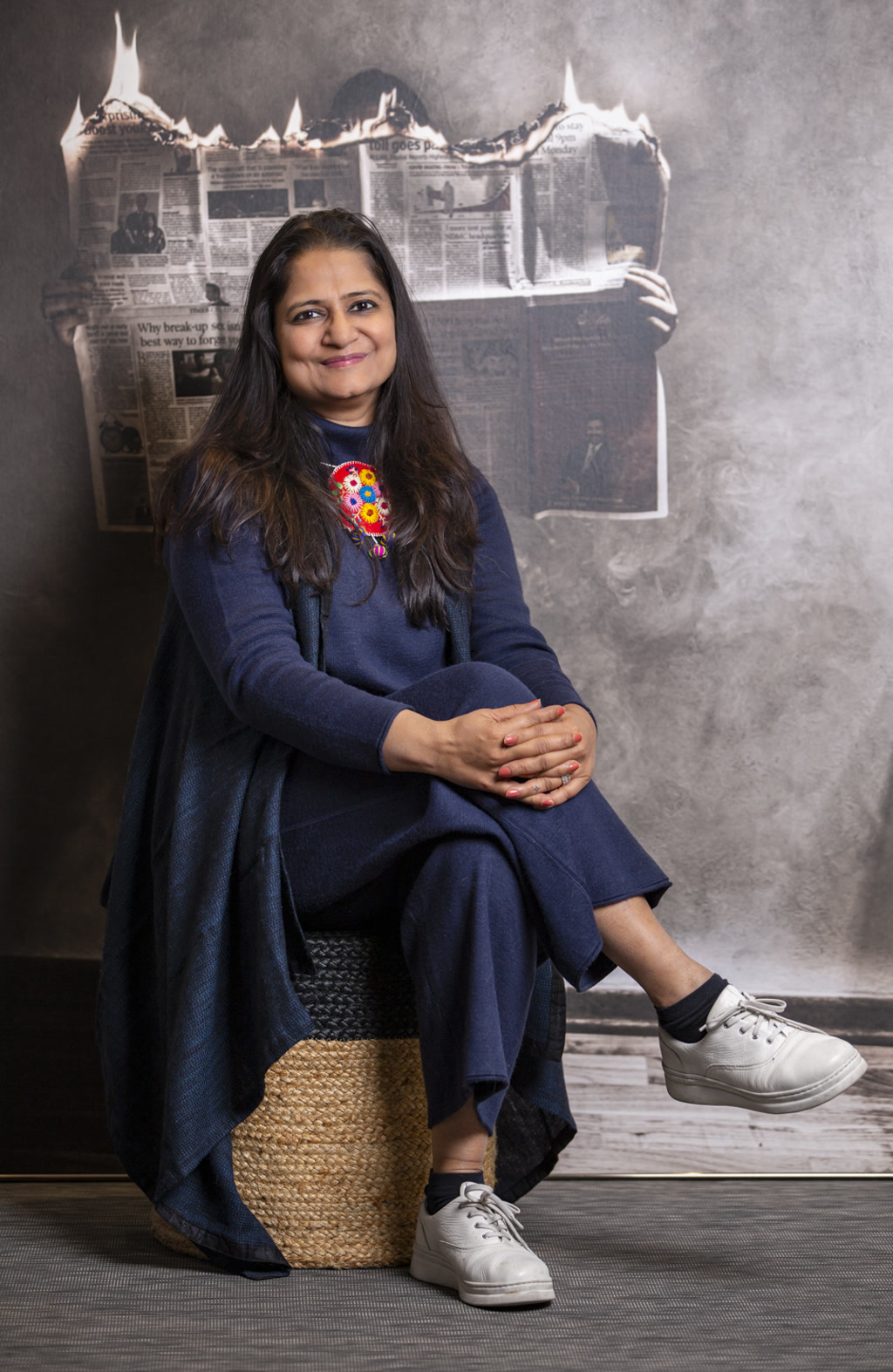
In this conversation, Rachna Agarwal, Founder and Design Ideator at Studio IAAD, unpacks how flexibility is embedded not just as a feature, but as a design methodology.
What was the client’s brief, and how did you translate it into a spatial concept for this project?
The brief was centred on creating a dual-purpose experience centre and workspace that could adapt between presentation-led engagement and day-to-day operational use. This translated into a spatial concept built around flexibility and maximisation of spatial efficiency. Instead of separating functions, the design integrates them through layered thresholds, interconnected corridors, and softened boundaries, allowing spaces to shift in function without disruption.
If you had to distil this project into one defining idea or philosophy, what would it be?
Among the many design philosophies we work with at Studio IAAD, the one that resonated most strongly in this project is Enhancing Experiences, the belief that a well-designed space should nourish and adapt to human interaction. This project extends that thought, where architecture and interiors are not separated but flow into one another, creating a continuous spatial experience.
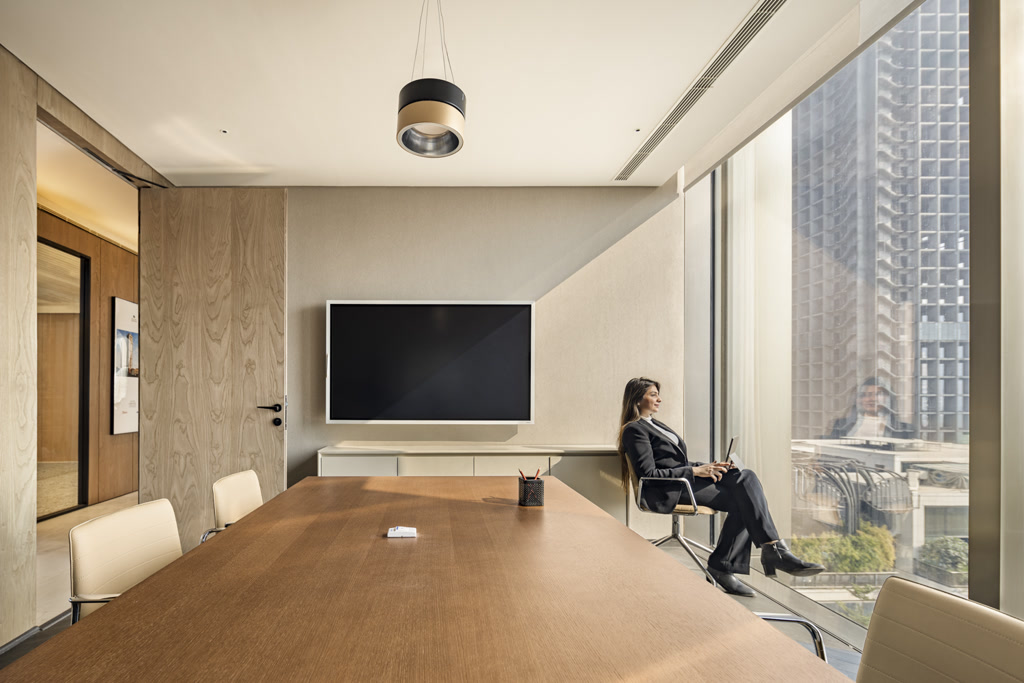
How did you approach designing a space that operates both as an experience centre and a functional workspace?
The approach was to avoid visual or functional segregation. Public-facing experience zones and internal workspaces are interwoven through a central circulation spine. Material continuity and visual openness ensure the space remains cohesive, while zoning allows for privacy and focus where required.
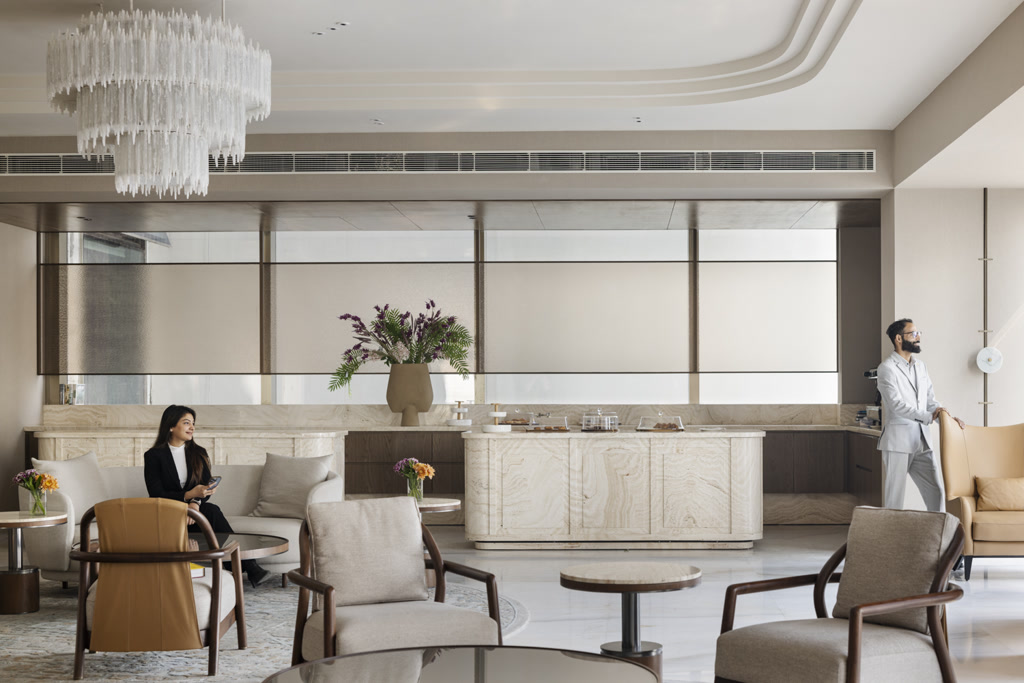
Could you walk us through the planning and zoning, and how movement through the space was envisioned?
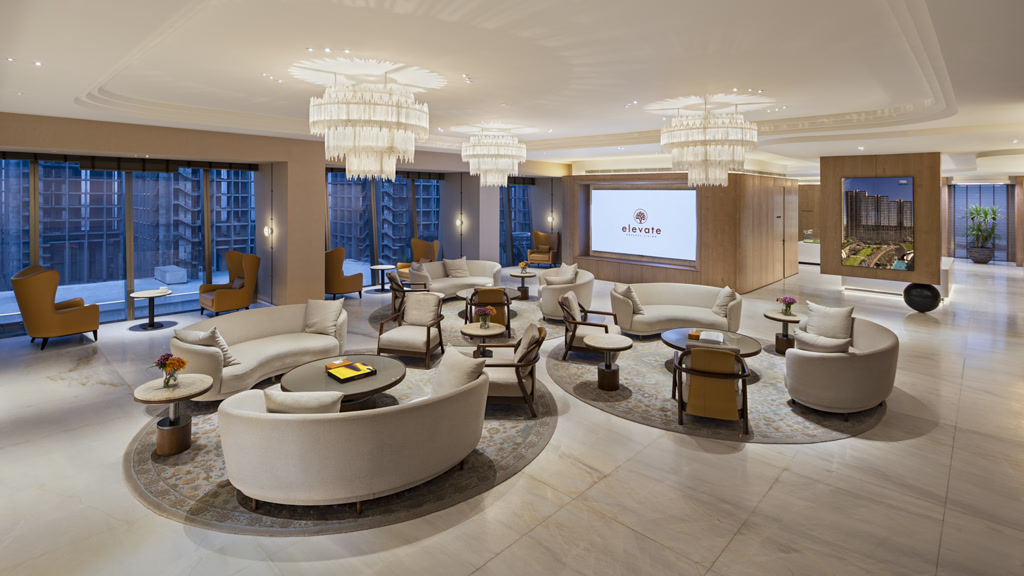
Movement is structured as a guided sequence rather than rigid corridors. From the lift lobby, users are drawn into reception and then naturally led into the central lounge and presentation area. From here, circulation branches, one side leading to collaborative and café-led spaces, and the other to meeting rooms and the boardroom. A secondary breakout zone introduces moments of pause, ensuring rhythm within movement.
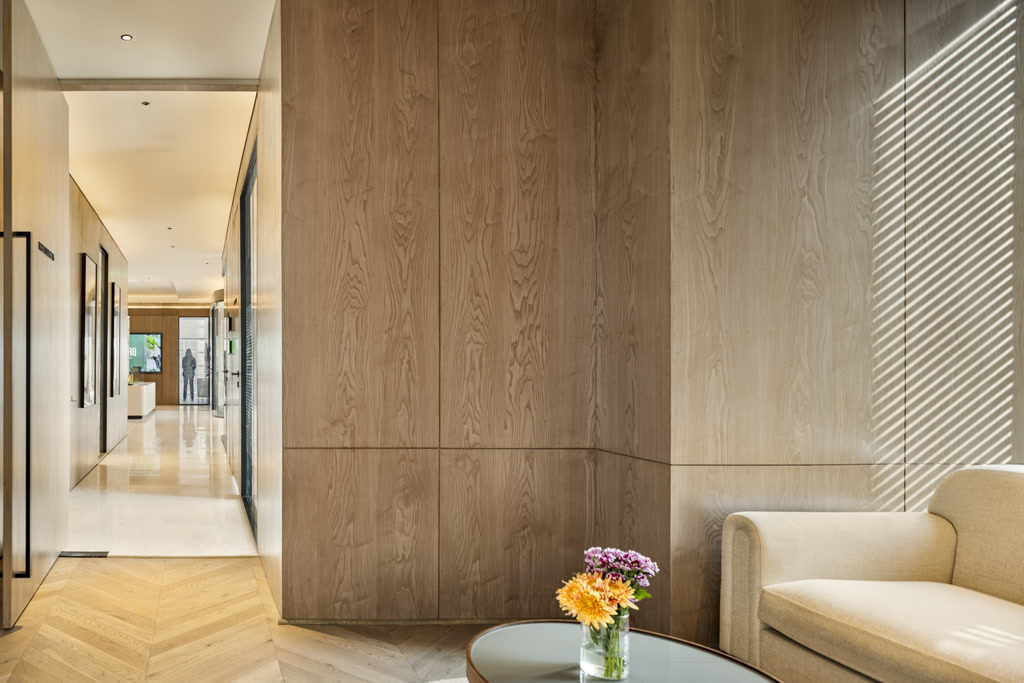
Flexibility is central to the project – how is this embedded in both planning and furniture systems?
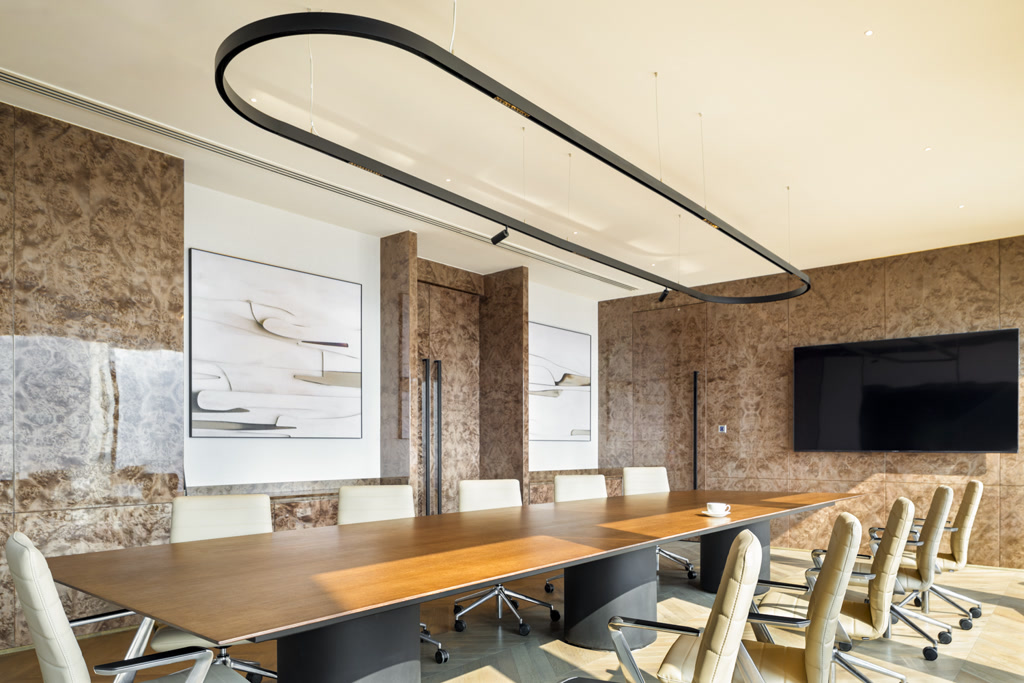
Flexibility is embedded at both macro and micro levels. Spatially, modular zoning and multi-access passages allow spaces to expand or overlap in function. At the furniture level, interchangeable seating clusters, curvilinear modules, and reconfigurable layouts enable quick transformation from a workspace to an event setting without altering the core structure.
What were the key site or structural constraints, and how did they shape or strengthen the final design?
The primary constraint has been working within a pre-defined built envelope and integrating immovable structural elements such as service cores. Rather than limiting the design, these conditions became anchors for planning, driving a layout that uses circulation and visual continuity to counter spatial compression and create a sense of expanded volume.
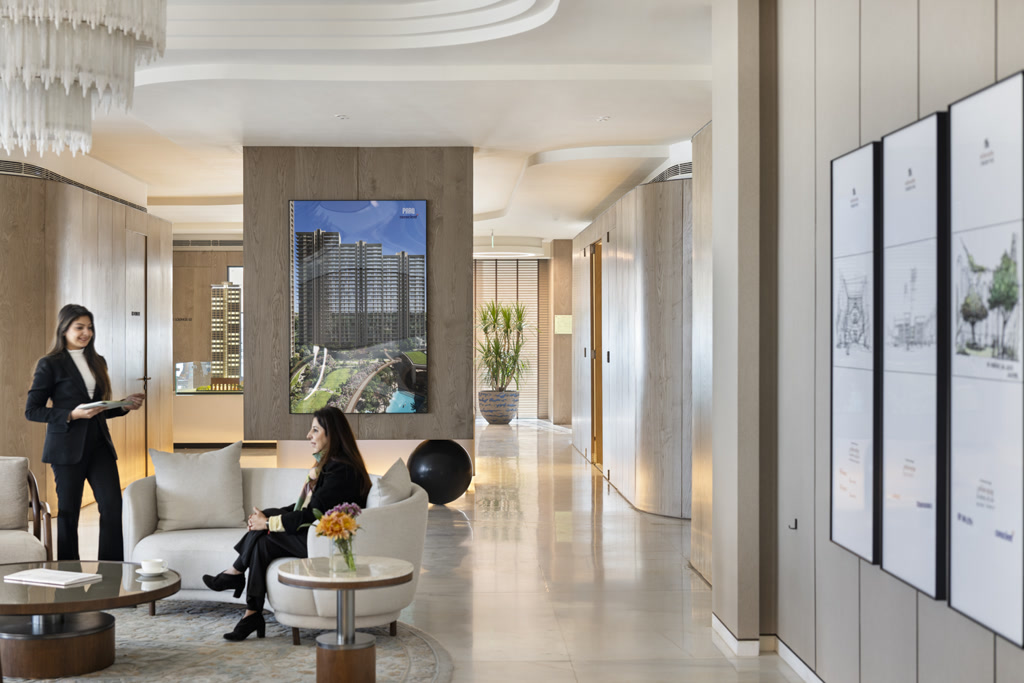
How would you describe the design language, and how does it respond to the client’s brand identity?
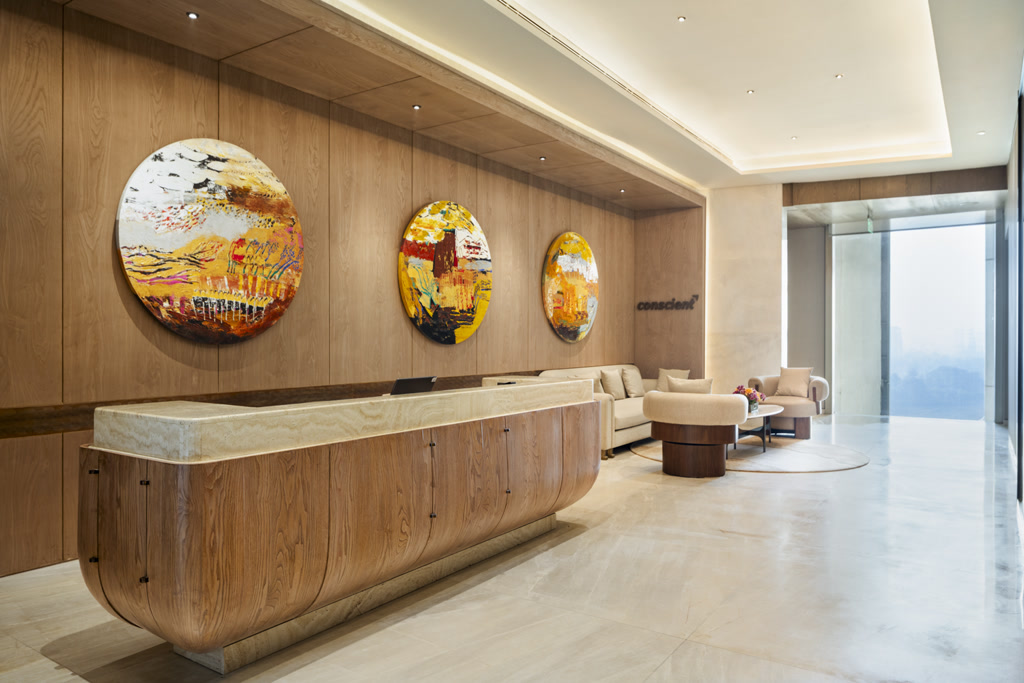
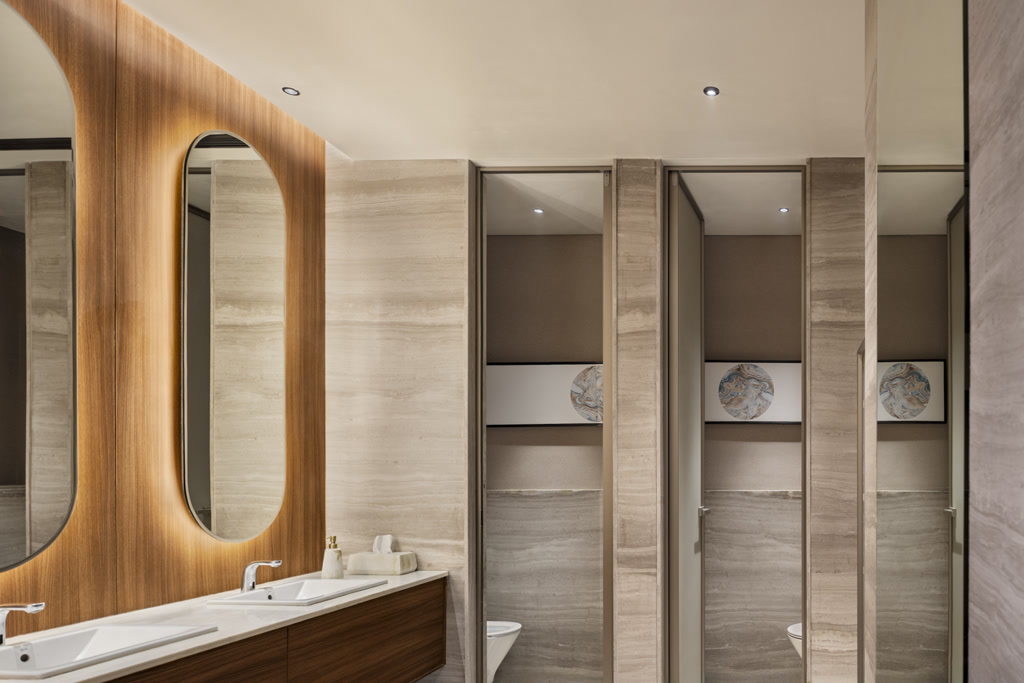
The design language is contemporary, restrained, and fluid. It aligns with the client’s identity by focusing on clarity, adaptability, and progressive spatial thinking. Neutral material palettes, soft curves, glazed expanses, and layered ceilings create a refined space that reflects a forward-looking institutional ethos.
What are some standout or defining elements in the project that create a lasting impression?
The fluid accent ceilings, interconnected circulation spine, and the multipurpose pop-up zone are key spatial drivers. Curated artworks, particularly sculptural circular pieces, along with terracotta accents and custom carpets, introduce moments of visual pause.
Could you share details of key collaborators, consultants, artists, or brands involved in the project?
The project brings together specialised execution partners for modular furniture systems, custom carpet development, lighting design, and curated art installations, ensuring alignment between spatial intent and material execution. Each collaborator has contributed to maintaining the balance between functionality and spatial refinement.
How has technology been integrated to enhance both presentation and day-to-day functionality?
Technology is integrated subtly through presentation infrastructure, modular lighting systems, and adaptable spatial configurations that support both static work and dynamic events. The focus remains on enhancing usability without overwhelming the spatial experience.
How has the space performed post-completion, and how does it support the client’s evolving needs?
The space has adapted to varied use, supporting everyday operations, client walkthroughs, and larger presentations without requiring structural shifts. Its modular nature allows it to evolve with shifting team structures and operational requirements without requiring spatial reconfiguration.
How does this project reflect your studio’s larger design approach, and what does it say about the way you see the future of workspaces?
The project reflects a larger belief in fluid, human-centric environments where function and experience coexist. Workspaces of the future are not static grids but adaptive systems that evolve with people, encourage interaction while maintaining clarity, and blur the line between operational efficiency and spatial experience.
What emerges from the Conscient Infra Sales Lounge is not simply a well-designed interior, but a redefinition of how commercial environments can operate. By dissolving rigid boundaries and embedding flexibility at every scale, the project positions itself within a broader shift — where workspaces are no longer fixed typologies, but responsive systems.
For Design Connect, this project underscores a critical idea: the future of spatial design lies not in form alone, but in its ability to adapt, perform, and evolve over time.