


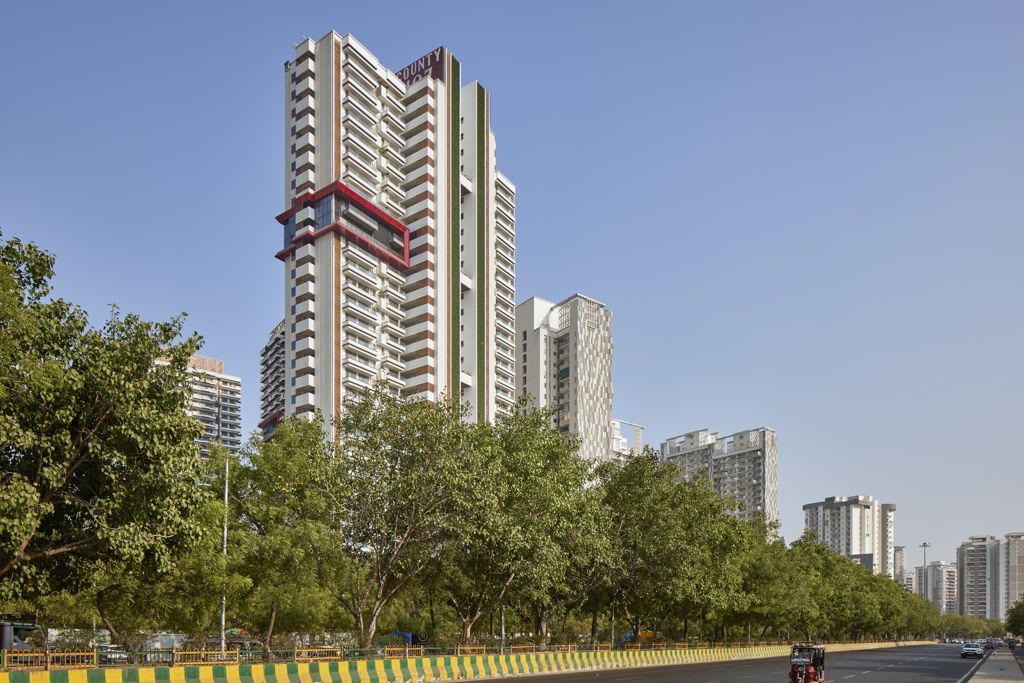
In Noida, County Group’s latest development foregrounds nature as lived experience — while Confluence unpacks the thinking behind its translation into a high-density residential model
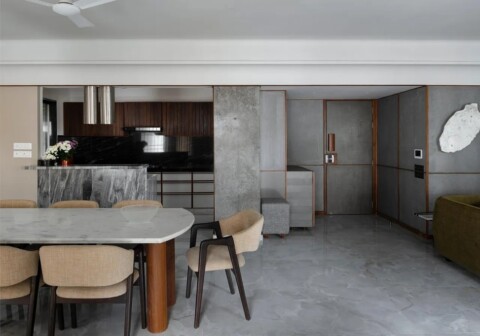
Located in Sector 107, Noida, County 107 is a luxury residential development spread across 4.9 acres, with a built-up area of approximately 14 lakh sq. ft. Developed by County Group, the project comprises large-format residences ranging from 3,500 to 6,500 sq. ft., structured around a central question: what does it mean to live amidst nature within the density of a city?
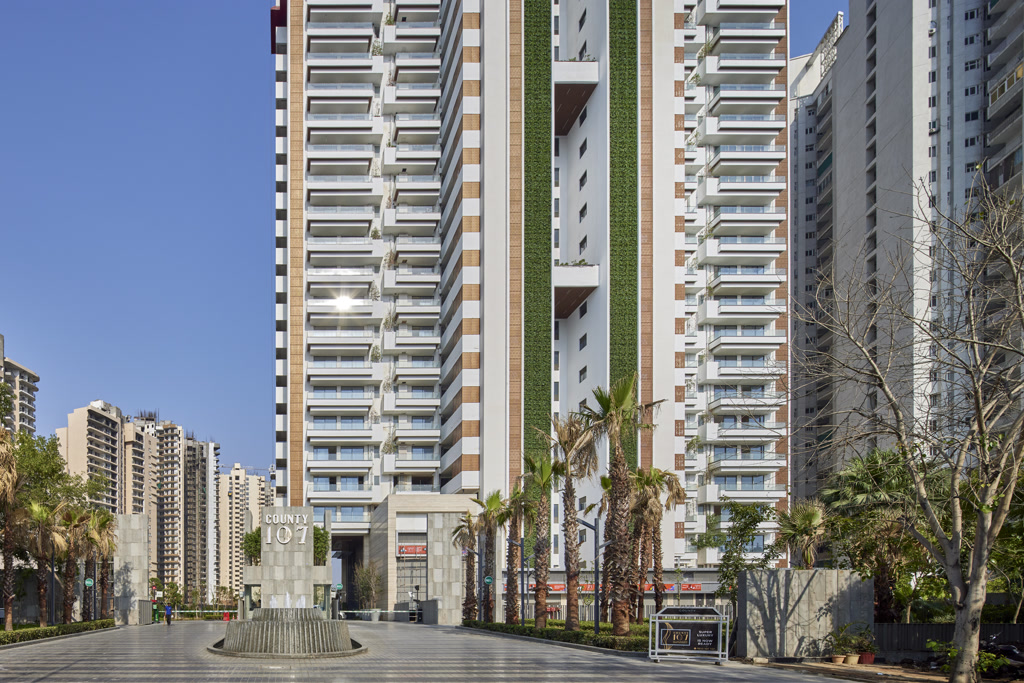
The design responds through the idea of a “vertical bungalow,” where each apartment integrates three trees within expansive private decks. Two 12-foot trees occupy wide balconies, while a third is positioned closer to interior spaces — recasting the traditional courtyard as an elevated, personal landscape. These green elements are supported by automated irrigation and external maintenance systems, ensuring that the experience remains seamless for residents.
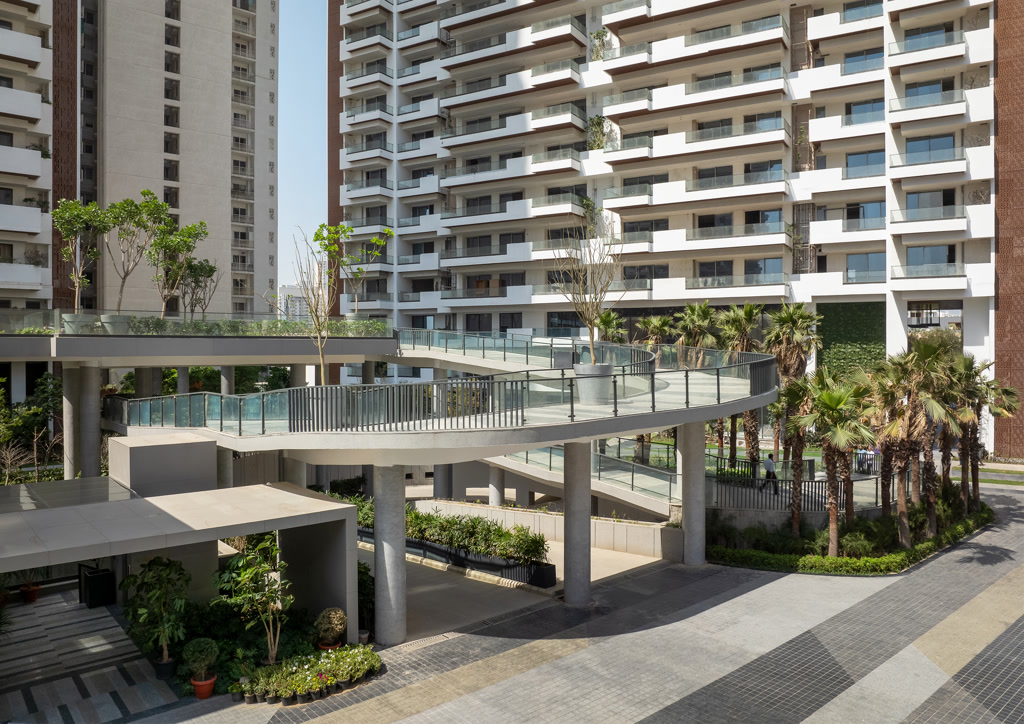
The site’s linear geometry informs the planning of four G+30 towers, each accommodating two apartments per floor, allowing one edge of the site to remain dedicated to landscaping. At upper levels, a series of penthouses introduce double-height living spaces, while at ground level, a landscaped welcome plaza replaces conventional vehicular roads. Environmental strategies — including solar integration, VR air conditioning, and a fully recycled wastewater system — work towards an IGBC Platinum certification.

In this conversation, Vishal Sharma, Founder Partner and Principal Architect at Confluence, discusses how these ideas were translated into a cohesive architectural and environmental framework.
County 107 is built around the idea of living amidst nature in the middle of a city – how did this core question shape the design from concept to execution?
The idea of integrating nature within a dense urban context became the foundational driver of County 107. From the outset, the design leveraged the site’s linear configuration to free up 43 per cent of the site for landscaping, ensuring that built form and open space were in balance. This intent extended vertically, with 670+ trees embedded into every apartment and carried upward across the towers. County 107 introduces nature at ground level and weaves it into daily life through private decks, planted balconies, high windows, and visual connections to surrounding green zones. This approach transforms the development into a biophilic ecosystem, allowing residents to experience nature as an intrinsic part of their everyday environment.
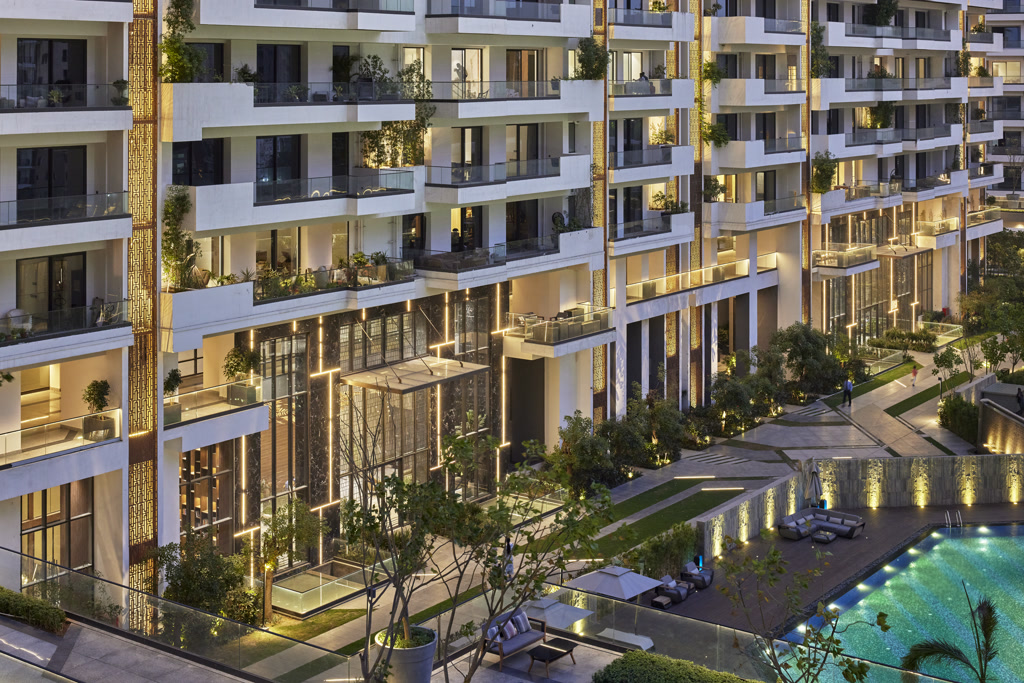
The concept of a vertical bungalow is central to the project – how did you reinterpret the traditional Indian courtyard within a high-rise format?
The traditional Indian courtyard, typically centred around a tree and acting as a social and climatic anchor, is reinterpreted here as a private, elevated green space within each residence. By integrating three trees per apartment: two majestic 12-foot-high trees and one smaller tree, and designing private decks spanning 10 to 12 feet in width and 40 to 50 feet in length, each home functions as a self-contained micro-environment. These green pockets serve as contemporary courtyards, bringing in light and ventilation, and maintaining privacy. This translation retains the cultural essence of courtyard living while adapting it to a vertical format, thereby allowing residents to experience the spatial and emotional qualities of a bungalow within a high-rise.
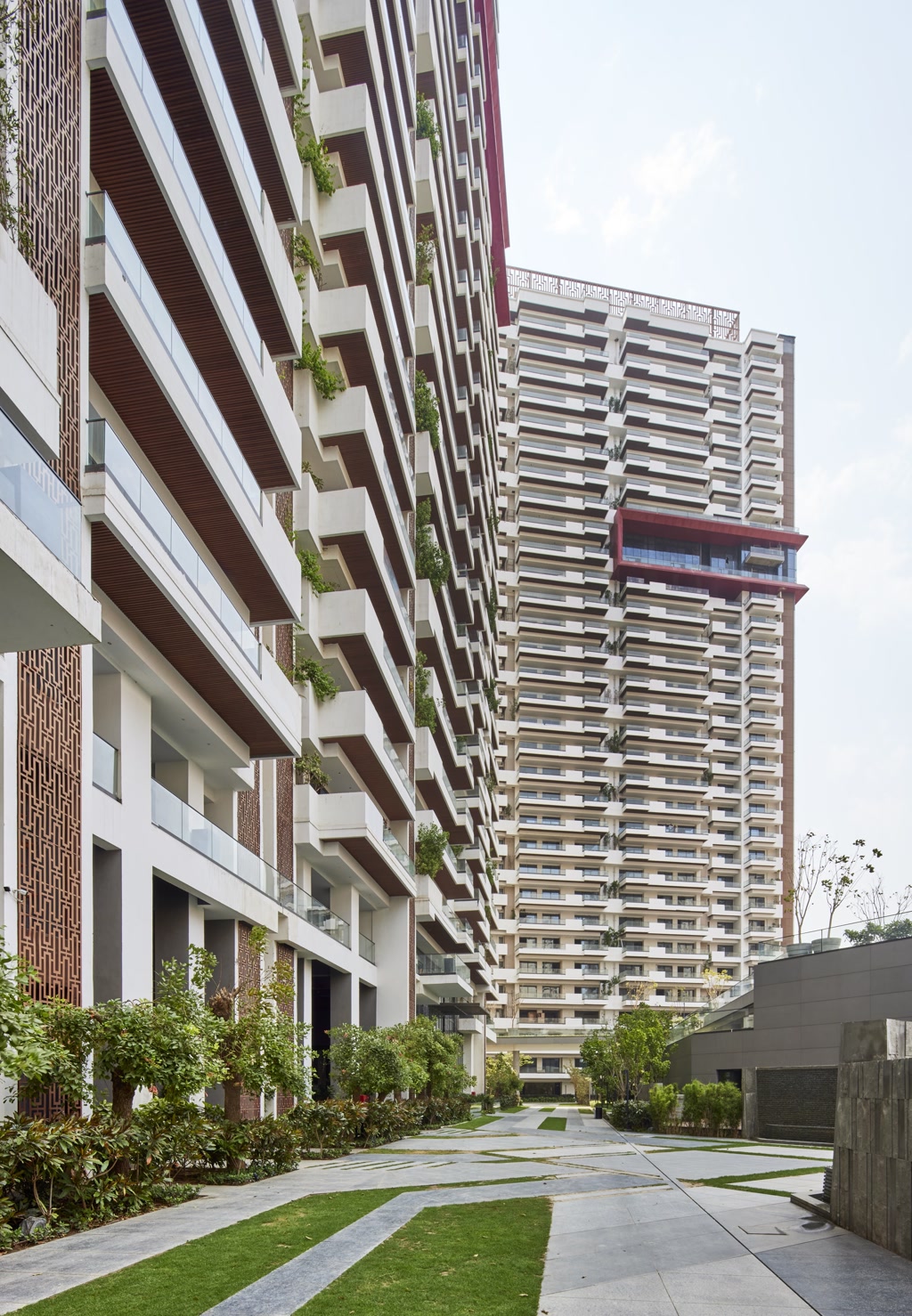
Integrating three trees into every apartment is a bold move – what were the key challenges in making this both practical and maintenance-free?
The principal challenge was zero resident intervention — trees at this scale inside an occupied home cannot depend on individual upkeep. Three systems work in concert to achieve this. An automated drip irrigation network delivers water and nutrients directly to each planter, removing any manual component. External pruning is handled via a dedicated cradle system, allowing maintenance crews to trim growth from outside the apartment without disturbing residents. Species selection was deliberate: drought-tolerant and native varieties were chosen for their resilience and compatibility with the microclimate of each deck. Structural loadings and planter depths were resolved at the design stage to accommodate long-term root and canopy growth. The result is a living element that requires no more attention from a resident than any other building system.
How did the site’s linear geometry and the C-shaped tower configuration influence privacy, views, and overall spatial planning?
The site’s thin, linear form was leveraged to create a highly efficient and exclusive layout. By limiting each tower to just two apartments per floor and adopting a C-shaped configuration, the design ensures maximum privacy. This arrangement allows one side of the site to remain entirely dedicated to landscaping, improving visual and environmental quality. The resulting spatial plan balances density with openness, so that each residence benefits from expansive views and a strong connection to the surrounding greenery.
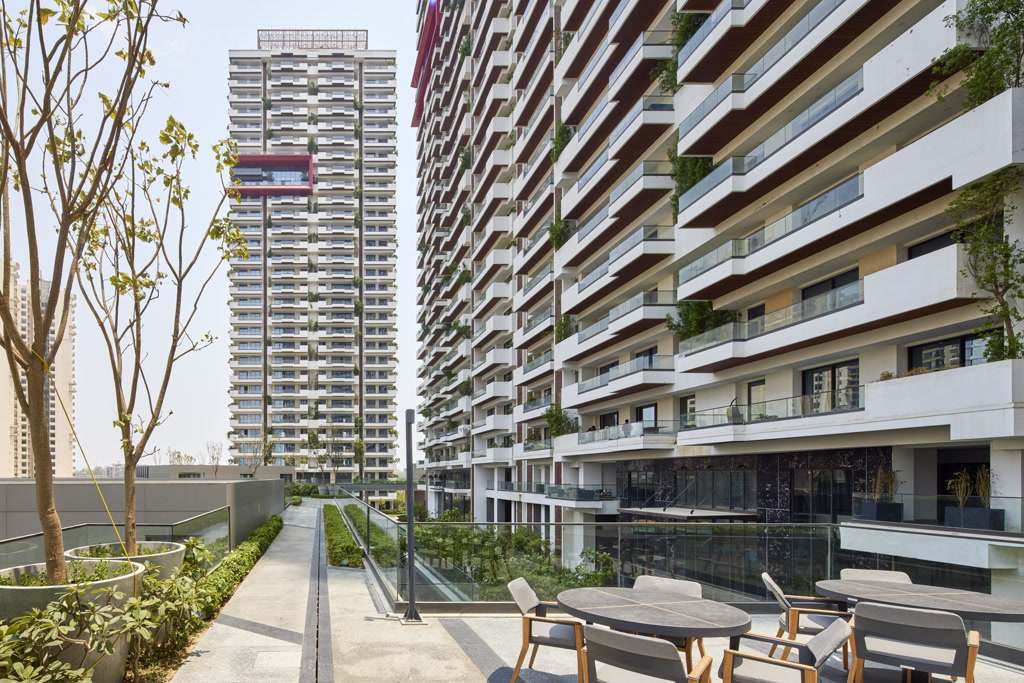
With large-format residences and exclusive penthouses, how do you define luxury in this project beyond just size and scale?
Luxury here is located in what money typically cannot buy within a high-rise: privacy, open sky, and the tactile presence of nature. Every apartment has a private deck — 10 to 12 feet wide, 40 to 50 feet long — that functions as an outdoor living space instead of a typical balcony. The three trees per unit extend this further, creating a green canopy that also acts as a natural air filter and shade element. At the upper end, the duplex penthouses on the 22nd floor are articulated as the “Red Box” — a bold, visually distinct volume with double-height living spaces and unobstructed views of Sector 47 Central Park. The entire proposition rests on a single idea: that a resident in a 30-storey tower should be able to step inside their front door and feel they are in a bungalow.
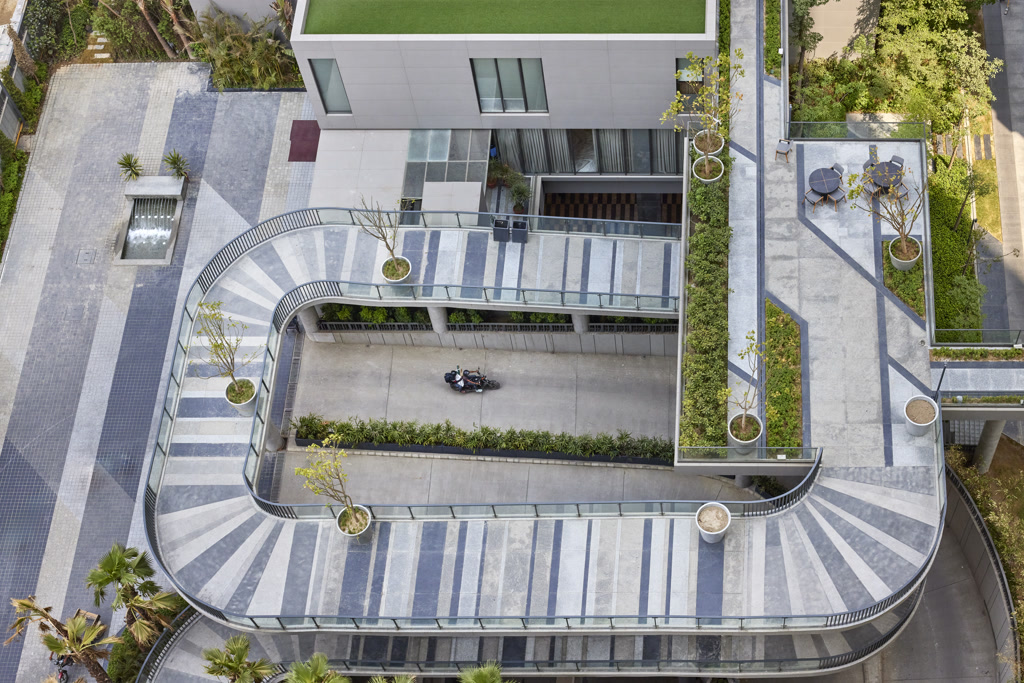
The project includes multiple sustainability strategies – how do these features translate into tangible benefits for residents?
The sustainability strategies translate directly into measurable outcomes for residents. Balconies spanning 10 to 12 feet in width and 40 to 50 feet in length, combined with high-performance glazing, create effective shading and a favourable microclimate, mitigating the heat island effect. VRF (Variable Refrigerant Flow) air-conditioning systems across all units and a 56.65 kWp rooftop solar PV installation — generating approximately 81,037 kWh per year and covering 83 per cent of common area lighting demand — reduce energy costs tangibly. A 250 KLD sewage treatment plant using MBBR technology treats 100 per cent of wastewater on site, with recycled water channelled to irrigation and flushing. These measures underpin the project’s IGBC Platinum certification and deliver lower operational costs and a healthier living environment for residents.
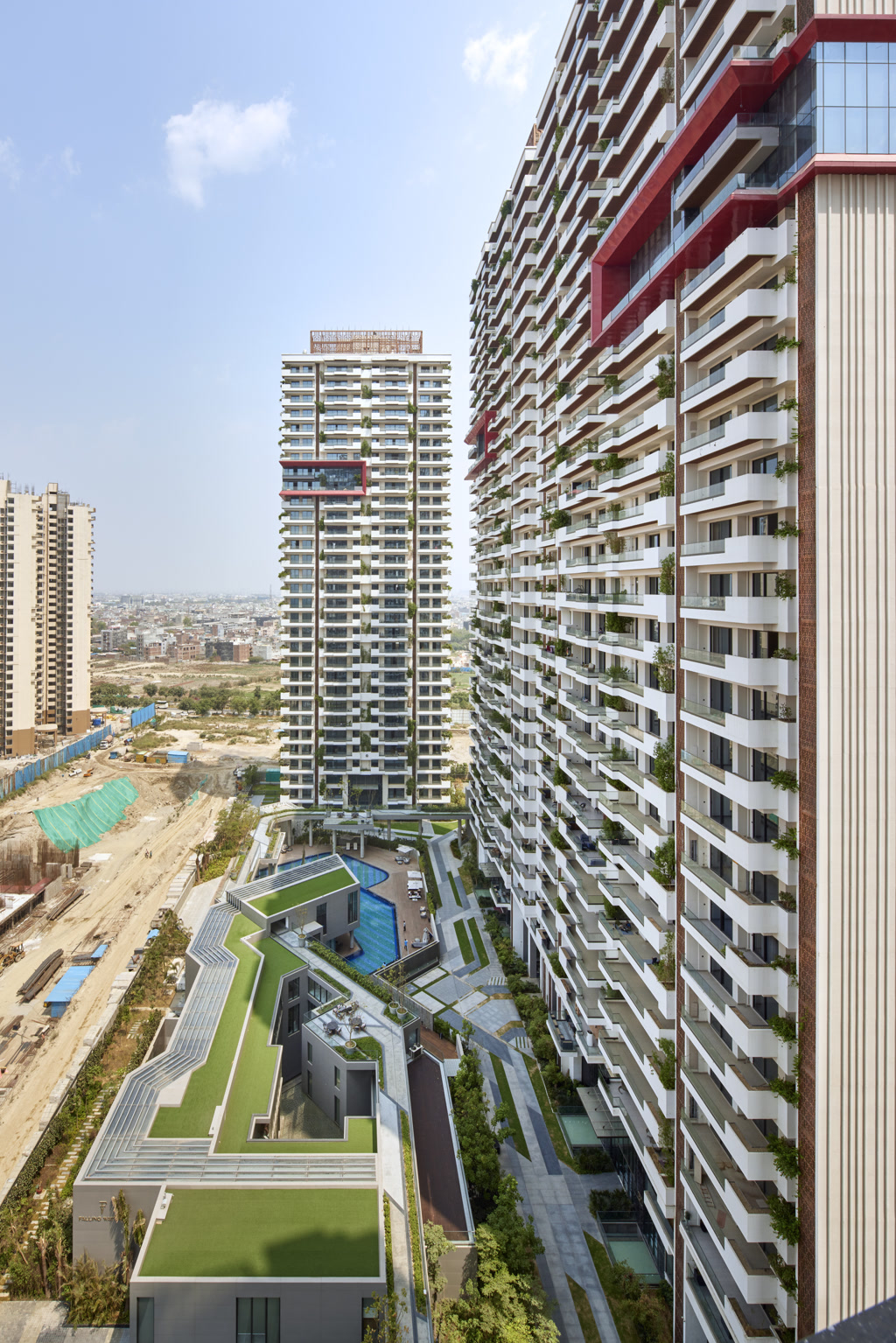
In a market filled with high-rise developments, what makes County 107 a future-forward residential model?
Across 4.9 acres with a built-up area of 14 lakh square feet, County 107 demonstrates that density and spatial quality are not mutually exclusive. Rather than maximising built coverage, the scheme dedicates 43 per cent of the site to landscaping — a figure that extends vertically through planted balconies on every floor of four G+30 towers. The layered landscape strategy, from ground-level walkways to a green-wrapped elevated bridge and rooftop plantings, creates an interconnected ecosystem rather than an isolated amenity. By combining the intimacy of bungalow living with the efficiencies of a high-rise, County 107 presents a progressive approach that responds to evolving urban lifestyles and environmental concerns.
Connect Online@www.confluenceworld.in