



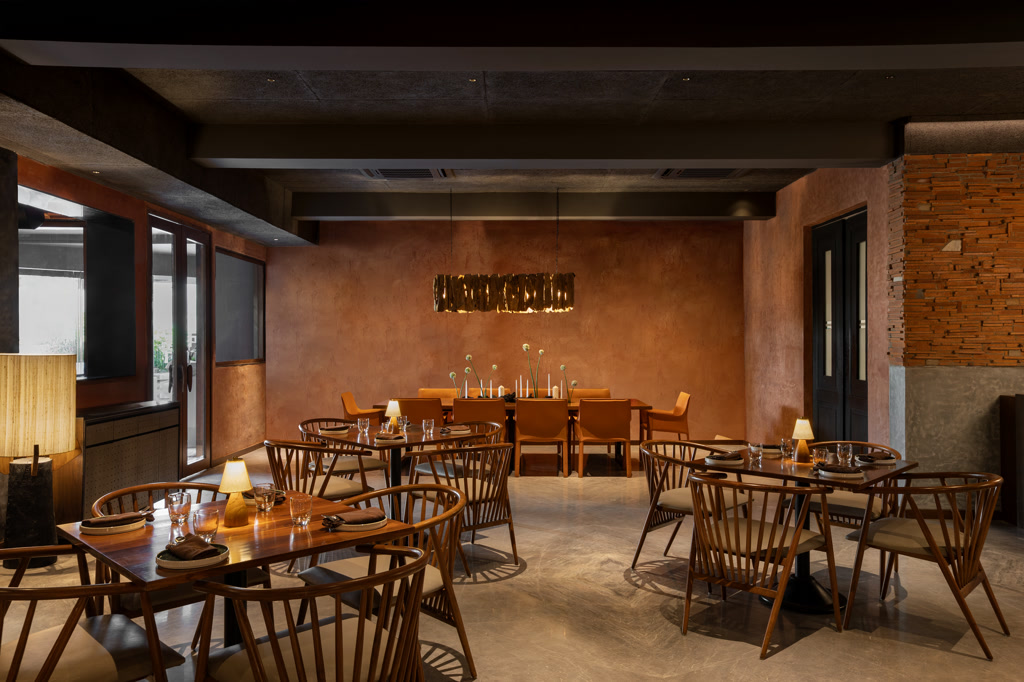
Flint distills the act of cooking over flame into a controlled architectural language where material, light, and spatial rhythm do the work
Located within the National Centre for the Performing Arts along the Arabian Sea in South Mumbai, Flint is built around a single, uncompromising idea: fire. Not as spectacle, not as styling — but as a force that shapes how we gather, cook, and inhabit space. Conceived with chefs Rahul Akerkar and Jaideep Mukherjee for the Aditya Birla New Age Hospitality Group, the project pushes back against the polished neutrality of contemporary dining, choosing instead something more direct, more physical, and far less mediated.
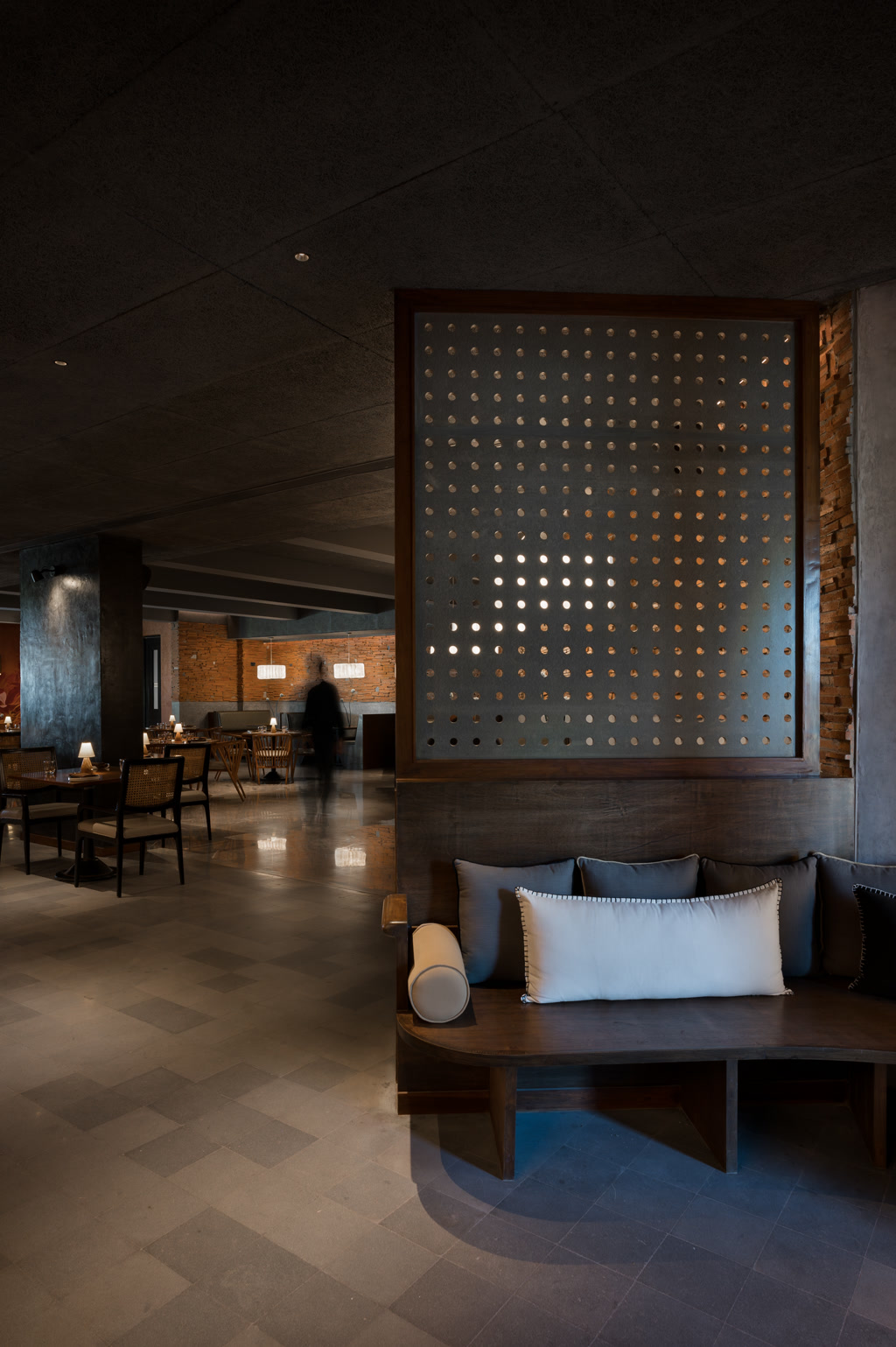
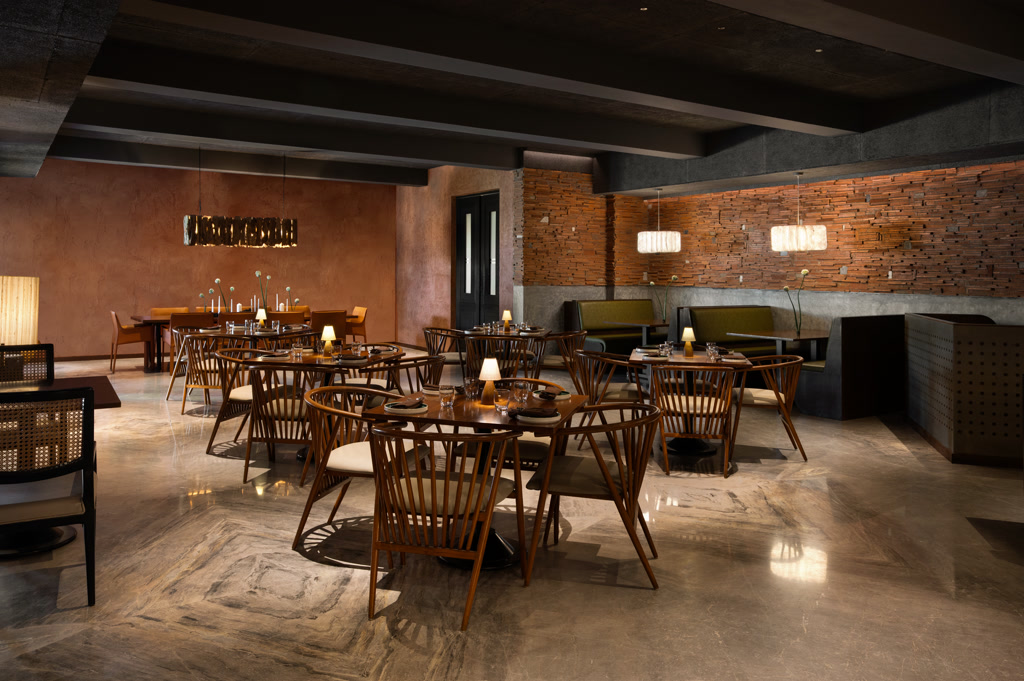
The reference point is familiar — campfires, open grills, food over flame — but the translation is controlled. There is no nostalgia here, only reduction. Greys, brick reds, rusted tones, and sooty blacks set the register. Walls are built from thin waste bricks, layered continuously to produce a surface that is uneven, tactile, and deliberately unresolved. It reads less as cladding and more as residue — material altered by heat, marked by time, and left exposed.
IPS finishes in charred, earthy tones extend this condition, blurring where one surface ends and another begins. The space holds together, but never settles. It feels active — caught in a state of slow transformation. Material, here, is not applied. It accumulates.
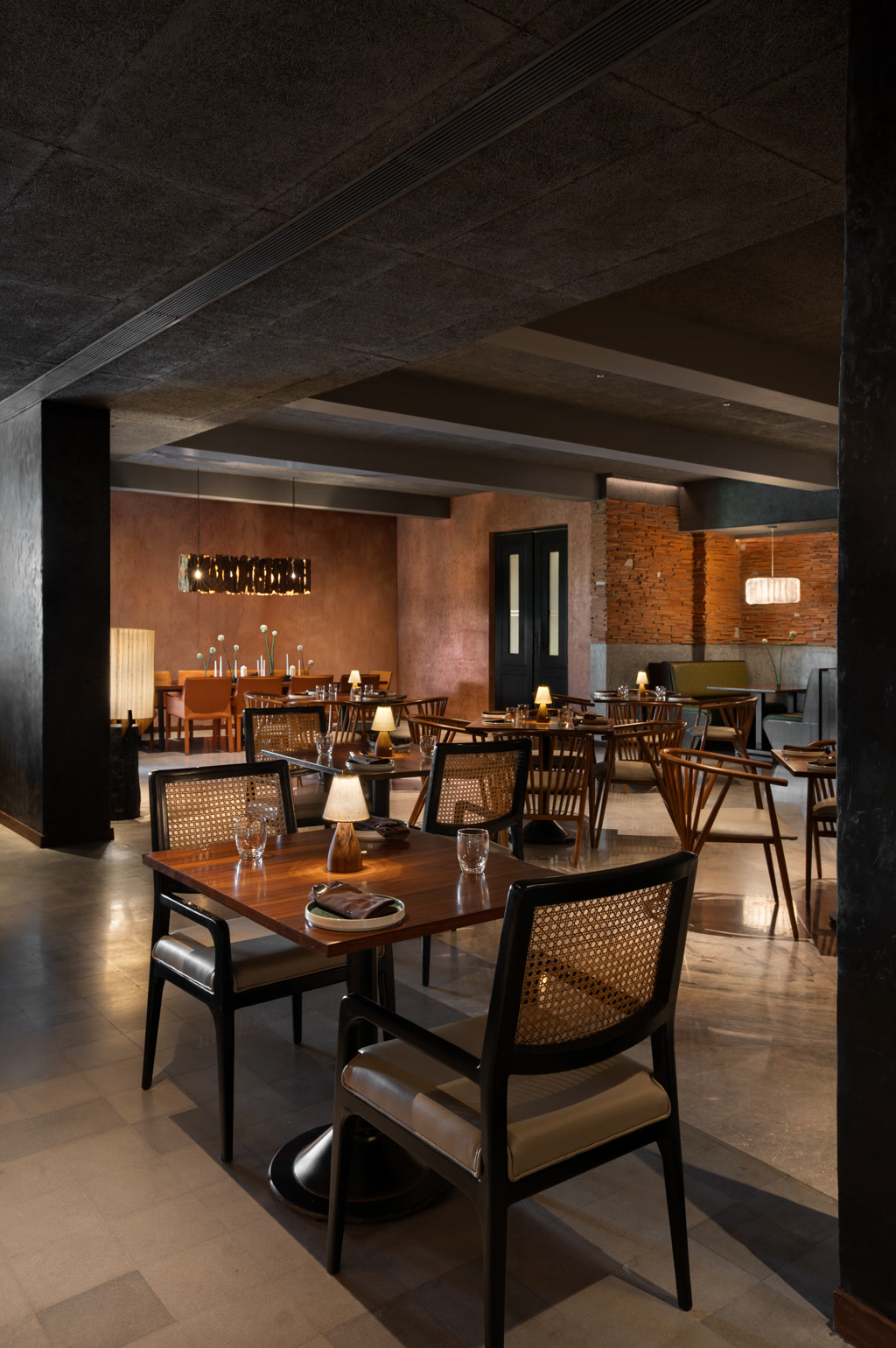
The ceiling refuses to disappear. Finished in grey-painted Anutone board, it carries a fine grain while quietly absorbing the acoustics of a dense, high-energy room. It does its job without theatrics, but it is not neutral. It completes the enclosure with the same restraint that defines the rest of the space.
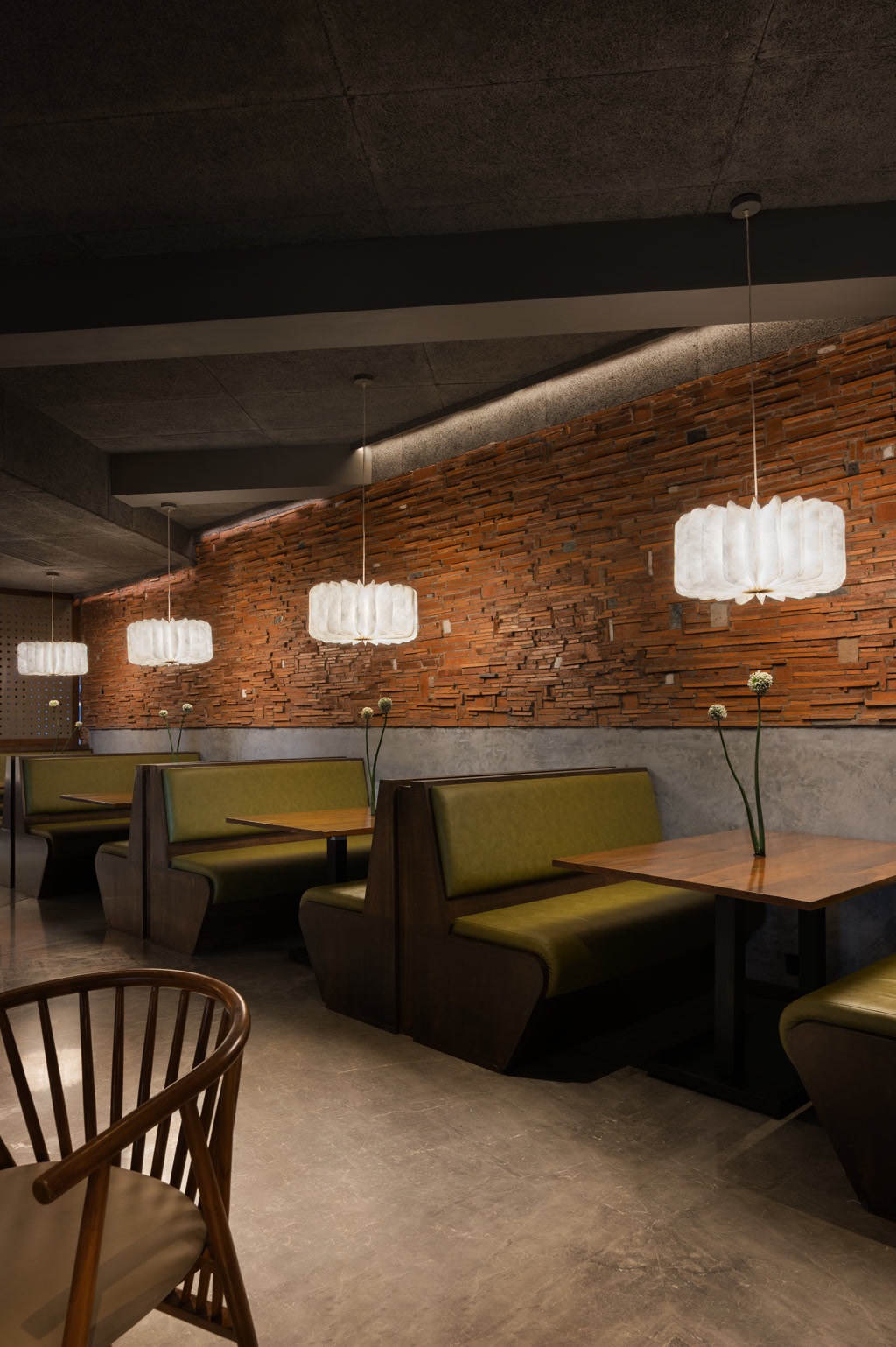
Light is tightly controlled. Daylight is introduced, but only just — filtered through new openings that keep the interior grounded. The real work happens after. Artificial lighting is precise and contained: warm pools over tables, nothing more than what is needed. The effect is immediate — intimate zones that hold people in place, each table its own centre of gravity. The reference to embers is clear, but never overstated.
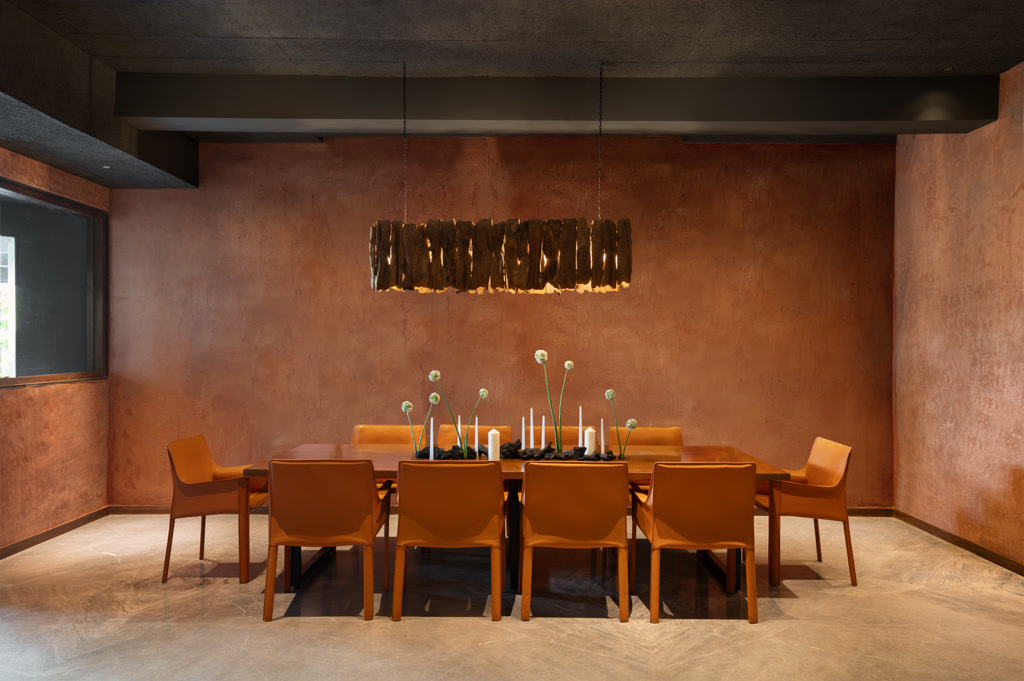
The plan is equally disciplined. A long communal table anchors the room, establishing a collective centre. Around it, island tables shift and adapt. Along the edges, booths pull back into quieter, more contained pockets. The hierarchy is clear without being rigid. At the centre of it all, a brass bar — heavy, patinated, and quietly luminous. It doesn’t shine; it holds light. When illuminated, it glows with a low intensity, closer to a burn than a sparkle.
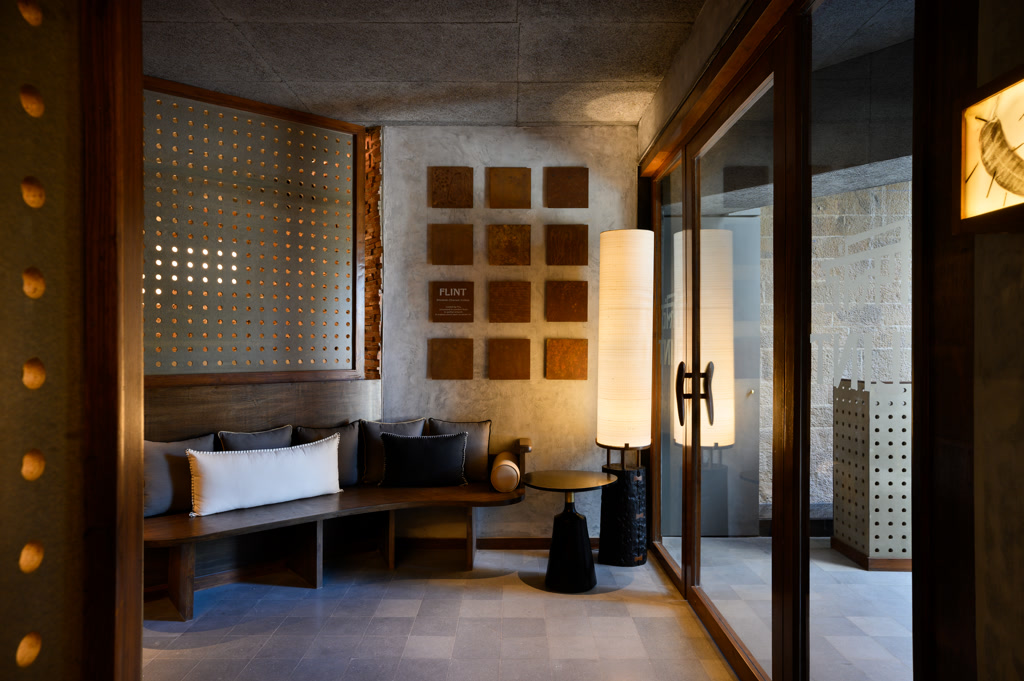
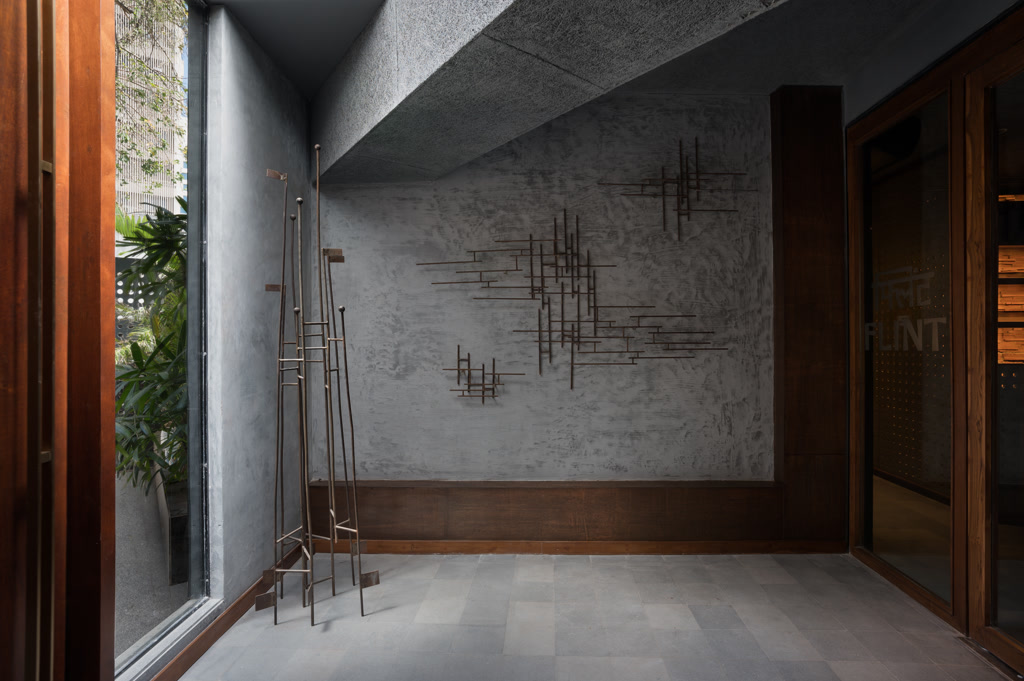
Beyond the primary surfaces, the project sharpens its position through detail. Mild-steel elements are left raw — coat hangers, partitions — nothing concealed, nothing overworked. At the entrance, corten steel plates are chemically treated with copper sulphate and acidic applications, producing a surface that is unpredictable, unstable, and constantly shifting in appearance. It is less an artwork and more a process captured mid-way. Elsewhere, backlit wax panels carry vegetable imprints and marks of culinary tools — direct, tactile, and unembellished.
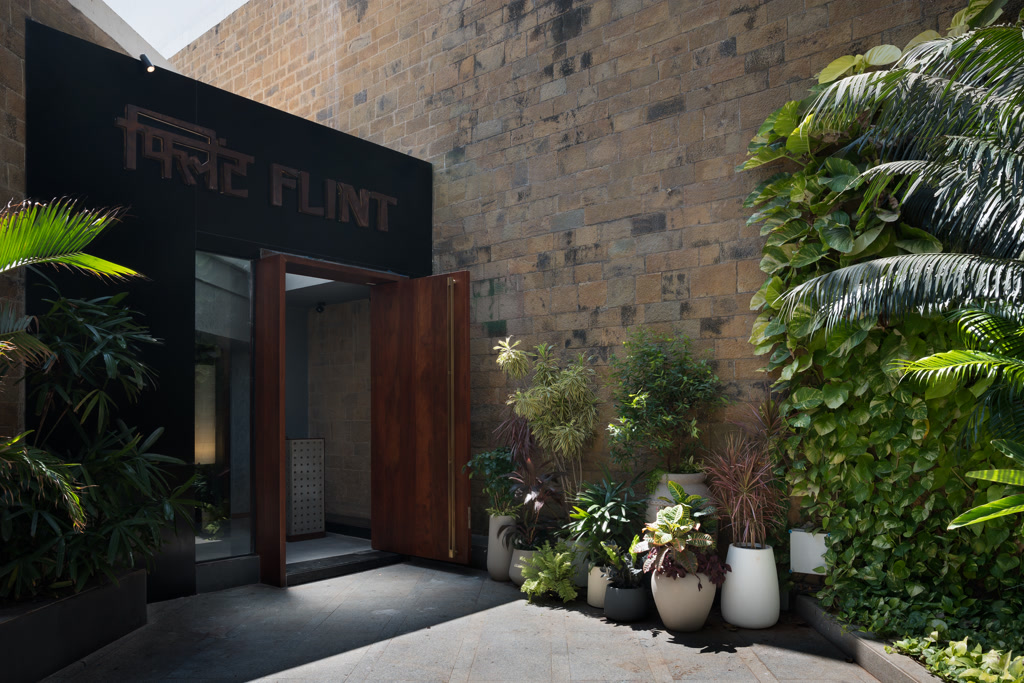
The transitions are handled with the same control. A landscaped entry of local plant species slows the approach without turning it into spectacle. The bread and dessert station continues the language through perforated partitions and layered displays. There are no breaks in logic — only shifts in scale.
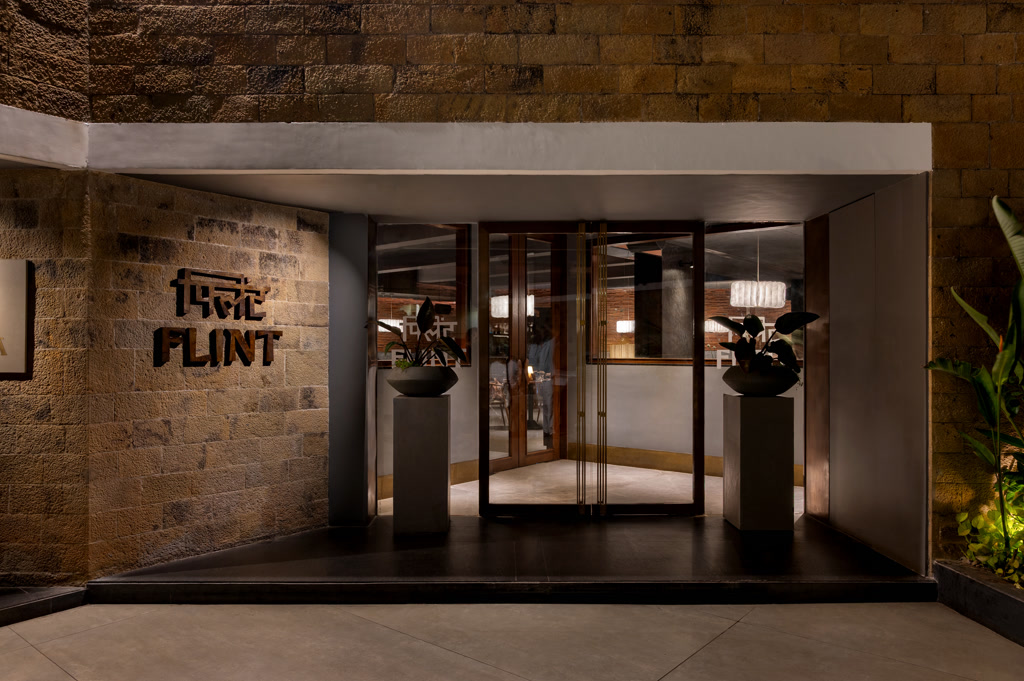
Flint does not try to impress. It does not chase novelty or visual excess. Instead, it commits — fully — to its material and its premise. Fire is not referenced; it is embedded in how the space is made, how it feels, how it operates.
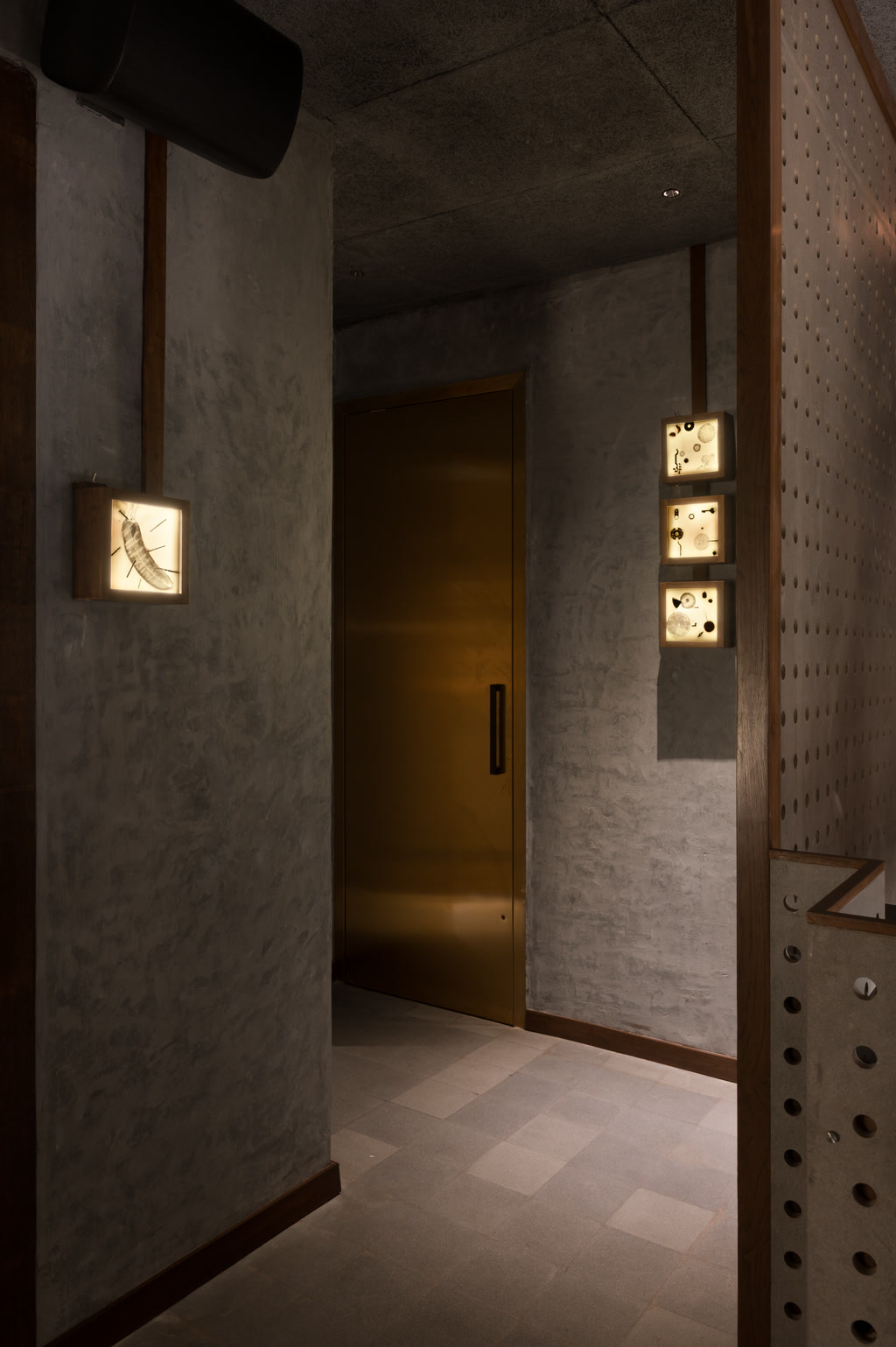
What remains is stripped back and precise: a room shaped by heat, held together by material, and activated by people. Not a reinterpretation of dining, but a return to its most fundamental condition—gathering, eating, and staying a little longer than intended.
Photographs : Neelanjana Chitrabanu (@neelenjanachitrabanu)
Connect Online@www.instagram.com/drawstudiomumbai/ | drawstudiomumbai@gmail.com