


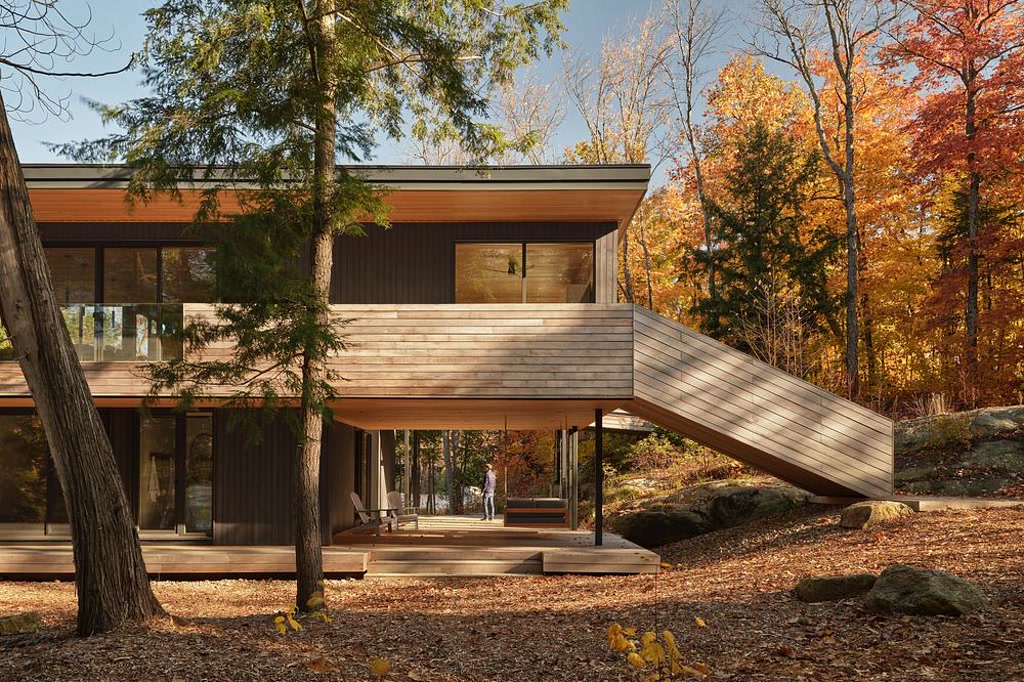
Set within Ontario’s wilderness, Dubbeldam Architecture + Design crafts an elevated, off-grid dwelling that balances accessibility, material continuity, and an immersive relationship with landscape.
In an era where remote living is often aestheticised rather than meaningfully resolved, Long Lake Cottage in Muskoka, Canada, positions itself through a quieter, more deliberate lens. Designed by Dubbeldam Architecture + Design, the project does not treat the off-grid condition as novelty, but as a framework — one that informs siting, planning, materiality, and the rhythms of inhabitation.
Located on a secluded, forested peninsula along a motorboat-free lake in Ontario, the site is defined as much by its isolation as by its ecological sensitivity. The clients — an urban couple with a longstanding connection to the land — occupied the site through camping before construction, allowing the eventual architectural response to emerge from observation rather than imposition. What follows is not an object placed within nature, but a dwelling calibrated to it.
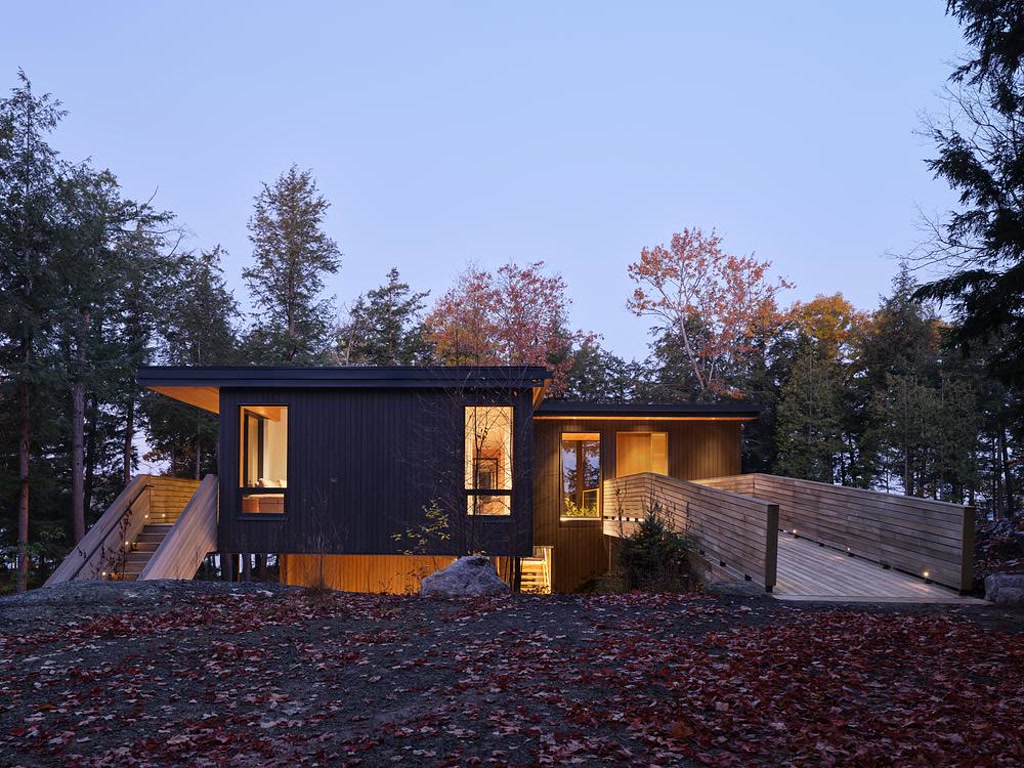
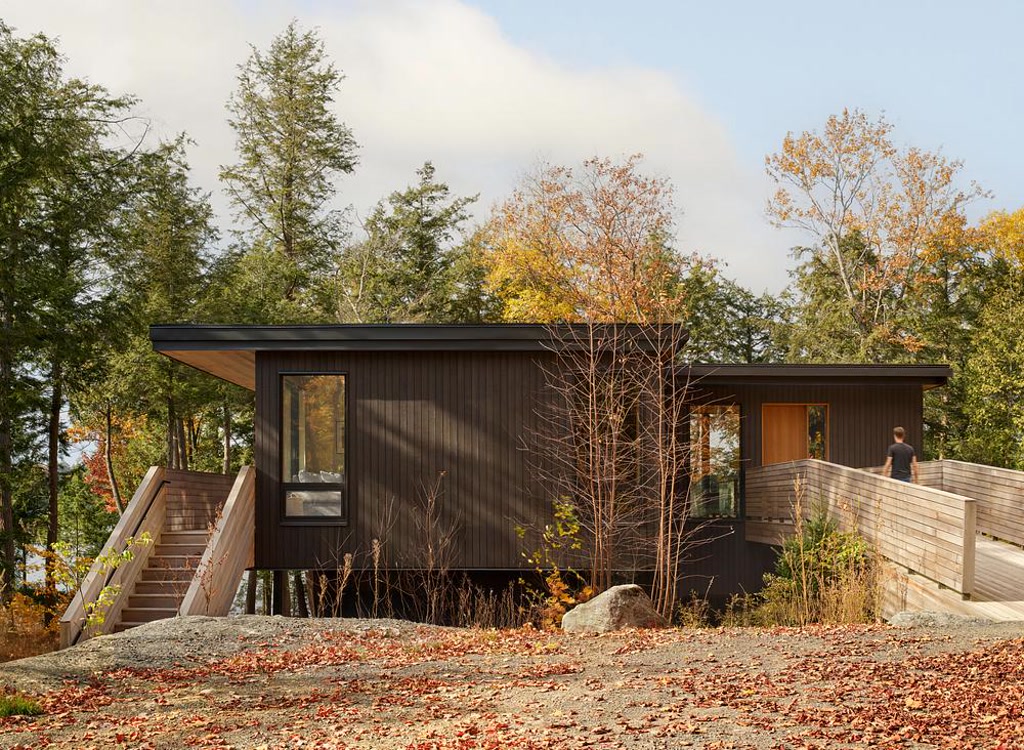
The sectional strategy becomes central to this calibration. Rather than asserting presence at ground level, the cottage embeds itself partially below a ridge of exposed bedrock, concealing its lower volume upon approach. Entry occurs via a bridge that leads directly to the upper level, where the primary living spaces are located. This inversion — placing communal functions above and private spaces below — reframes the domestic hierarchy. Living areas occupy the tree canopy, while bedrooms remain anchored to the forest floor.
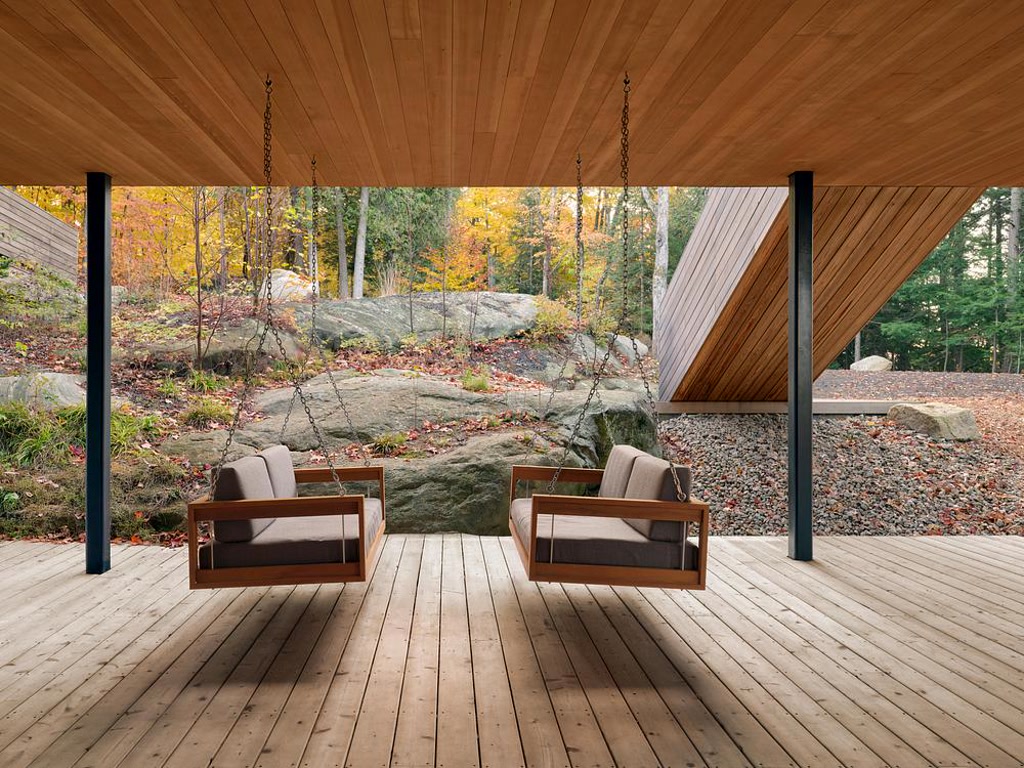
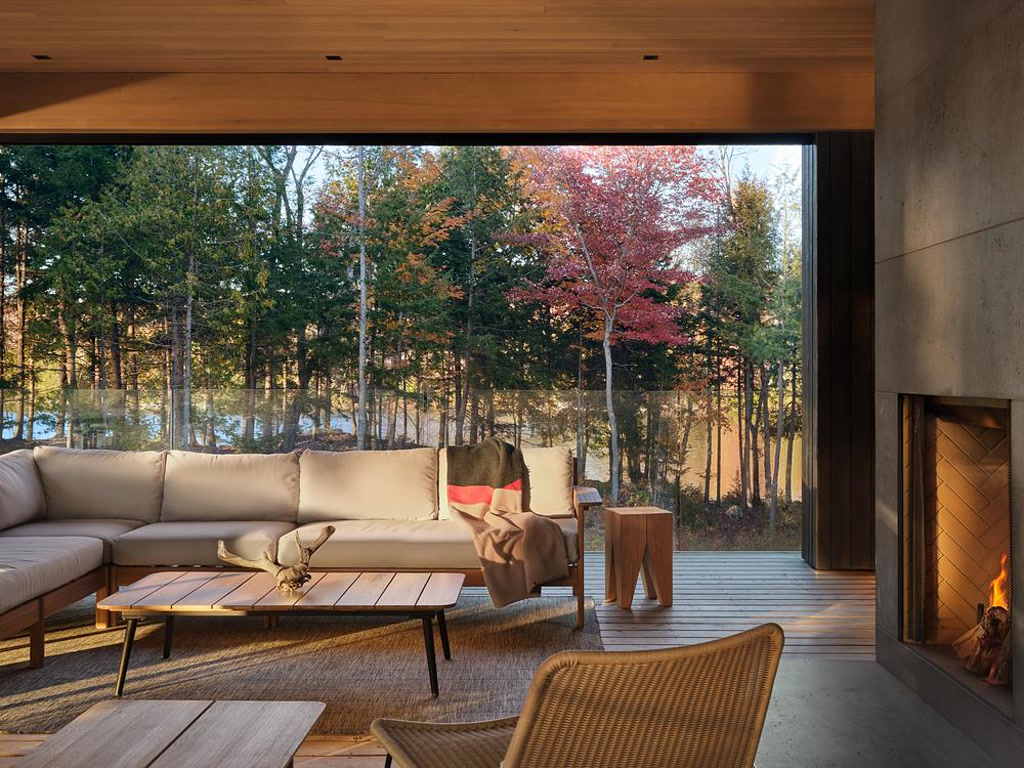
This decision is not merely spatial, but experiential. The upper level is conceived as a continuous, open-plan environment where the boundaries between interior and exterior are deliberately softened. Wrap-around glazing and sliding openings extend the living space onto a deck with multiple exposures, allowing light, air, and seasonal change to permeate daily life. The living room, anchored by a cast concrete hearth, is organised as a place of gathering, with seating arrangements and a built-in 17-foot window bench reinforcing a collective orientation towards the landscape.
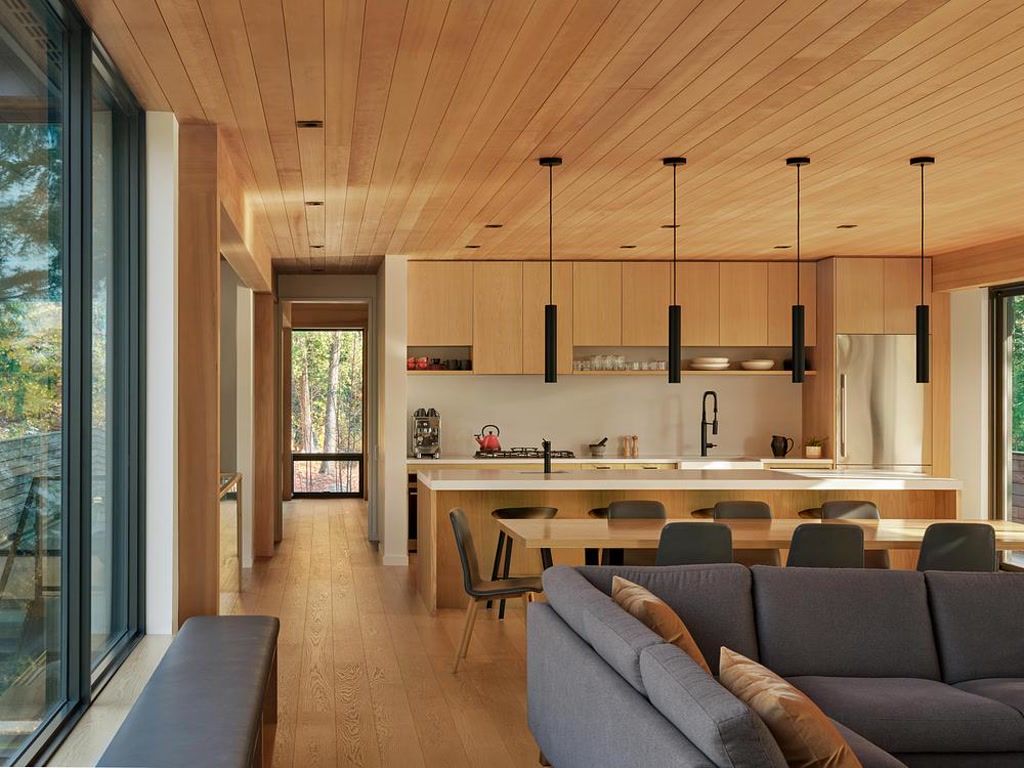
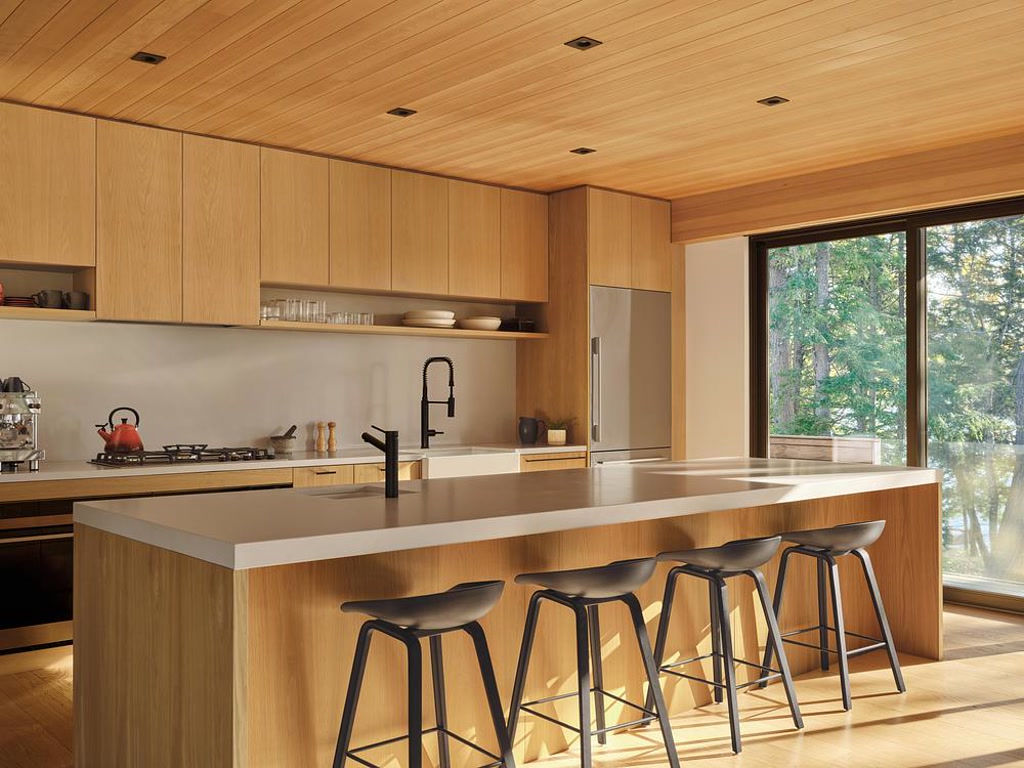
Material choices operate with similar restraint and precision. White oak millwork, engineered stone surfaces, and a ceiling of continuous western hemlock boards establish a palette that is both tactile and subdued. The continuity of the hemlock ceiling — from interior to exterior — becomes a critical detail, dissolving thresholds and reinforcing the sense of the building as an extension of its surroundings rather than a contained volume.
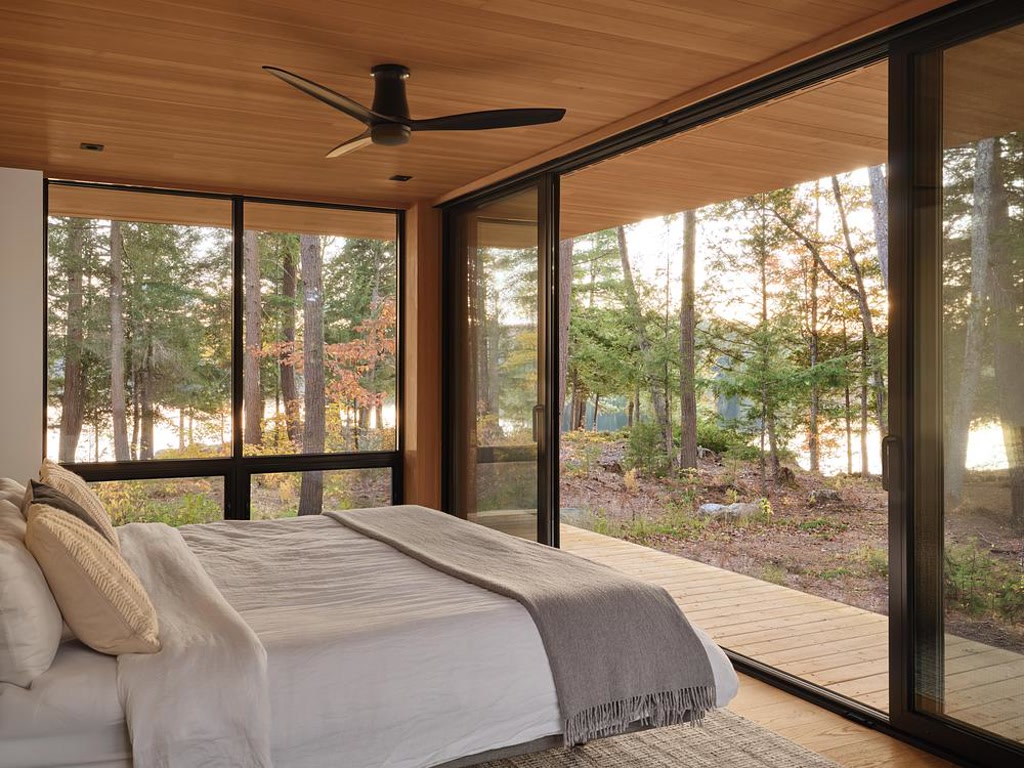
Below, the private realm adopts a different register. Five bedrooms open directly onto the forest through floor-to-ceiling glazing and independent access points, prioritising both privacy and immediacy of connection to the site. The primary suite extends this relationship further, incorporating an outdoor shower — an understated gesture that recalls the clients’ earlier experience of inhabiting the land through camping. An additional accessible bedroom on the upper level ensures that the house accommodates multigenerational use without compromise.
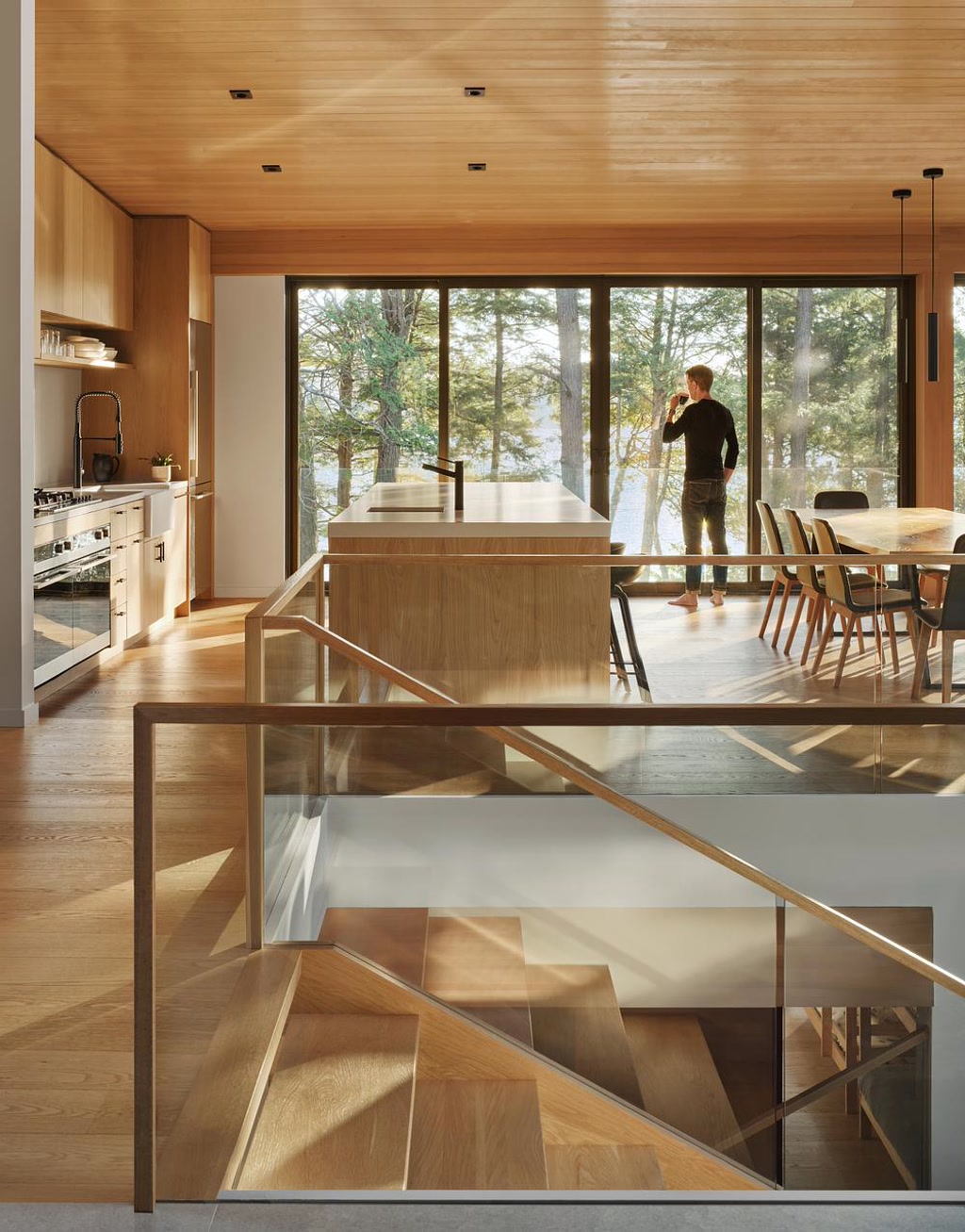
The planning is further articulated through a series of outdoor spaces embedded within the building’s form. The offset volumes create two distinct decks: an upper deck that extends the communal areas outward, and a lower, more sheltered space that engages closely with the bedrock and benefits from natural cooling. These are not ancillary additions, but integral to how the house is occupied — mediating between exposure and enclosure, openness and retreat.
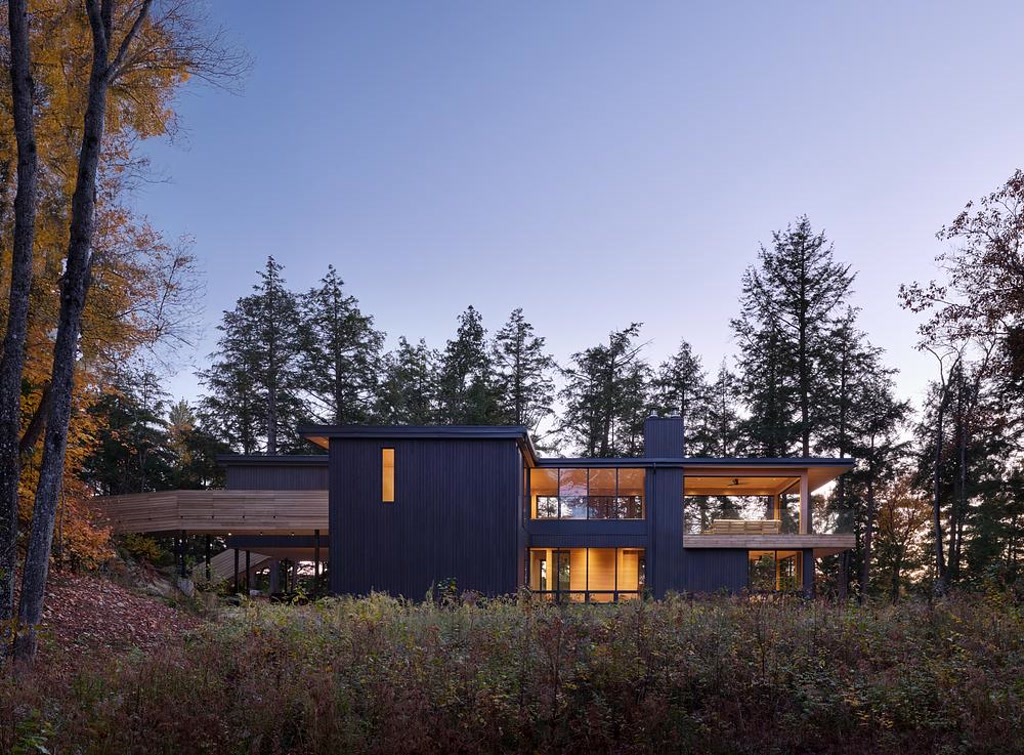
Sustainability, in this context, is not applied as a layer, but embedded within the project’s logic. Operating entirely off-grid, the cottage is powered by a solar array and constructed using sustainably harvested and locally milled wood. The exterior — finished in greyed cedar and charcoal-stained spruce — recedes into the forest, while the interior maintains a lighter, warmer palette. The building’s environmental performance is supported as much by these material decisions as by its siting, orientation, and passive strategies.
What distinguishes Long Lake Cottage is not the articulation of a remote dwelling, but the precision with which it negotiates its conditions. It resists both excess and spectacle, instead offering a measured response to questions of access, sustainability, and inhabitation. In doing so, it reframes the idea of the retreat — not as escape, but as alignment with context, climate, and time.
Photo Courtesy: Riley Snelling
Connect Online@www.dubbeldam.ca