


Beyond Designs Studio introduces a fine-dining destination within the historic Teen Murti Bhavan estate, where architecture, landscape and heritage remain in quiet conversation.
Forest Table has quietly arrived at one of New Delhi’s most layered historic settings. Designed by Beyond Designs Studio, the new fine-dining destination takes over the rooftop terrace of the Nehru Planetarium inside the Teen Murti Bhavan estate. It spans more than 10,000 sq. ft., introducing a major new hospitality space without overshadowing the landscape and architectural history around it.
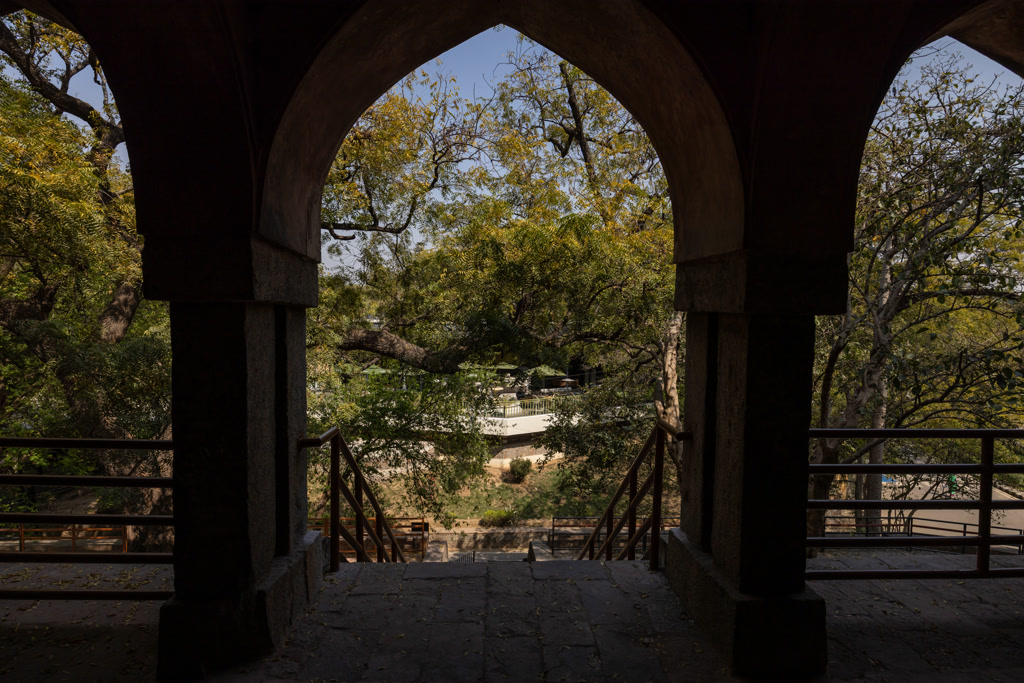
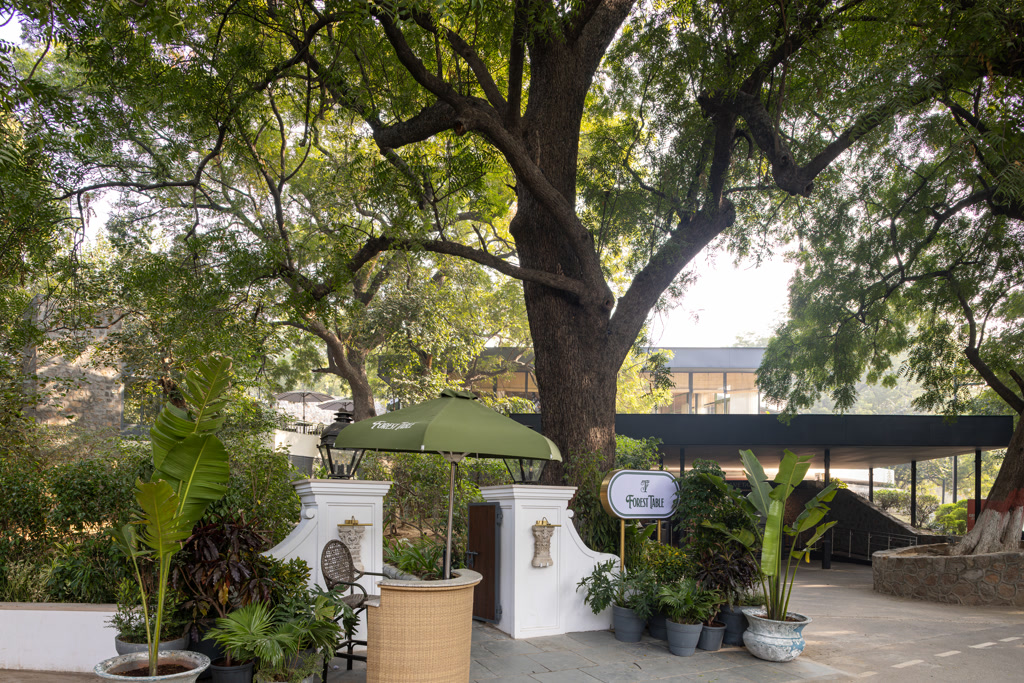
You really can’t separate the setting from the experience here. The estate is 30 acres. It holds the 700-year-old Tughlaq-era Kushak Mahal, Teen Murti Bhavan, the Nehru Memorial Museum and Library, and the Prime Ministers’ Museum. The planetarium sits at the northern edge, surrounded by lawns, old trees, and peacocks. The designers didn’t treat this as an isolated project. They inserted the restaurant right into this dense historical and natural landscape.
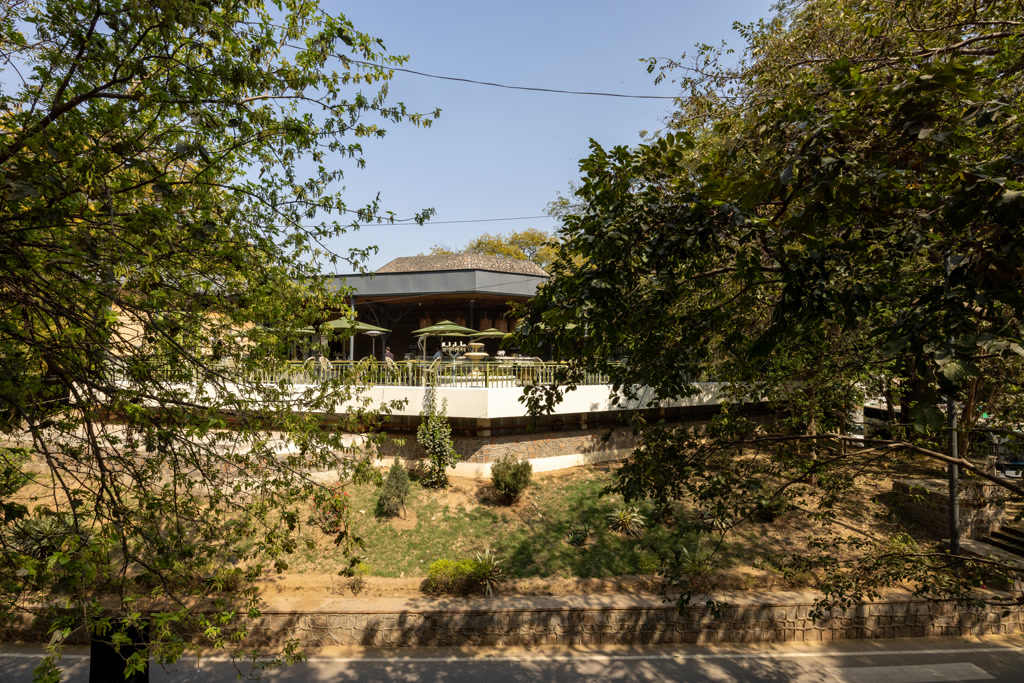
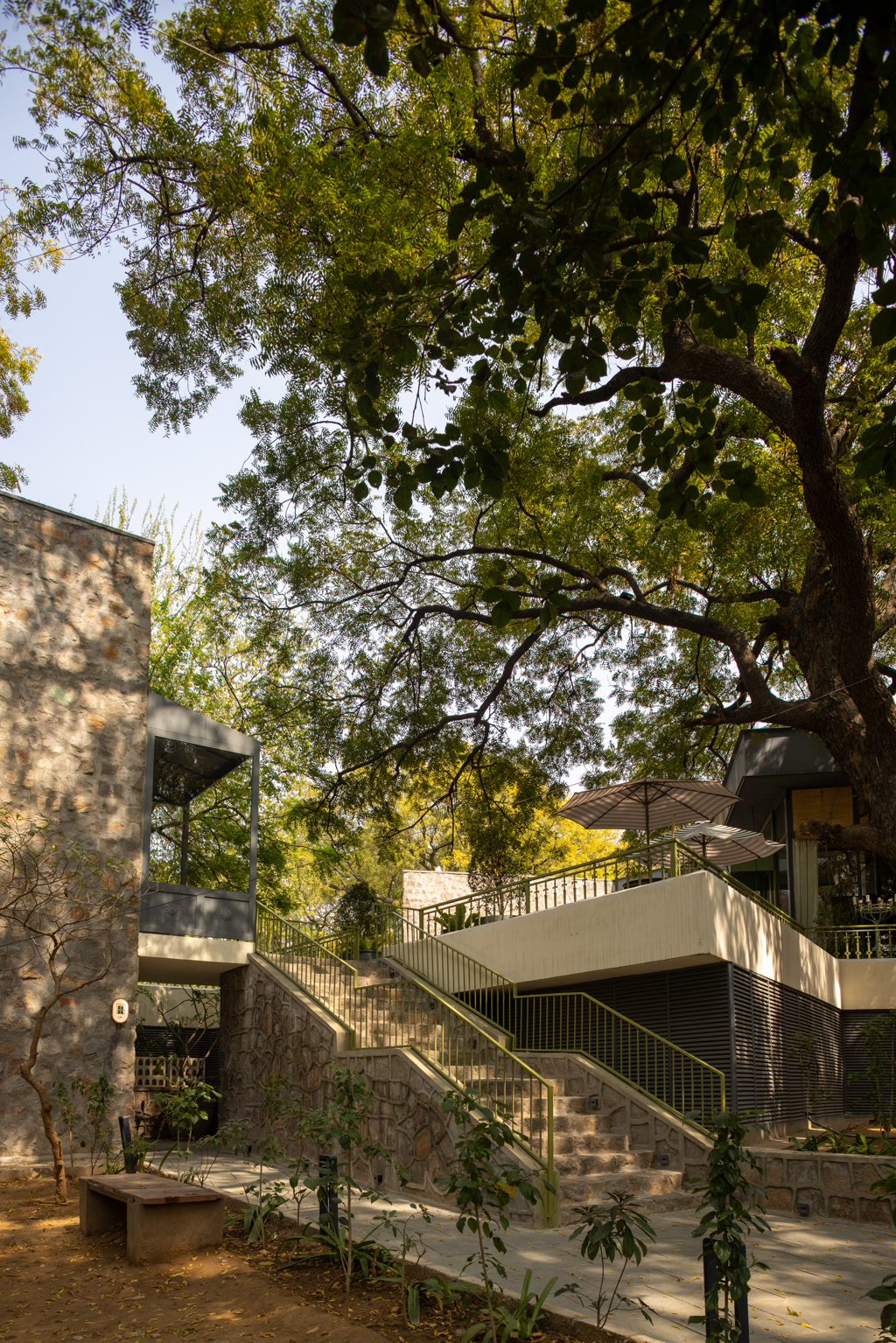
That distinction is central to the design. Beyond Designs Studio chose transparency over monumentality. They let the restaurant recede beneath the existing tree canopies. The goal wasn’t to recreate the landscape indoors. It was to keep the landscape present while you eat. They preserved the trees, and the architecture works with the scale of the larger estate.
A Project Woven Into the Site: The project goes way beyond Forest Table, too. The design team overhauled the entire planetarium terrace. They refurbished the old canteen into Canteen Stories, added landscape lighting, updated the estate’s signage, and put in lifts and ramps. It’s all part of a larger effort to improve how visitors experience the estate.
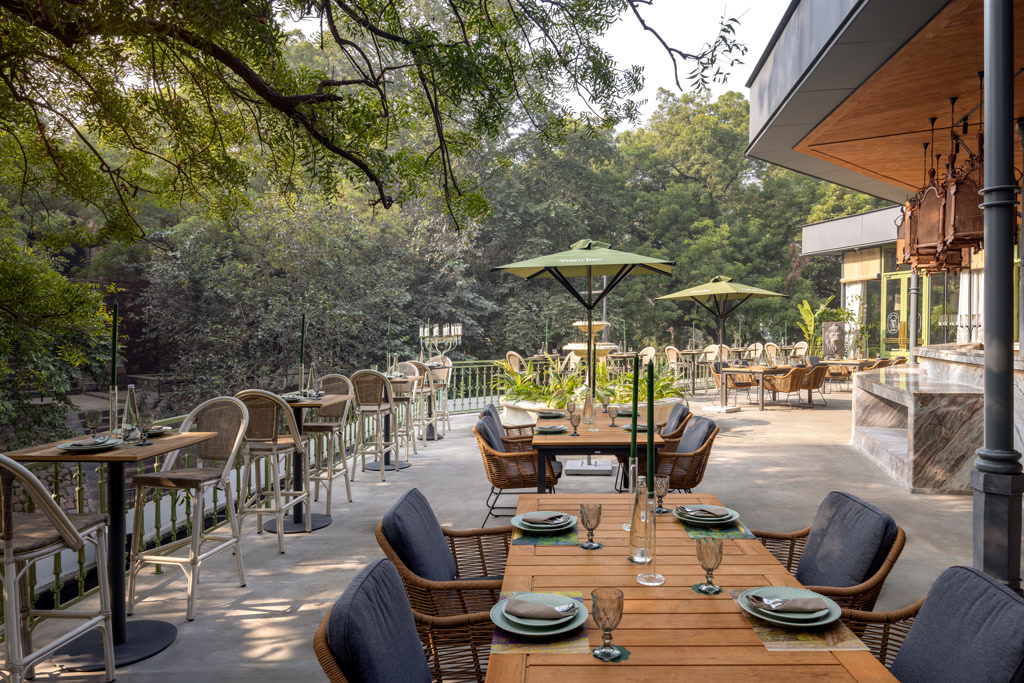
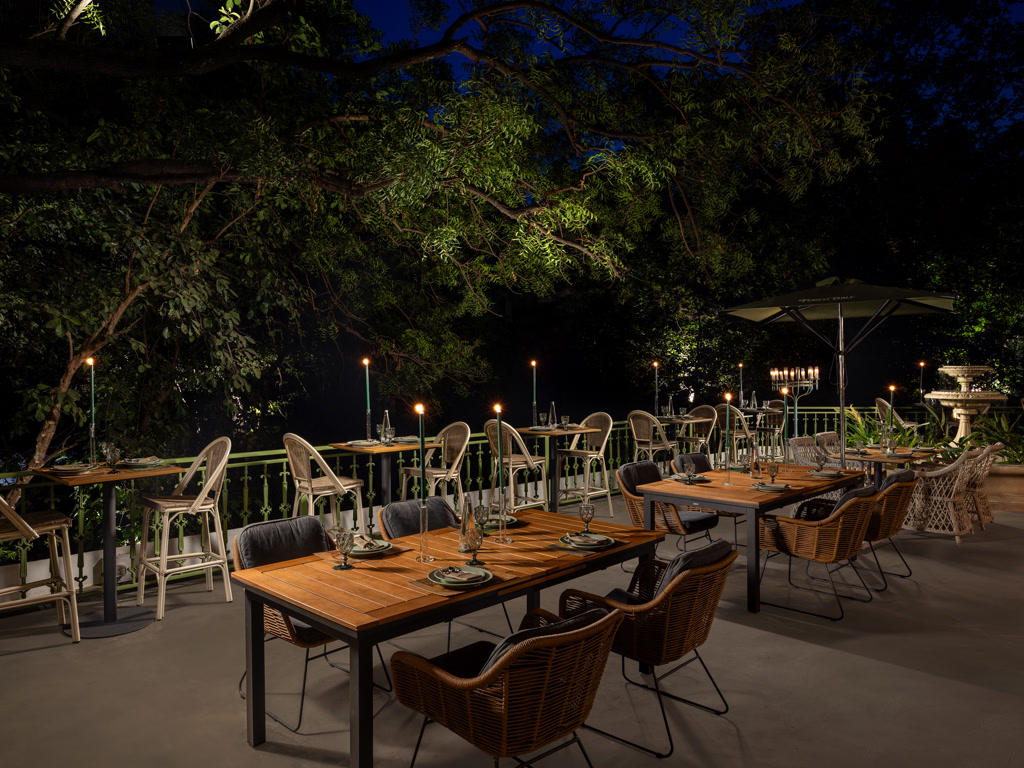
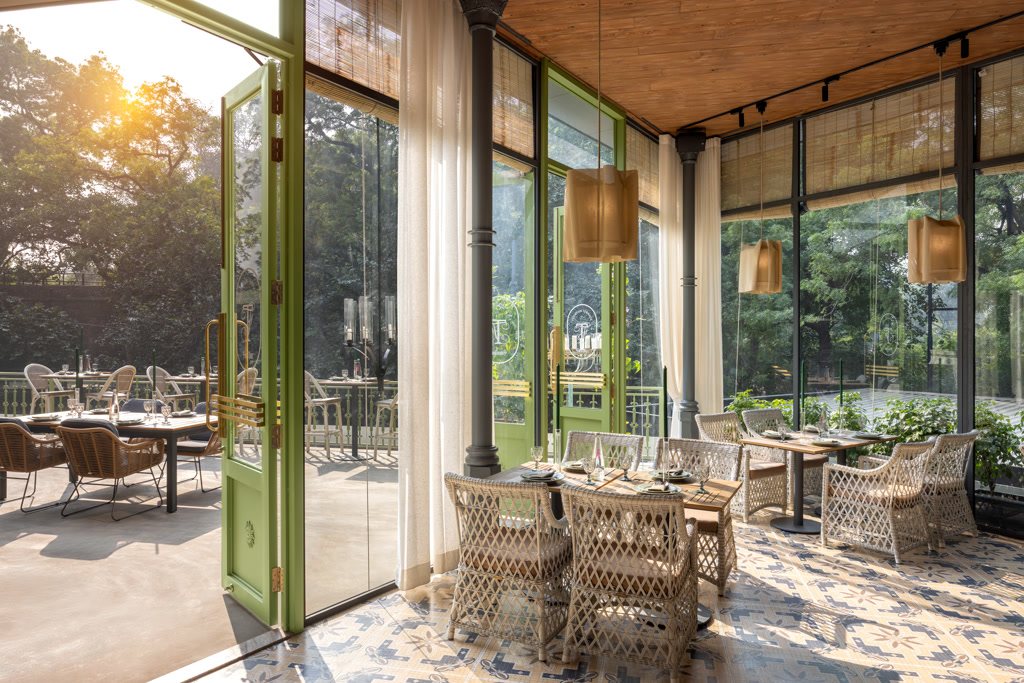
At the restaurant, the octagonal form matches the geometry of the planetarium roof. You enter from the south and move counterclockwise through five quadrants. They alternate between enclosed and open-air dining. It seats about 150 guests, creating a changing relationship with the landscape as you walk through. Floor-to-ceiling glass defines the enclosed areas, framing the greenery. On the outdoor terraces, the Kushak Mahal feels much closer. Vintage wrought-iron railings in patinated green keep the edge open while preserving the views. The live kitchen, coffee bar, buffet, and private terrace fit into the plan without interrupting the visual flow.
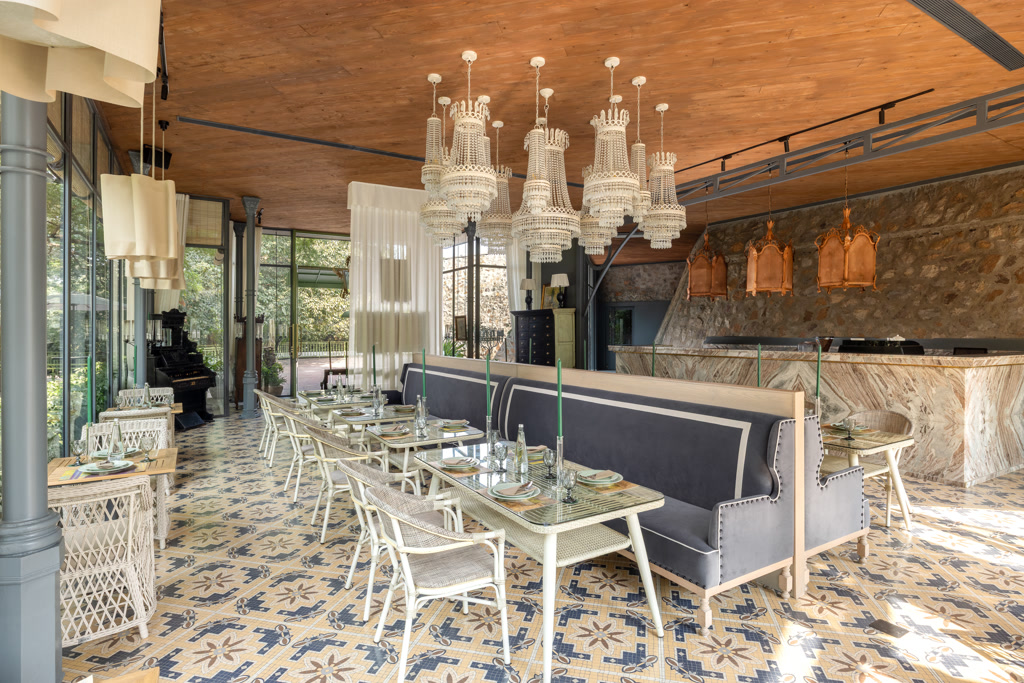
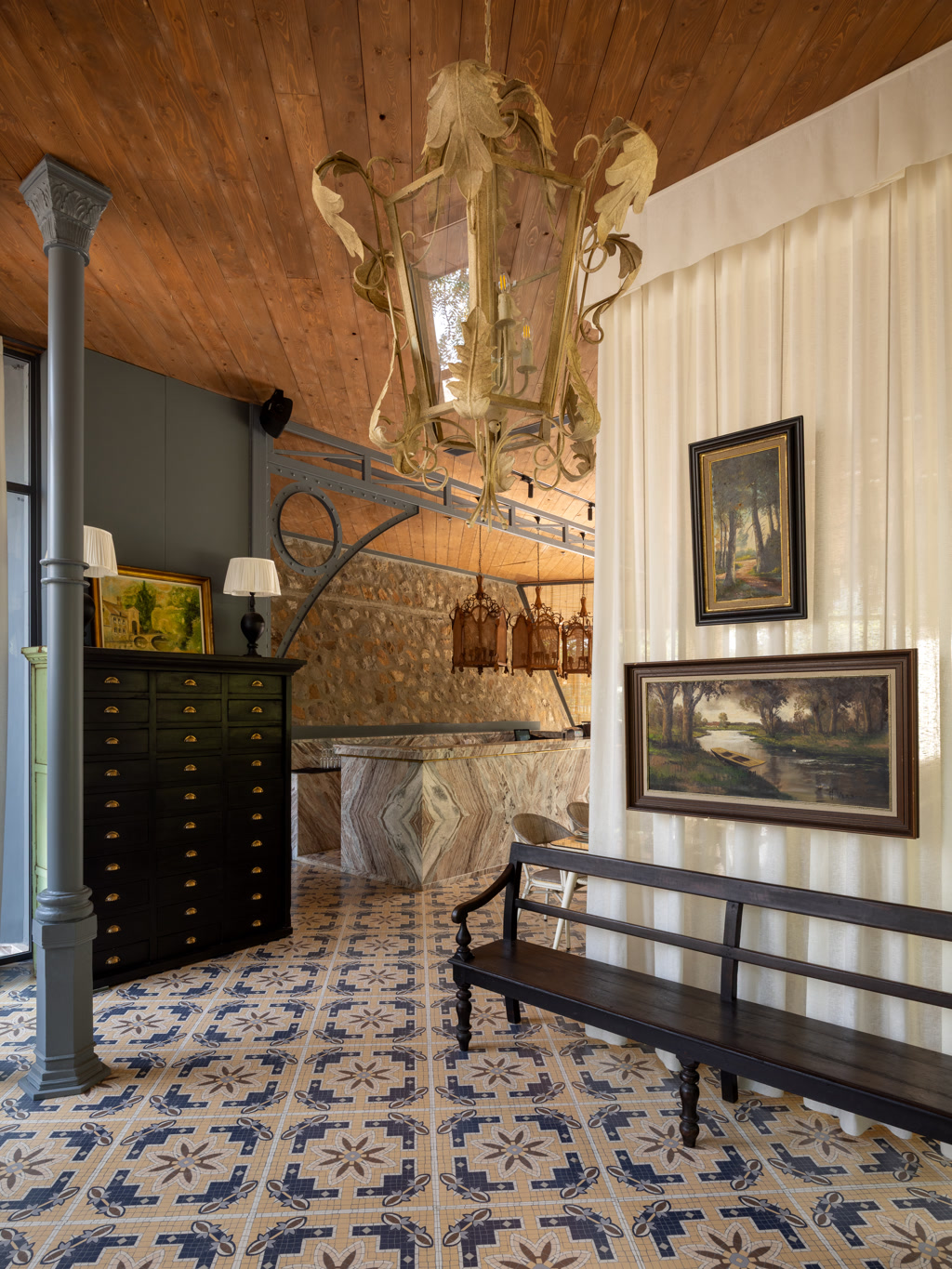
The materials follow the same logic. Rubble masonry echoes the stonework of the planetarium and Kushak Mahal. Wooden ceilings add warmth without being over the top. Inside, mosaic tiles in muted sage, dove, and blush tones add color against the tactile materials. Outside, they kept the original stone flooring wherever possible. They also replanted barren areas to strengthen the existing grove of neem and flowering sada-bahaar trees.
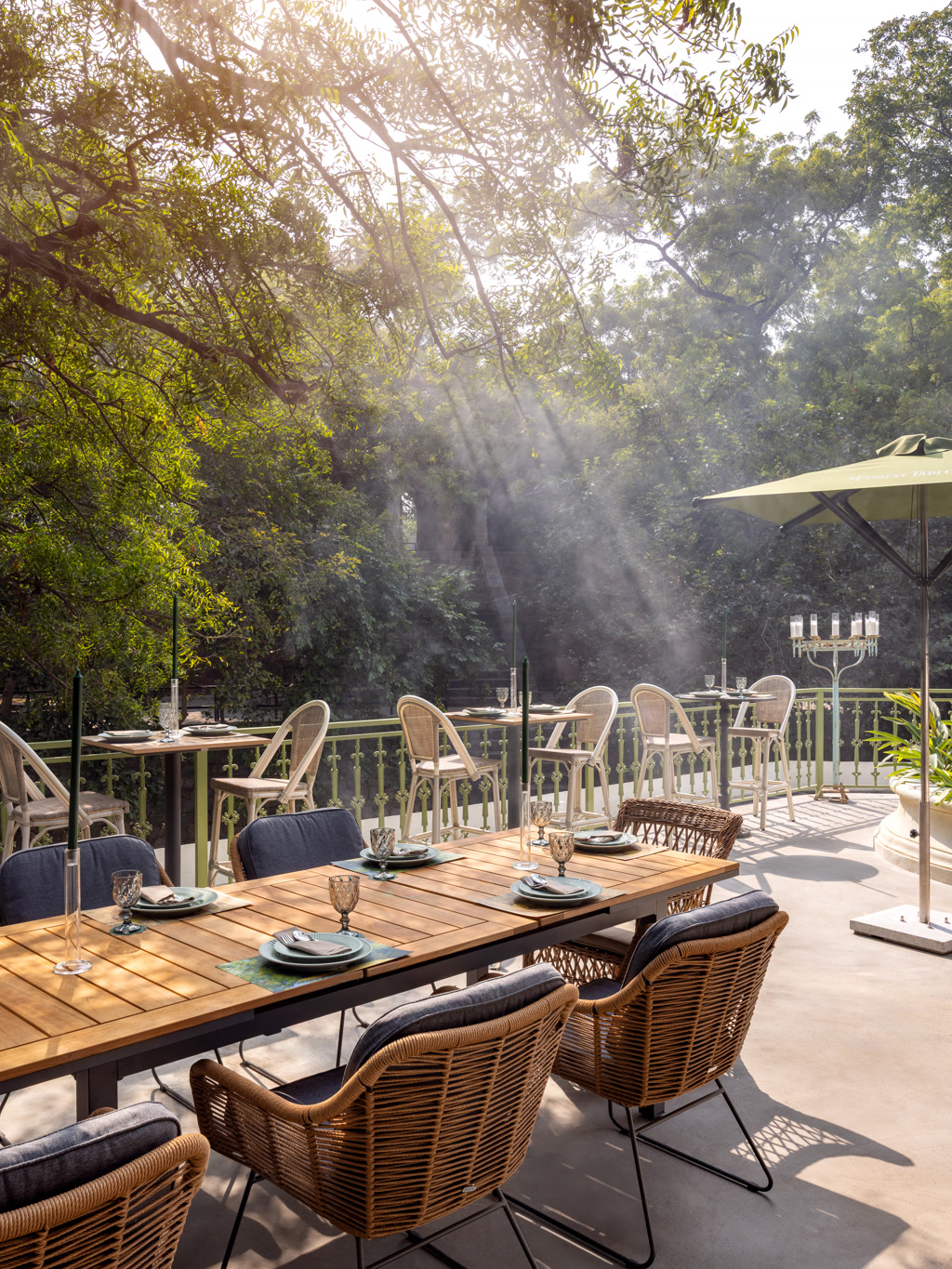
The result is deliberately porous. Glass, open terraces, and restrained colors let the restaurant sit inside its setting. The sound and movement of the estate stay part of the experience.
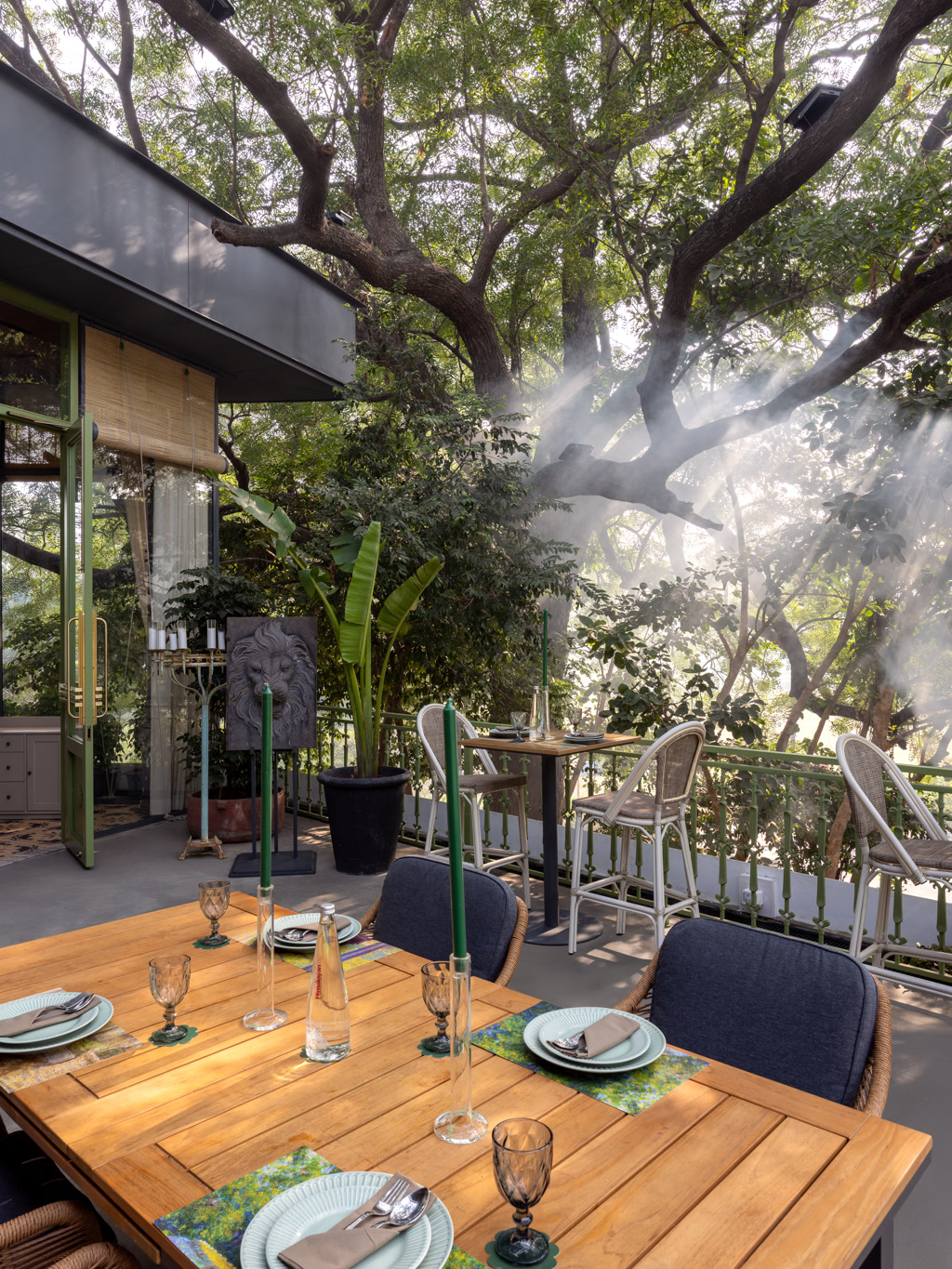
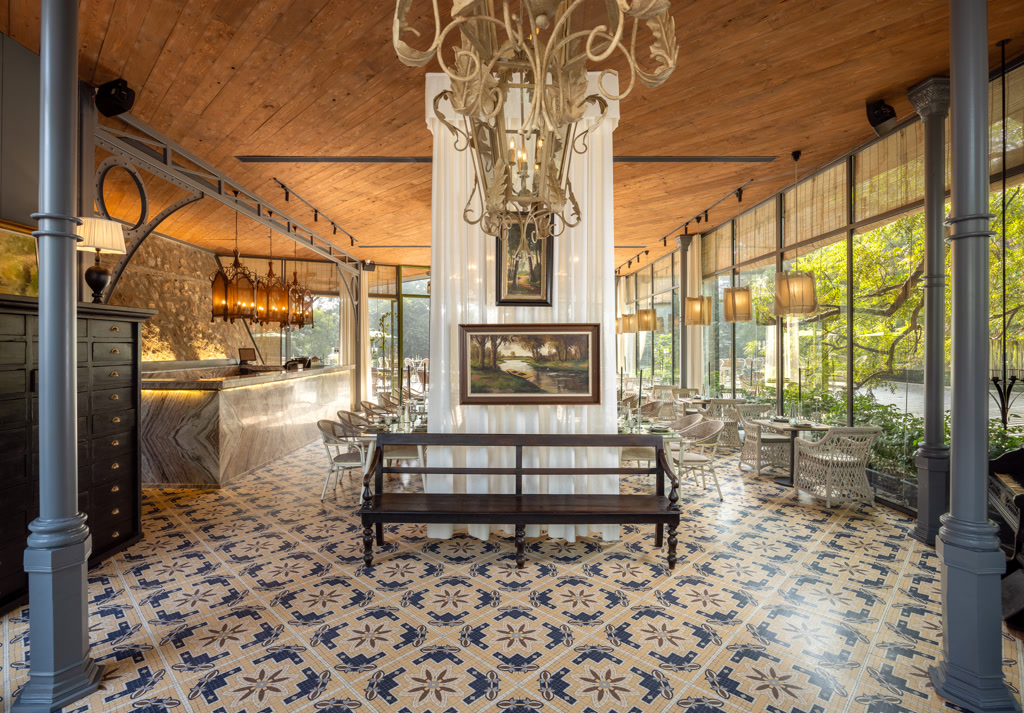
Old-World Charm, Reimagined: Inside, Beyond Designs Studio draws from old-world European cafés, but it’s not a literal copy. Lamp-post-like iron colonettes, pastel tones, and materials that age well set the vocabulary. Vintage furniture adds another layer.
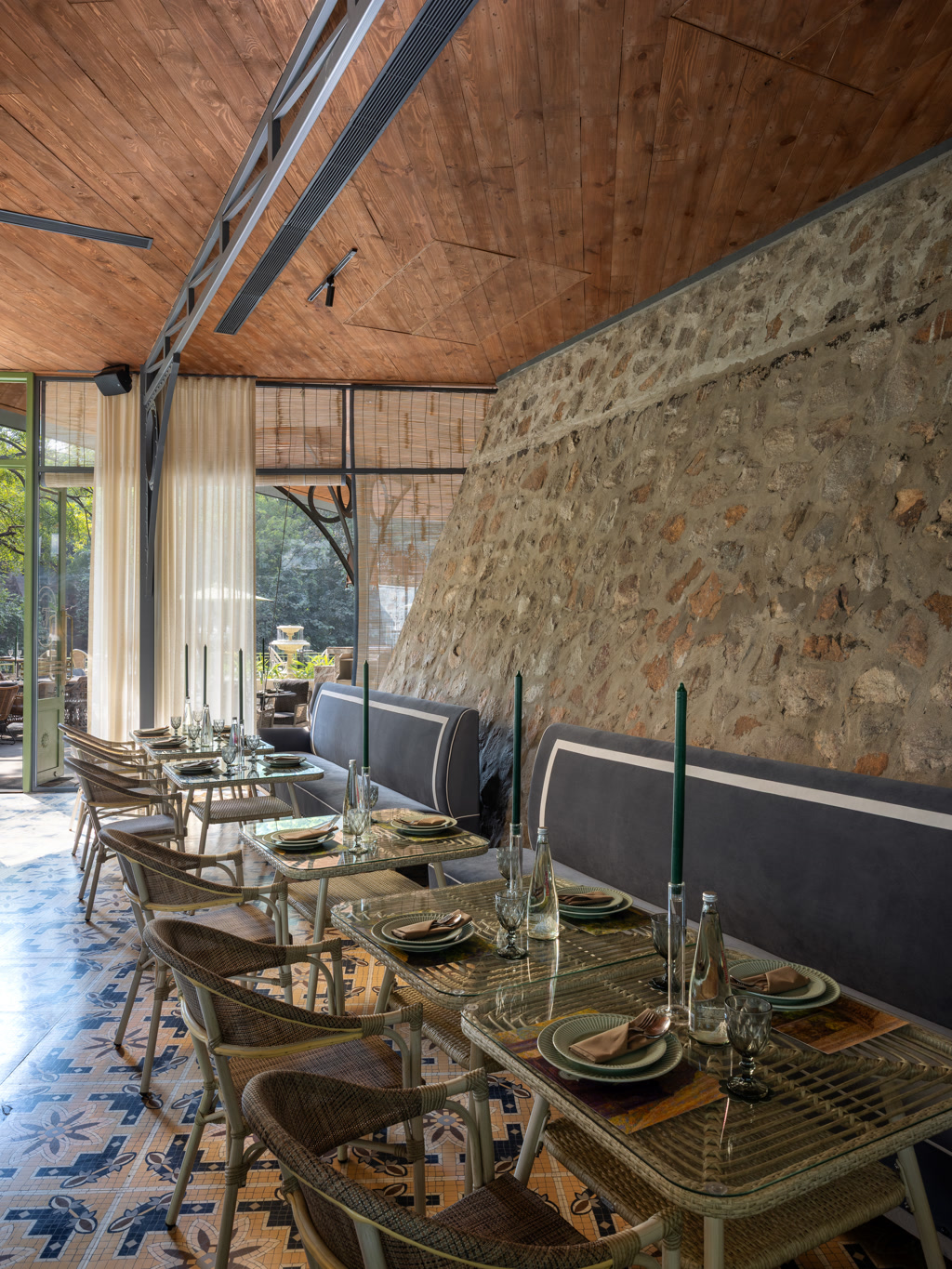
Co-founders Sachin Gupta and Neha Gupta personally picked out wooden cabinets, pianolas, and other vintage pieces. Mixed with rattan, wood, bamboo, and glass furniture, it brings a lighter, organic quality. The European café references sit next to Indian materials and craftsmanship. It feels collected, not staged. A crystal chandelier adds a vintage note, but the evening lighting is kept low. They kept the landscape lighting and added subtle ambient fixtures and vintage lamps. It shifts to a warmer, more intimate atmosphere after sunset.
A Menu That Matches the Vibe: The menu matches the design. Neha Gupta put together the culinary programme, bringing together Modern Indian, Vietnamese, Asian, and Continental cuisines. It’s not just a random mix. The menu follows the restaurant’s idea of quiet luxury.
Slow reductions, gentle fermentations, and controlled heat favor patience. Ingredients are handled with the same restraint you see in the space. It makes dining feel unhurried.
More Than Just Fine Dining: Forest Table is just one part of the intervention. The old canteen is now Canteen Stories. It went from a 10-seater grab-and-go spot to a 100-seater restaurant with a full kitchen, two new washrooms, and table service.
The redesign considers the people who use the estate daily – scholars, staff, guards, and visitors. A shaded outdoor area with bamboo fencing, lightwood tables, and benches sits under umbrellas. Wider windows bring air and daylight inside. Woven bamboo lamps, orange walls, and cane chairs make it relaxed.
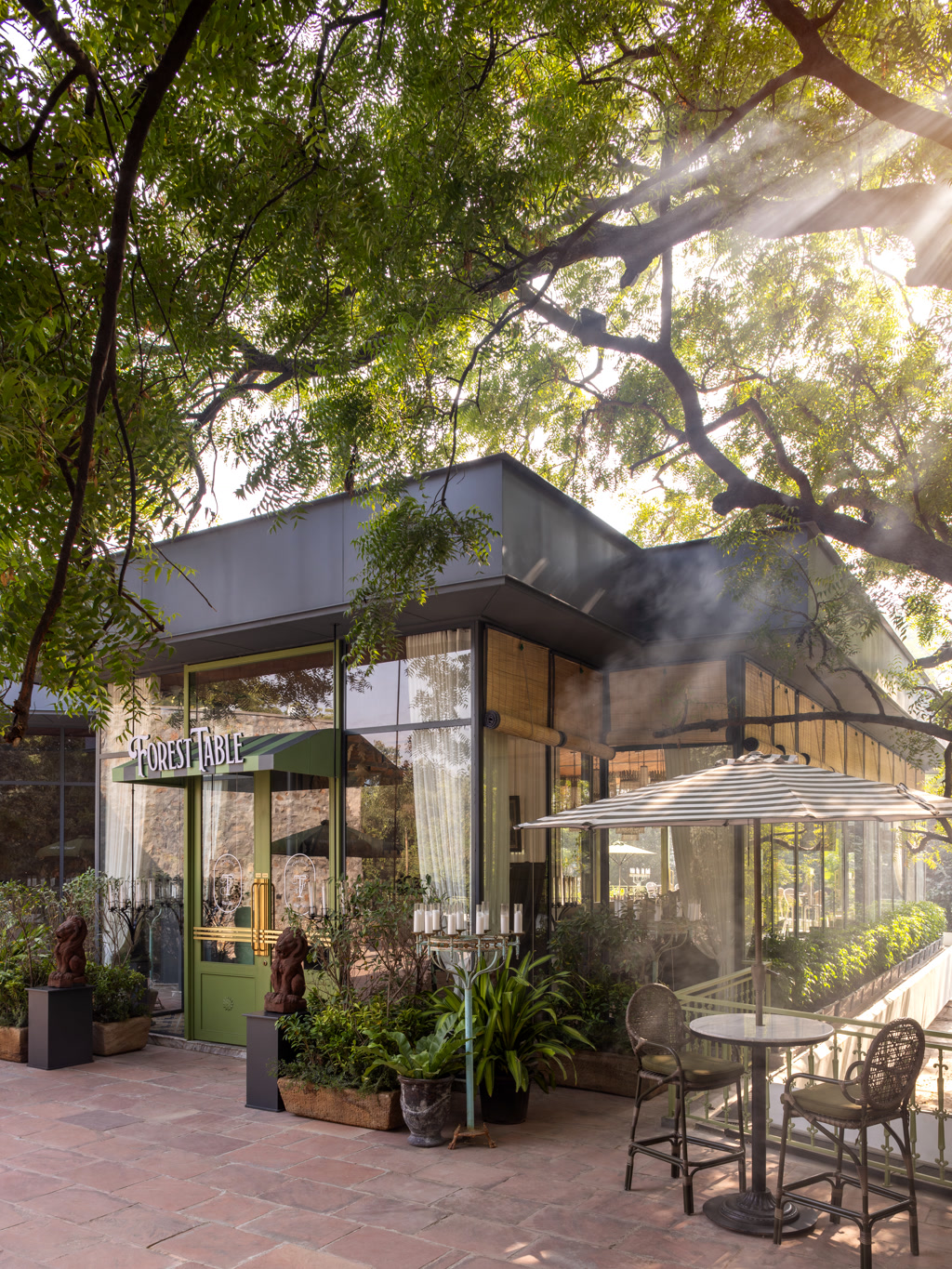
At the end of the day, the significance of Forest Table isn’t just the scale. It’s how the project approaches its setting. They introduced over 10,000 sq. ft. of hospitality into a historic public estate without treating the landscape as something to hide or design around. Every tree was preserved. Key sightlines to Kushak Mahal were kept.
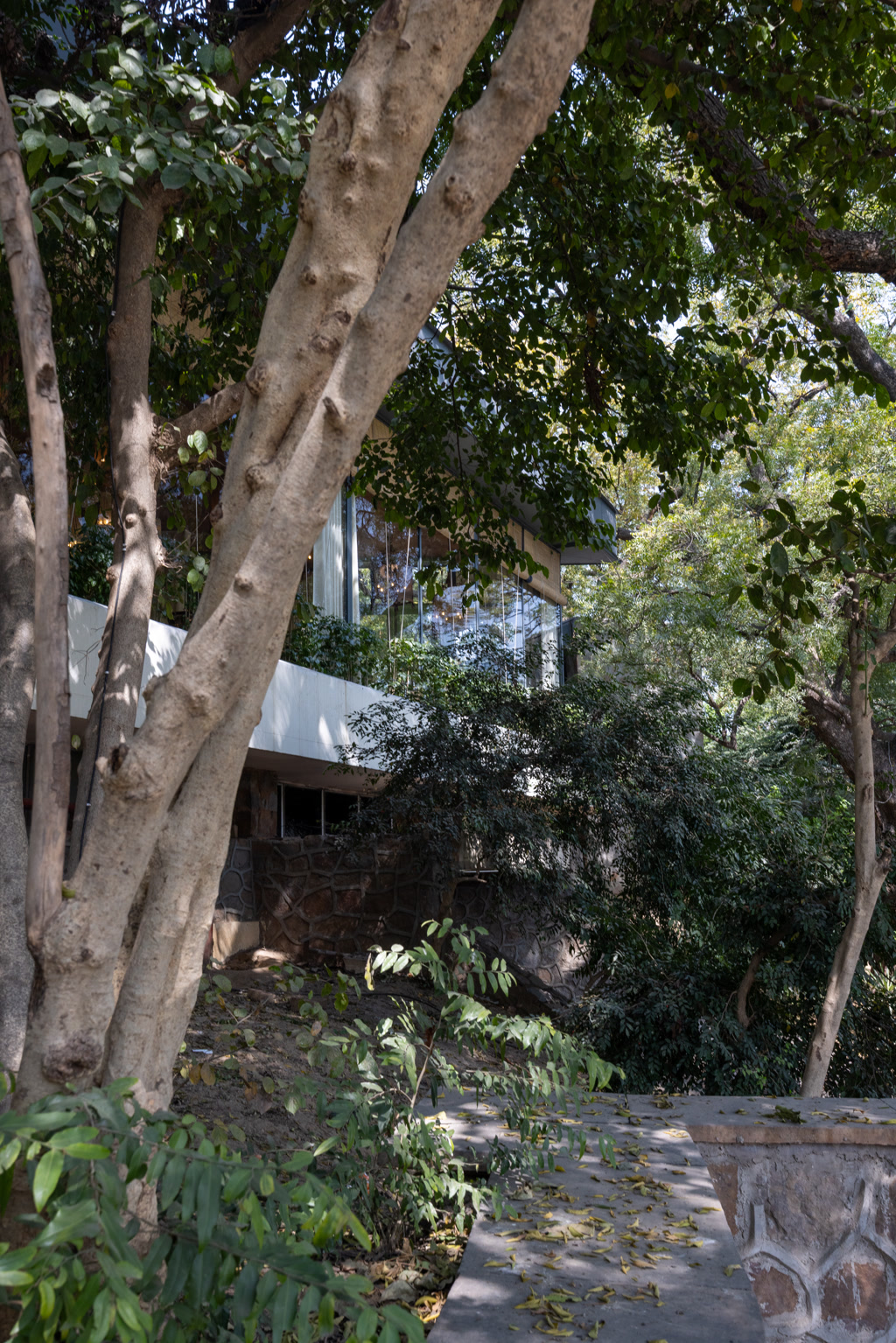
It’s an exercise in restraint at a large scale. The architecture is visible, but it doesn’t insist on being the center of attention. The trees, the monument, the old stone, and the history remain the active parts of the experience.
Connect Online@ www.beyonddesigns.in