


Legal workplaces have traditionally been defined by enclosed cabins, heavy material palettes, and an architectural language that reinforces hierarchy and confidentiality. As workplace expectations continue to evolve, the challenge is no longer simply to modernise these environments, but to reinterpret institutional identity without compromising the qualities that define them.
For Khaitan & Co’s workplace, Workplace Curators approached this question through a design language centred on restraint, clarity, and carefully calibrated transitions between openness and privacy. Rather than relying on visual formality, the project explores how daylight, materiality, spatial planning, and precise detailing can create an office that feels contemporary while remaining grounded in the legacy of one of India’s oldest law firms.
In this conversation with Design Connect, Manish Ray, CEO, Workplace Curators, discusses the ideas, challenges, and design decisions that shaped the project, reflecting on how architecture can redefine the modern legal workplace without losing its sense of authority.

What was the client’s brief, and what were the key objectives that shaped the design?
For WPC, the brief from Khaitan & Co was to design a contemporary office that reflected the stature, trust, and legacy of one of India’s oldest law firms, while also aligning with the expectations of a modern workplace. The client wanted a space that felt refined, authoritative, and timeless, but without the heaviness and visual formality often associated with traditional legal interiors.
At WPC, our key objectives were to reinterpret that sense of gravitas through clarity, precision, and restraint; to improve daylight penetration and openness across the floor; to create a more thoughtful balance between privacy and transparency; and to ensure that the office worked seamlessly for the firm’s day-to-day operations. For WPC, it was important that the office feel calm, highly functional, and progressive, while still carrying the institutional confidence Khaitan & Co is known for.
Every project begins with an idea. What was the central concept behind this one, and how did it evolve through the design process?
At WPC, the central idea behind this project was the notion of the calibrated threshold. We wanted to move away from the usual binary of either a fully open workplace or a series of completely closed cabins. Instead, WPC envisioned the office as a gradient of enclosure, where privacy, openness, movement, and visibility could coexist in a more nuanced and sophisticated way.
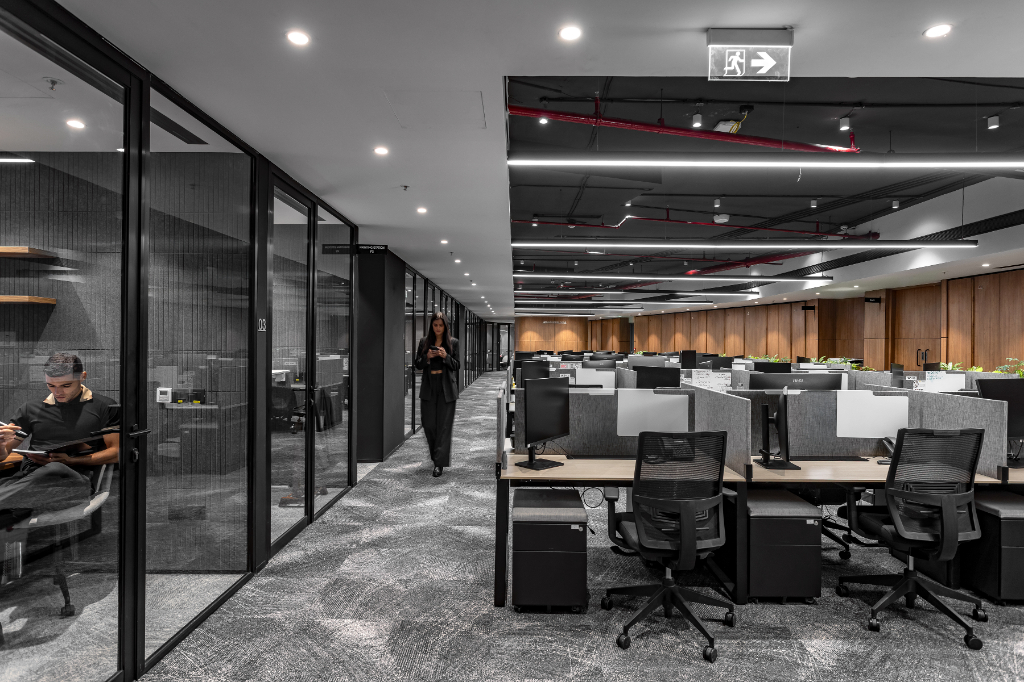
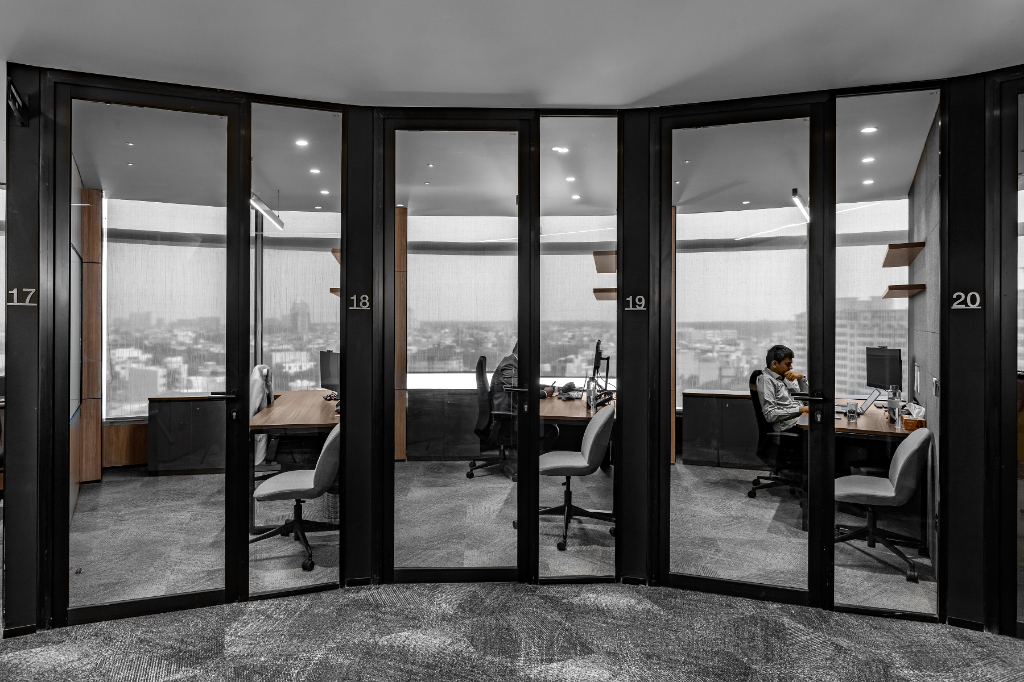
As the design developed, this idea became the organising principle for the entire plan. WPC used full-height glazed partitions, slim black metal frames, and carefully sequenced spatial transitions to define rooms without making them feel sealed off. This allowed the workplace to maintain discretion and privacy while ensuring that daylight, sightlines, and continuity flowed through the office. Over the course of the design process, WPC developed this concept into a larger architectural language that informed everything from planning to detailing and materiality.
How did you approach the planning of the space to balance functionality, aesthetics, and the client’s day-to-day needs?
For WPC, the planning strategy was rooted in operational clarity and spatial efficiency. Legal workplaces require confidentiality, focus, hierarchy, and professionalism, but they also need to support ease of movement, long working hours, and a high level of everyday functionality. WPC approached the layout so that every zone responded directly to how Khaitan & Co functions on a daily basis.
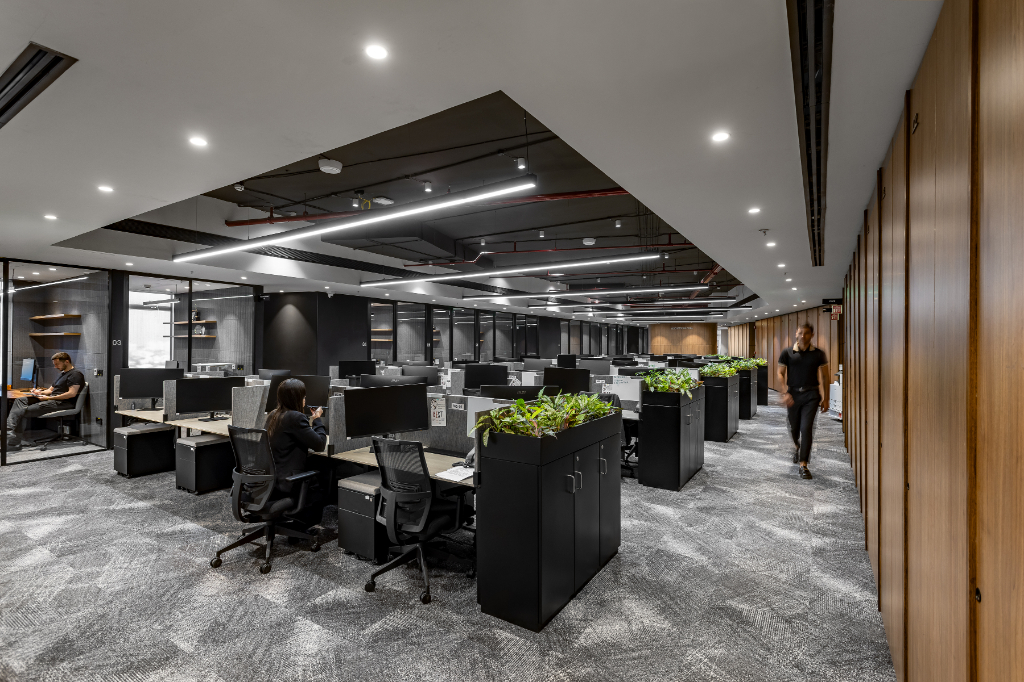
WPC placed the partner cabins along the glazed perimeter to maximise natural light, while internal circulation and shared spaces benefited from borrowed light through transparent partitions. The open workspace was designed by WPC as a calm and efficient working core, with integrated storage and planting helping organise the floor without making it feel fragmented. Formal areas such as the reception and boardroom were given a distinct identity, but they remained part of the larger spatial narrative developed by WPC. This helped create a workplace that is aesthetically disciplined, highly usable, and intuitive in its planning.
The project features a carefully curated material palette. What informed your choices, and how do these materials contribute to the overall experience?
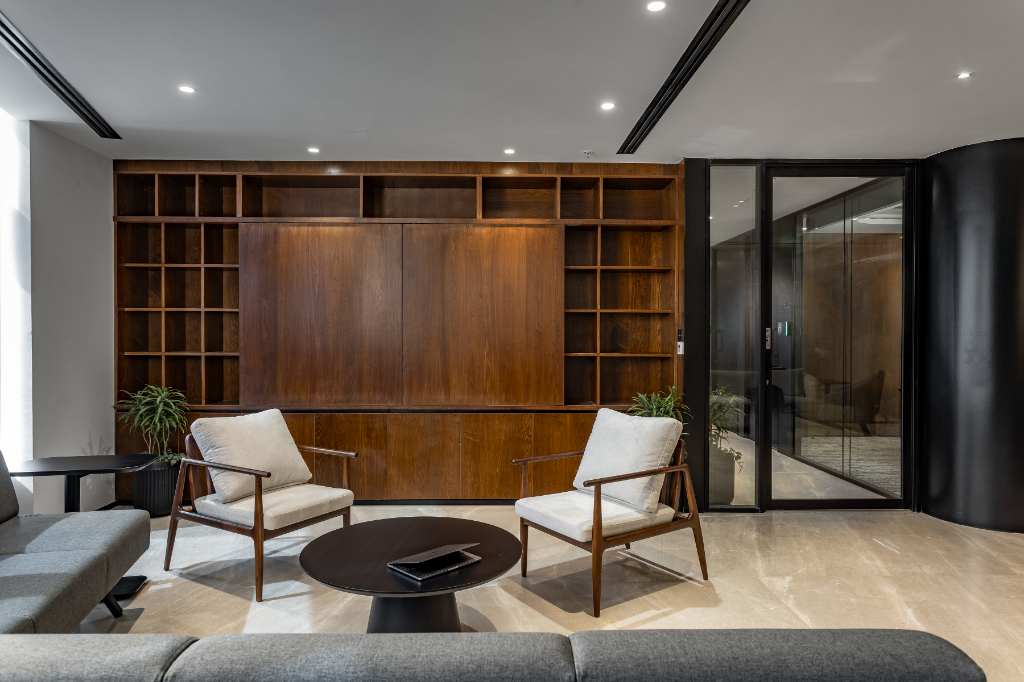
At WPC, the material palette was guided by the need to express permanence, sophistication, and warmth without relying on excess. WPC wanted the office to feel dignified and enduring, but also contemporary, tactile, and human in experience.
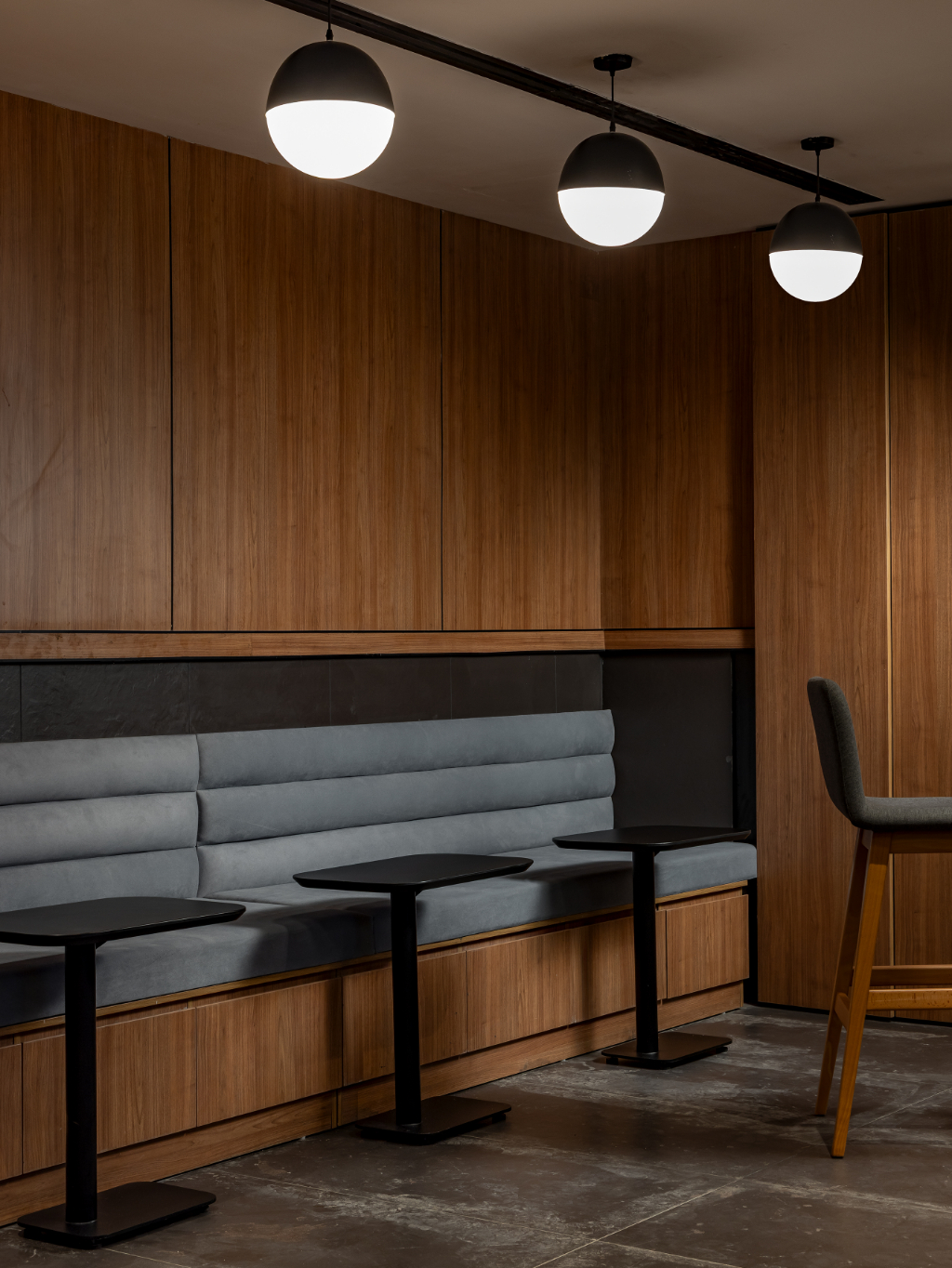
For WPC, walnut became an important grounding element because it carries warmth, familiarity, and a sense of legacy. Marble was used in two clear registers: a dramatic black veined stone for moments of visual emphasis and authority, and a softer grey stone for surfaces that frame and recede. Black metal gave WPC the precision the project required through slim lines, crisp reveals, and controlled detailing. To soften these more formal elements, WPC introduced tan leather, textured carpet, and planting, which made the office feel more tactile and welcoming.
Together, this palette allowed WPC to create an environment that feels composed, understated, and premium without becoming decorative. The materials reinforce the larger architectural idea that elegance comes through discipline and restraint.
Which space or design element best represents the essence of the project, and why?
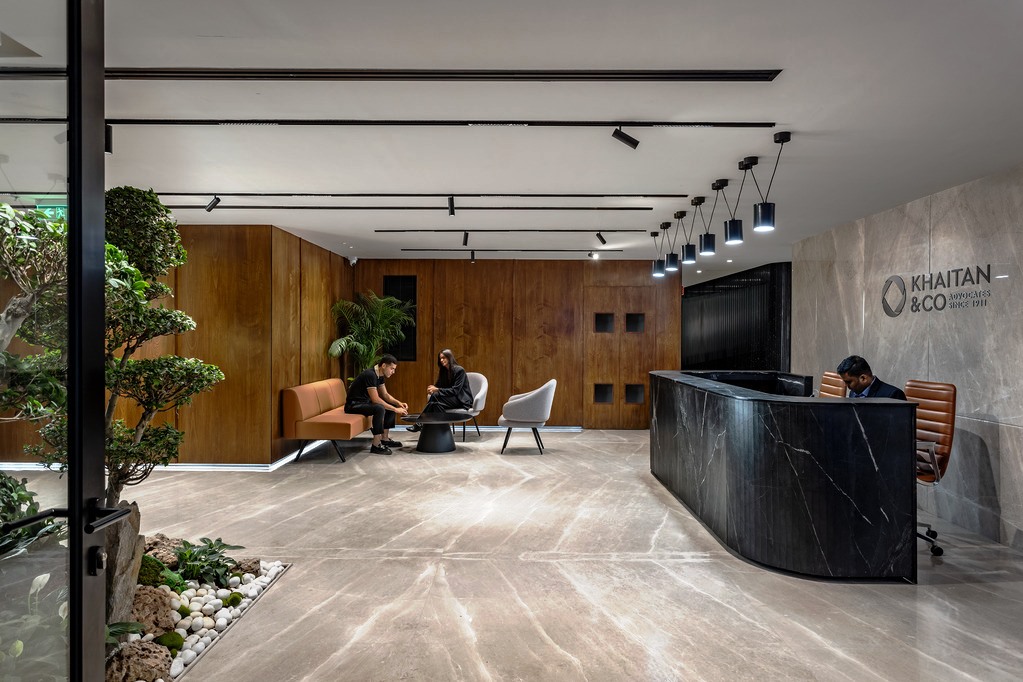
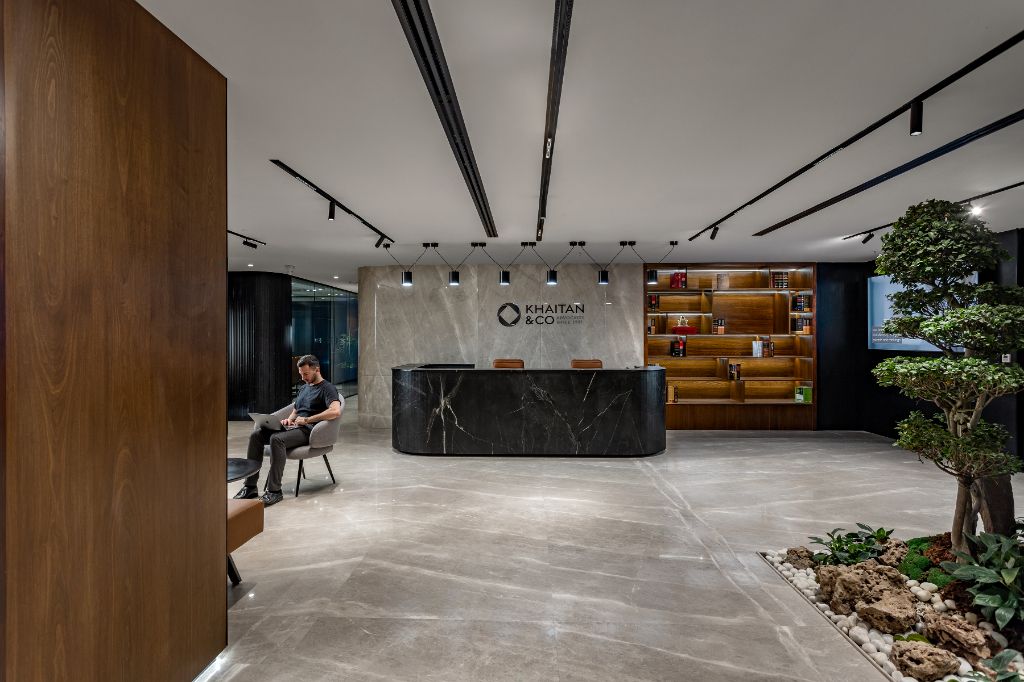
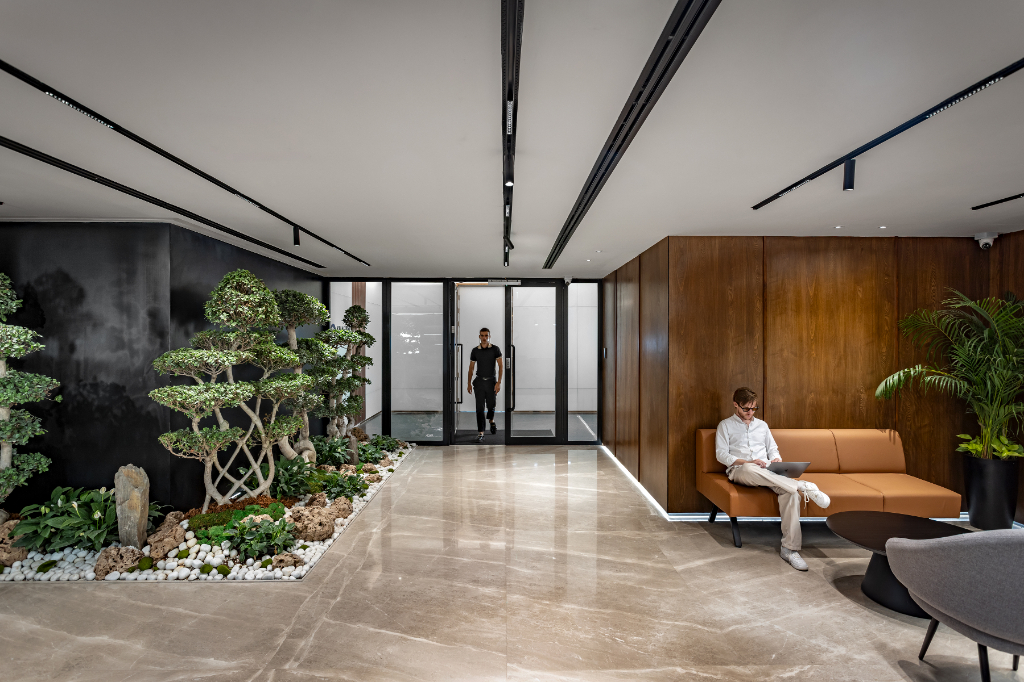
If I had to identify one space that best captures the essence of the project from WPC’s perspective, it would be the reception. For WPC, this space distils the entire design philosophy into a single arrival experience.
The black marble reception desk, the calm grey stone backdrop, the walnut library wall, and the landscaped garden together express the balance that WPC wanted to achieve between permanence, warmth, transparency, and calm. It immediately communicates Khaitan & Co’s identity, but in a contemporary and carefully composed way. For WPC, the reception is significant because it does not depend on overt grandeur; instead, it creates presence through material clarity, proportion, atmosphere, and restraint. In many ways, it sets the tone for the entire workplace.
What were the biggest design or execution challenges, and how did your team overcome them?
One of the biggest challenges for WPC was rethinking the traditional legal office model without losing the privacy, authority, and seriousness that such a workplace must retain. Law offices often default to heavy, enclosed, and highly formal environments, so for WPC, the challenge was to create something lighter, more open, and more contemporary while still preserving confidentiality and gravitas.
WPC addressed this by using full-height glazed partitions and carefully detailed framing systems that maintained acoustic and visual separation without blocking daylight or making the office feel closed. Another challenge for WPC was ensuring that minimalism did not become cold or generic. That required a very disciplined approach to proportion, detailing, and material balance. WPC overcame this by focusing on tactility, warmth, and spatial choreography, so that the restraint always felt deliberate, expressive, and specific to the identity of the project.
How has sustainability, employee wellbeing, technology, or future flexibility been integrated into the design?
At WPC, these aspects were integrated in practical and meaningful ways rather than treated as add-ons. Daylight was one of the most important design tools for WPC. By placing glazed cabins along the perimeter and allowing light to travel deeper into the floor plate, WPC improved access to natural light throughout the office, which supports employee wellbeing and helps reduce dependence on artificial lighting.
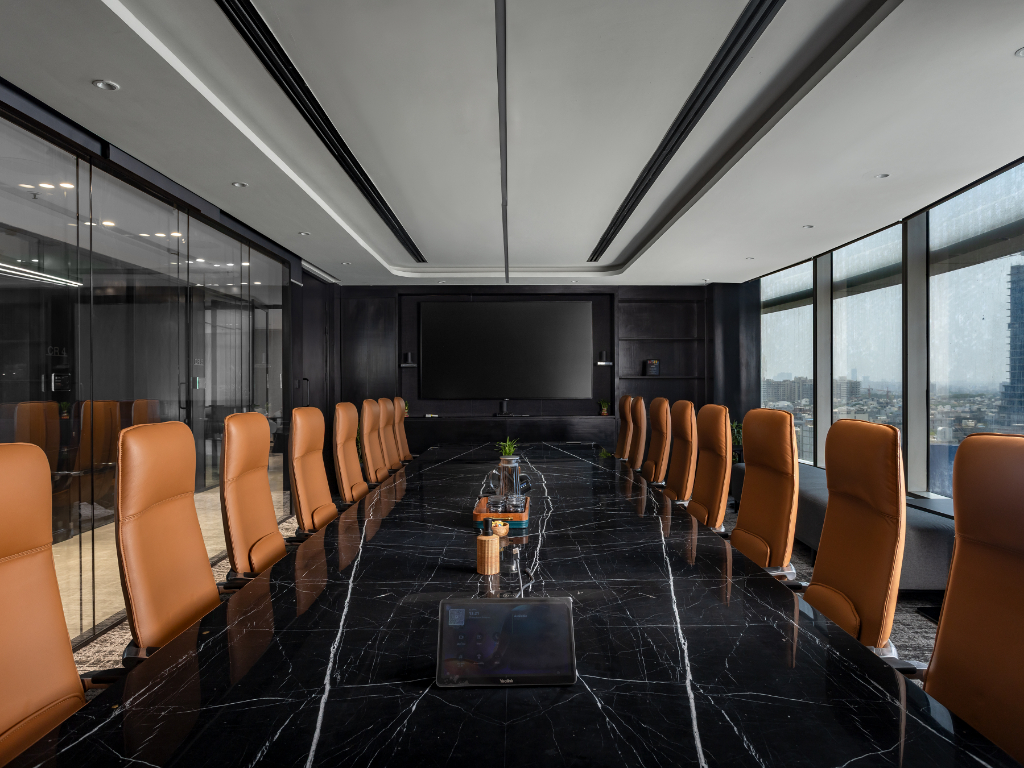
WPC also incorporated planting into the workspace to introduce calm and a stronger connection to nature in the day-to-day environment. Material choices leaned toward durability and timelessness, which for WPC is an important part of sustainable thinking. From a planning standpoint, WPC created a balance between enclosed spaces for focused work and open areas for everyday collaboration, giving the office a degree of long-term flexibility. Technology was integrated discreetly, particularly in spaces like the boardroom, so that functionality could be enhanced without disrupting the overall visual clarity of the interior.
What has been the client’s or users’ response since the project was completed?
The response to the project has been extremely positive. For WPC, what has been especially rewarding is that the appreciation has gone beyond the visual character of the office and extended to how well the space performs on a daily basis. The office feels calm, efficient, and aligned with the culture of Khaitan & Co, which is exactly what WPC set out to achieve.
Users have responded strongly to the quality of light, the openness of the environment, and the balance that WPC created between professionalism and comfort. For WPC, that is the strongest validation – when a workplace is not only admired aesthetically but genuinely supports the people who use it every day.
Looking back, what is one lesson, insight, or takeaway from this project that will influence your future work?
One key takeaway for WPC from this project is that authority in design does not have to come from heaviness. It can come from restraint, clarity, and confidence in what is essential.
This project reinforced WPC’s belief that minimalism, when handled with rigour and sensitivity, can create environments that feel timeless, powerful, and deeply human at the same time. Going forward, this insight will continue to shape how WPC approaches workplaces, especially for institutions with strong legacies – by finding ways to honour history without being constrained by inherited typologies.
Photo Courtesy: Rajwansh
Connect Online@www.workplacecurators.com