


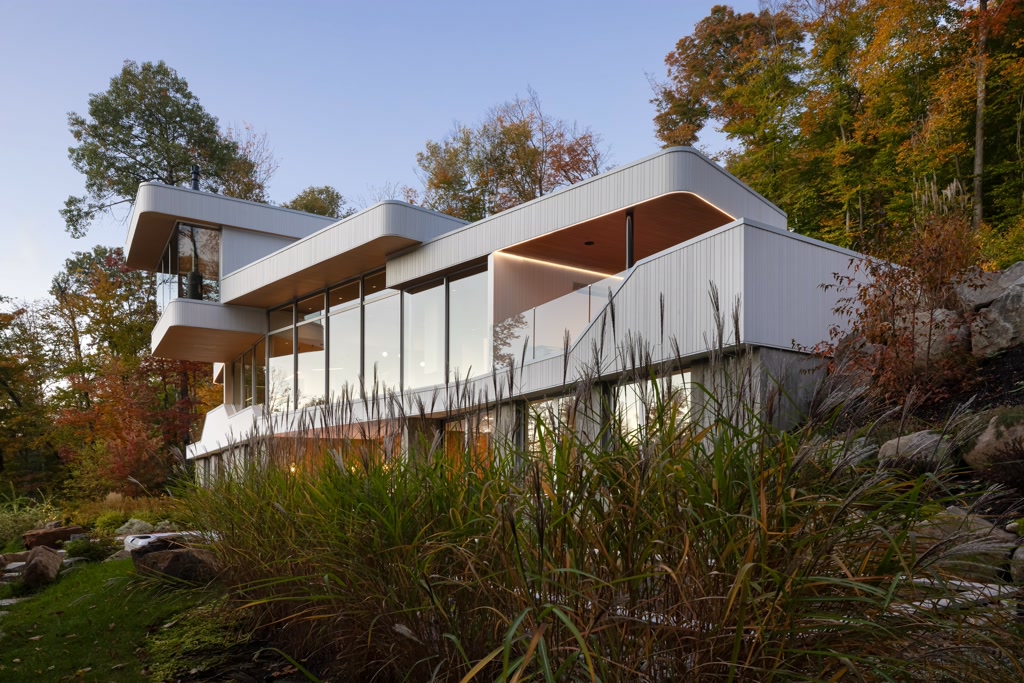
Perched above Lake Xavier in Quebec, MU Architecture crafts a residence that negotiates landscape, scale, and family life through a series of interconnected volumes that appear to hover between forest, water, and sky.
In residential architecture, the challenge is often not how much can be built, but how much architecture can disappear into its setting while retaining a strong sense of identity. The Albatross, designed by MU Architecture in La Conception, Quebec, addresses this tension through a carefully orchestrated balance of presence and restraint. Situated within the dramatic landscape of the Laurentians, the residence transforms a steep, wooded site into a layered living environment that engages equally with topography, views, and habitation.
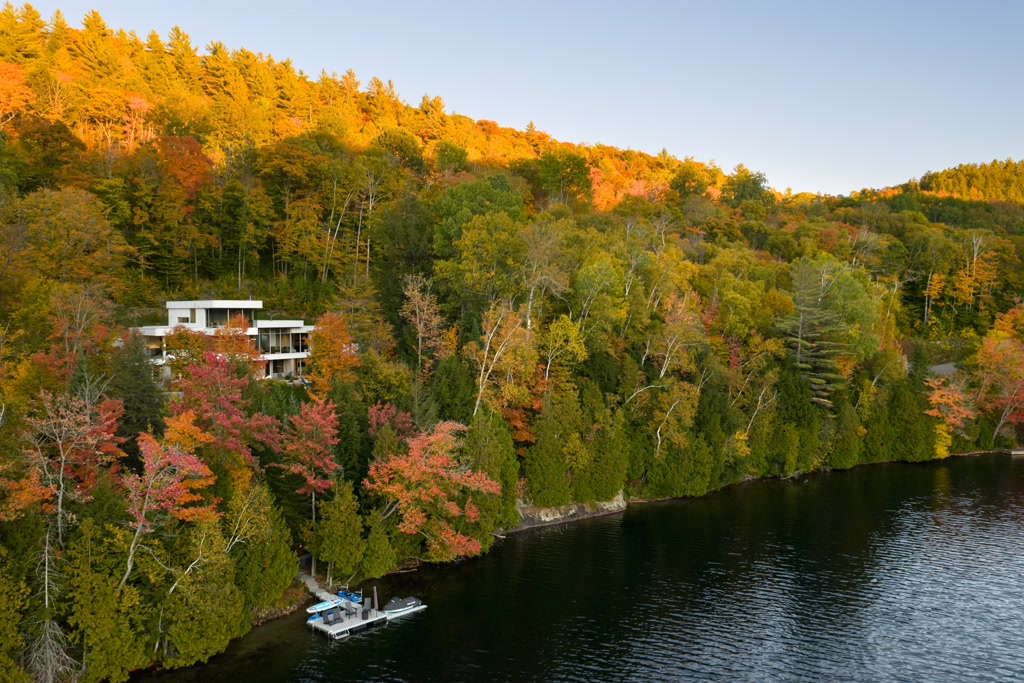
33Positioned at the furthest edge of Lake Xavier, where protected land safeguards uninterrupted vistas, the project occupies a site defined by both its isolation and its ecological sensitivity. Existing shoreline vegetation has been preserved, allowing the house to remain visually embedded within the landscape while maintaining a strong connection to the lake and surrounding mountains. Rather than imposing a singular architectural object upon the terrain, the design adopts a more nuanced approach, fragmenting the programme into a series of articulated volumes that respond directly to the contours of the land.

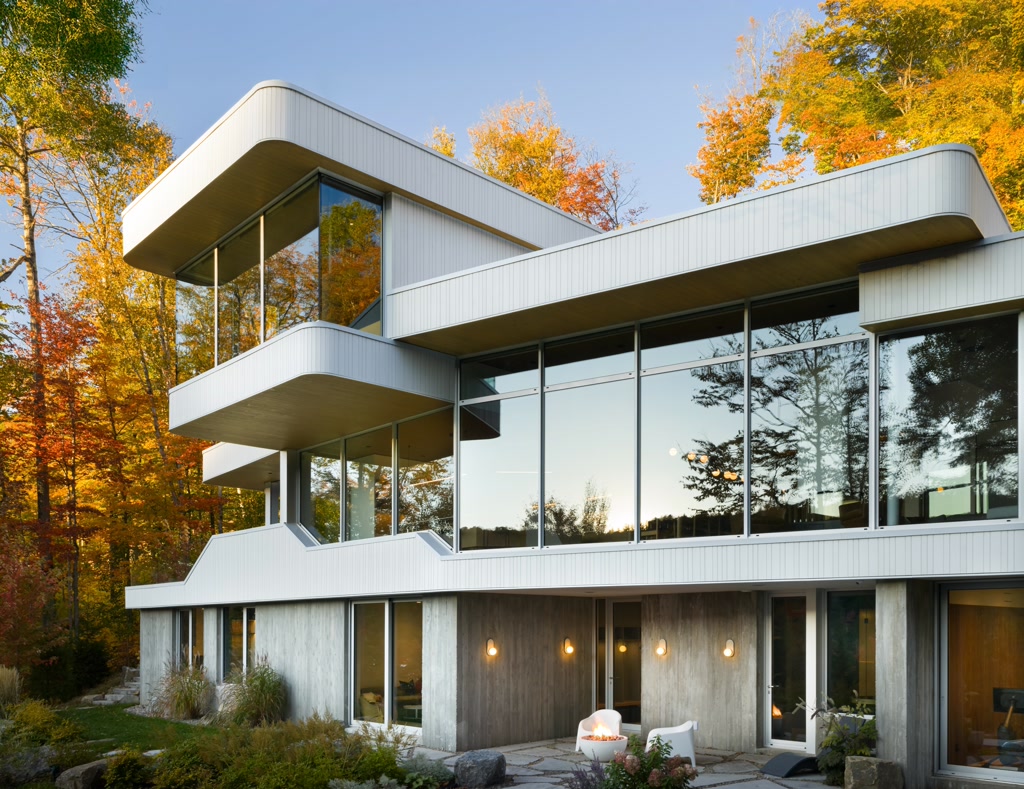
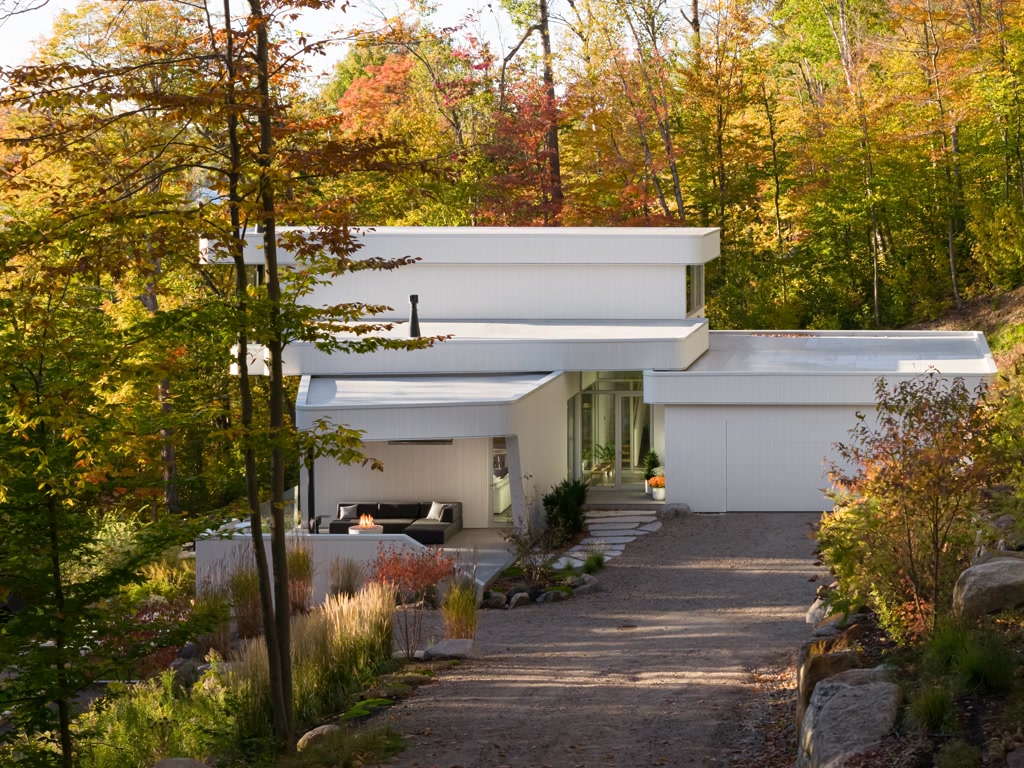
This strategy becomes one of the project’s defining moves. By breaking down a substantial residential brief into interconnected forms, the architecture reduces its visual impact while creating a more dynamic relationship with the site. Rooflines shift, volumes overlap, and terraces project outward, producing a composition that feels simultaneously expansive and grounded. The result is a residence that reveals itself gradually rather than all at once.

The experience of arrival is carefully choreographed. From the approach, the home presents a restrained façade, concealing much of its scale and complexity. This measured introduction creates a deliberate sense of anticipation, allowing the architecture to unfold through movement. Spaces are revealed sequentially, establishing a rhythm of compression and release that continues throughout the house.
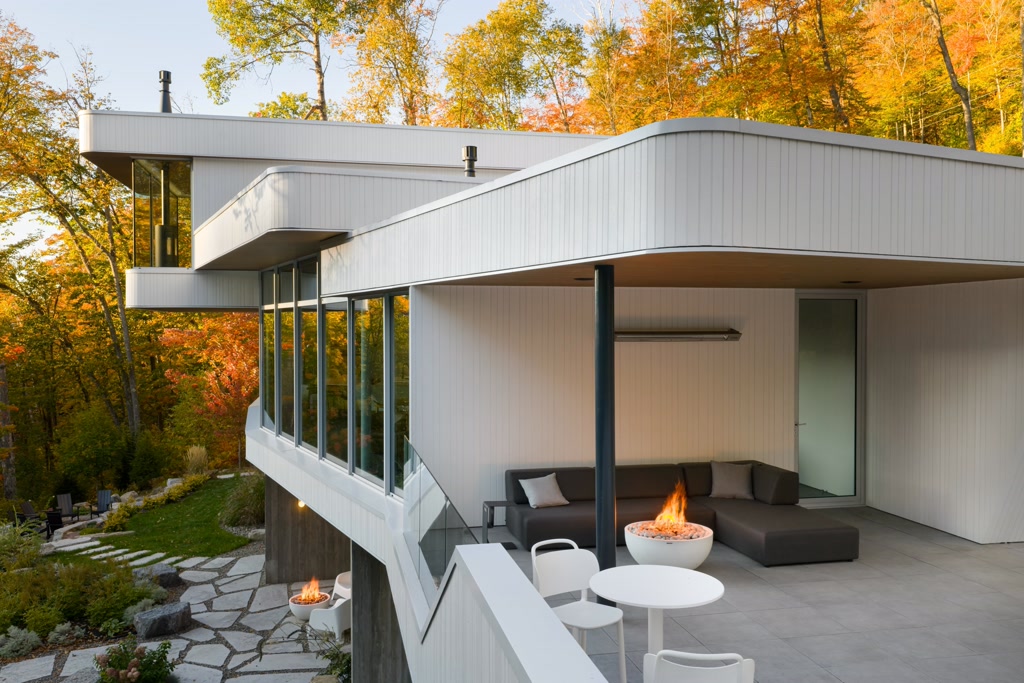
The project draws conceptual inspiration from the albatross, a bird associated with travel, freedom, and effortless movement across vast distances. Rather than treating this reference as a stylistic gesture, the architects translate it into spatial and structural expression. Bold cantilevers extend outward like wings, framing views across the lake and reinforcing the sensation that the residence hovers above the terrain. Elevated terraces amplify this effect, creating a continuous dialogue between architecture and horizon.

The white wood exterior further reinforces the building’s sense of lightness. Against the changing backdrop of forest, water, and snow, the cladding allows the residence to shift in character with the seasons, at times standing out with clarity and at others receding almost entirely into its surroundings. The composition’s subtle nautical undertones deepen its connection to both landscape and movement.
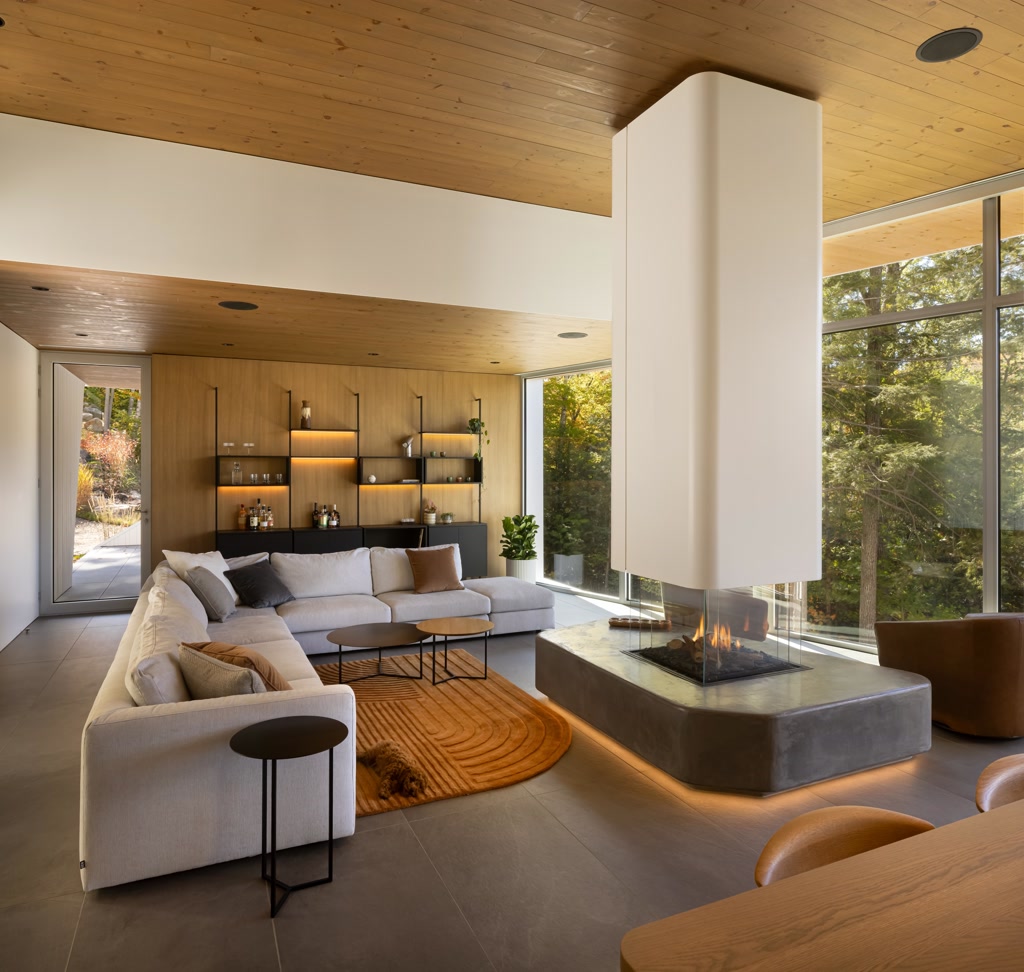
Internally, the project is organised around a clear understanding of contemporary family life. The main level functions as the social heart of the residence, where living, dining, and kitchen spaces flow into one another while maintaining distinct identities. Generous glazing opens these areas to the surrounding landscape, ensuring that the experience of the lake remains ever-present. A dining area designed to accommodate large gatherings and a kitchen organised around two sculptural islands reinforce the emphasis on collective living.
The upper level is conceived as a private retreat, elevated above the communal zones and fully oriented toward the view. Here, the primary suite incorporates a home office, meditation room, walk-in closet, bathroom, reading nook, and fireplace, creating an environment that balances openness with intimacy.
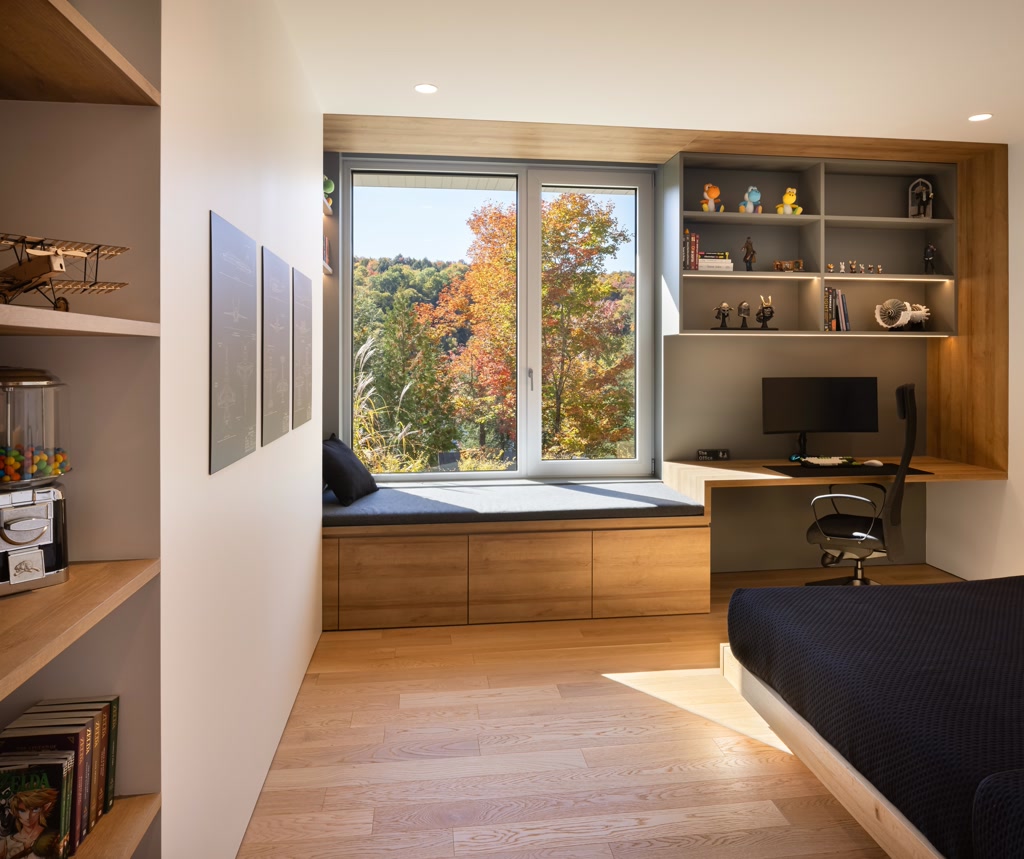
Below, the garden level accommodates the more dynamic aspects of family life. Children’s suites, guest accommodations, entertainment spaces, and wellness amenities are organised into distinct yet connected zones. A home theatre, billiards room, and a spa-inspired sequence comprising sauna, shower, cold plunge, and outdoor hot tub extend the programme beyond conventional residential expectations. Direct connections to the landscape ensure that even these highly specialised spaces remain linked to the broader experience of the site.
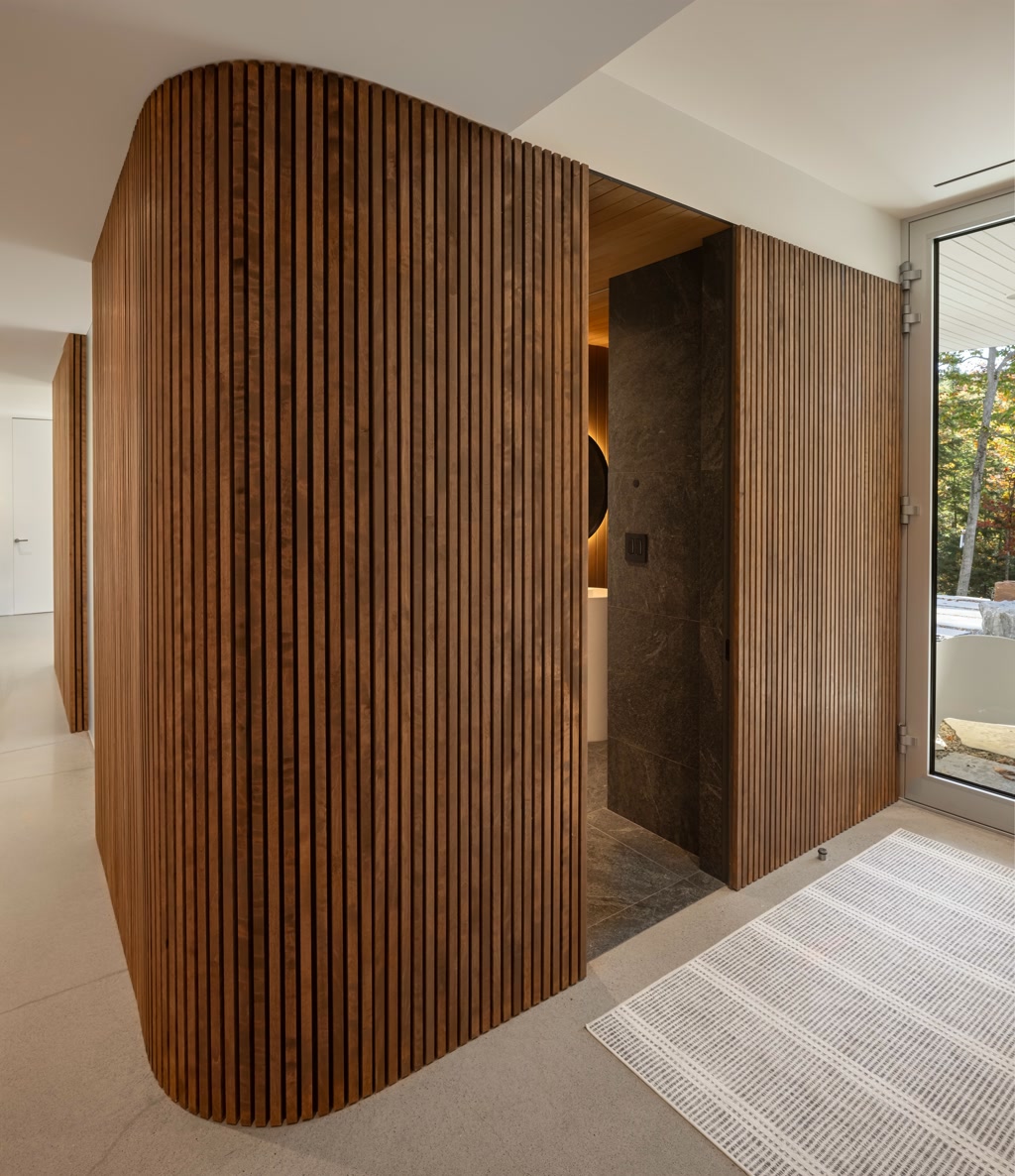
Materiality plays a central role in shaping the interior atmosphere. While the exterior projects a sense of precision and lightness, the interior introduces warmth through an extensive use of wood. Natural light animates these surfaces throughout the day, while carefully integrated custom furnishings reinforce the continuity between architecture and interior design. Curved elements soften transitions between spaces, balancing the geometric rigour of the overall composition.
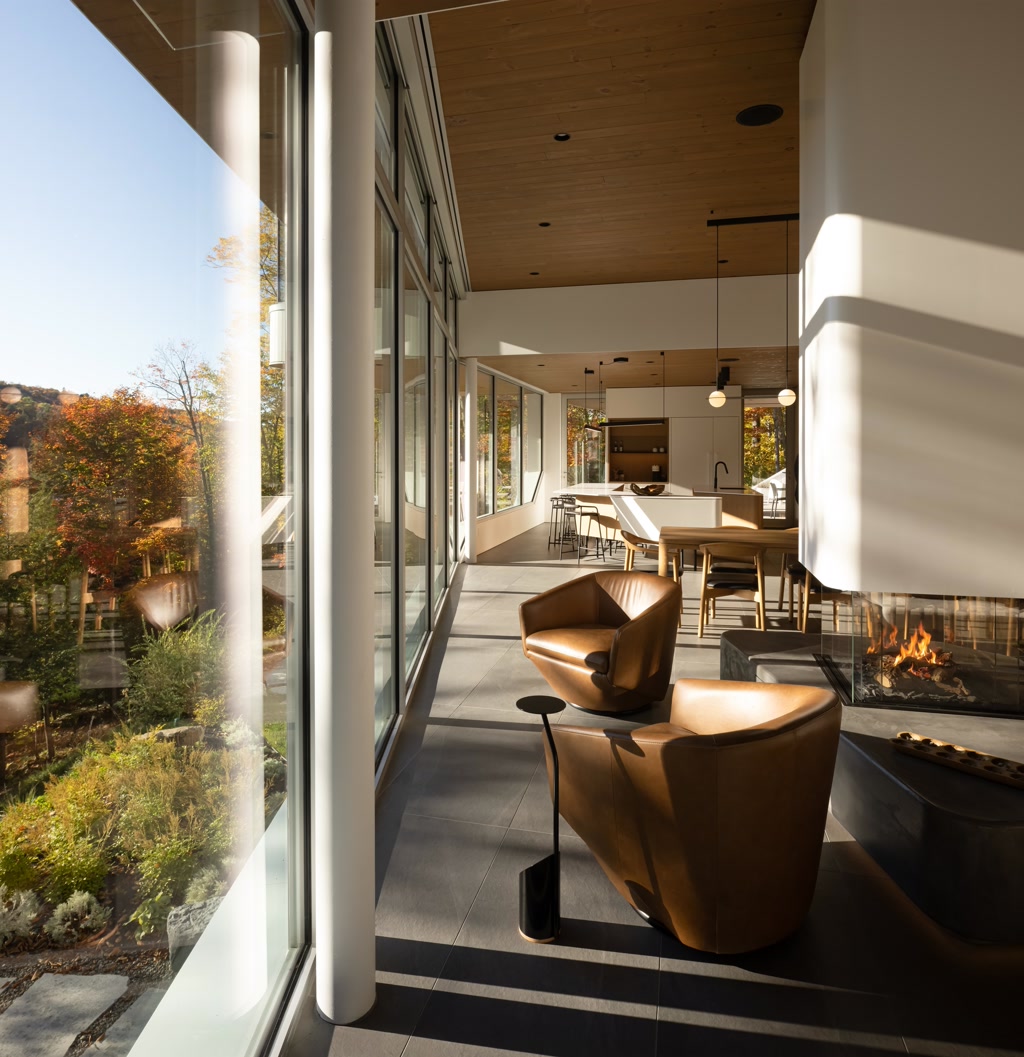
Beneath this apparent ease lies a considerable degree of technical complexity. A highly engineered steel structure supports the project’s ambitious cantilevers and layered volumes, while extensive coordination between architectural, mechanical, and electrical systems ensures that the spatial vision remains uncompromised. This hidden precision allows the architecture to achieve its defining quality: an appearance of effortlessness.
What ultimately distinguishes The Albatross is its ability to reconcile ambition with restraint. The residence is expansive without feeling excessive, technically sophisticated without becoming demonstrative, and deeply connected to its landscape without relying on spectacle. Through careful planning, rigorous detailing, and a strong understanding of place, MU Architecture has created a home that engages with its setting not as a backdrop, but as an active participant in everyday life.
More than a retreat, The Albatross proposes a way of living shaped by landscape, movement, and continuity – an architecture designed not simply to occupy a site, but to belong to it.
Photo Courtesy : Stéphane Groleau
Connect Online@www. architecture-mu.com